


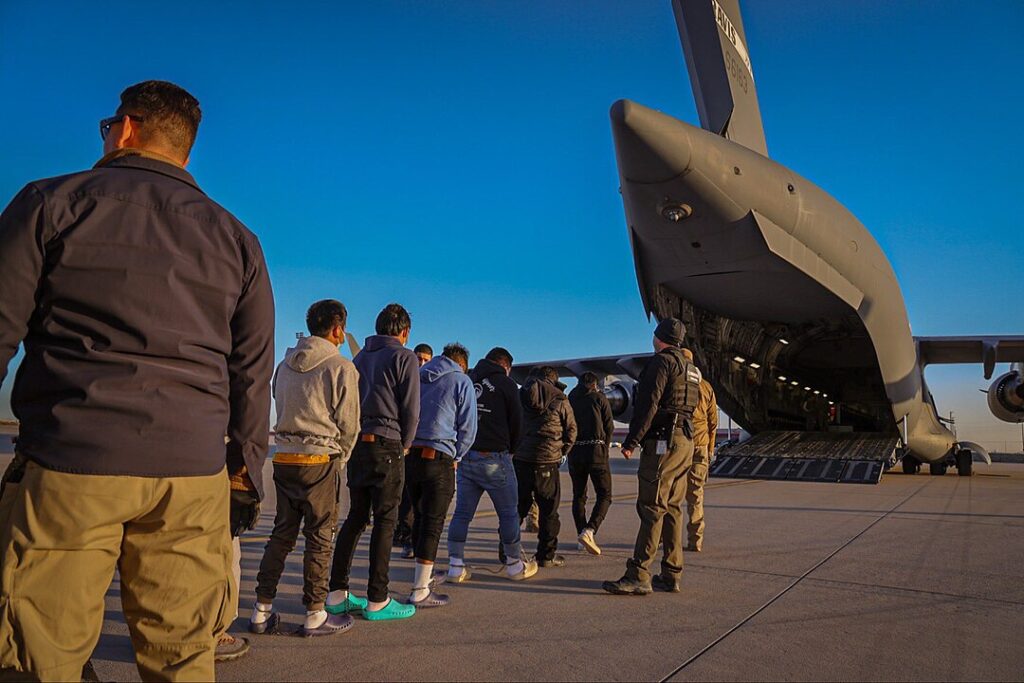
The United States has reached an agreement with the Commonwealth of Dominica that could allow certain asylum seekers arriving at the U.S. southern border to be transferred to the Caribbean nation, according to statements from Dominican officials.
Dominica Prime Minister Roosevelt Skerrit said the arrangement is “one of the primary areas of collaboration” between the two governments following recent U.S. visa restrictions imposed on Dominican nationals.
Skerrit said he has been in ongoing discussions with U.S. officials since the announcement but declined to specify how many asylum seekers could be transferred to Dominica or when such transfers might begin.
He emphasized that talks with U.S. authorities have included what he described as “careful deliberations” aimed at ensuring Dominica does not receive individuals who could pose a security risk. Skerrit said the government is focused on avoiding the transfer of “violent individuals or individuals who will compromise the security of Dominica.”
Following public concern, the Dominican government issued a clarification stating that U.S. officials have confirmed Dominican nationals holding valid U.S. visas — including tourist, business, student, and other lawful categories — remain eligible to travel to the United States and its territories under existing immigration rules.
The Associated Press reported that the agreement mirrors similar arrangements the United States has reached with countries such as Belize and Paraguay. The policy aligns with broader efforts under President Donald Trump’s administration to encourage partner nations to share responsibility for managing asylum claims and reducing pressure on the U.S. border system.
Dominica, which has a population of approximately 72,000, has raised questions about its capacity to absorb additional migrants. Observers and opposition figures have expressed concern about whether the island nation has sufficient resources and infrastructure to accommodate asylum seekers transferred under the agreement.
Details of the agreement have not been formally released by U.S. officials.
READ NEXT: Iran’s Supreme Leader May Flee To Moscow If Situation Worsens