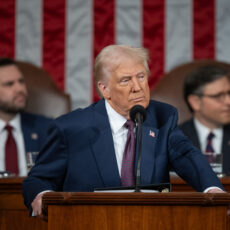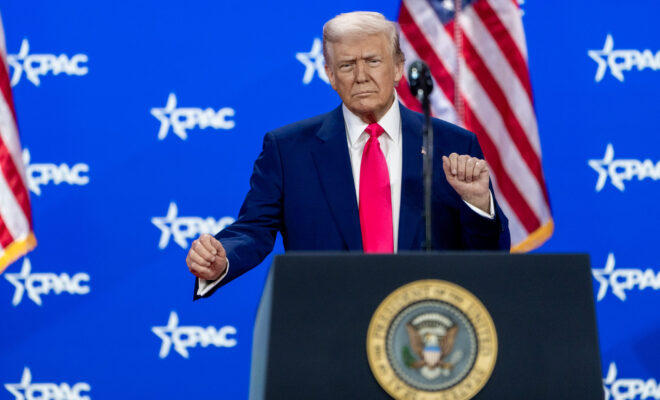




Sen. Adam Schiff (D-Calif.) said Sunday that President Donald Trump may seek to overturn the outcome of the 2026 midterm elections if Republicans lose seats in Congress.
“I think [Trump] intends to try to subvert the elections,” Schiff told ABC News’ This Week co-anchor Jonathan Karl. “And if he loses the vote … he’s prepared to try to take some kind of action to overturn the result, and we really shouldn’t question that.”
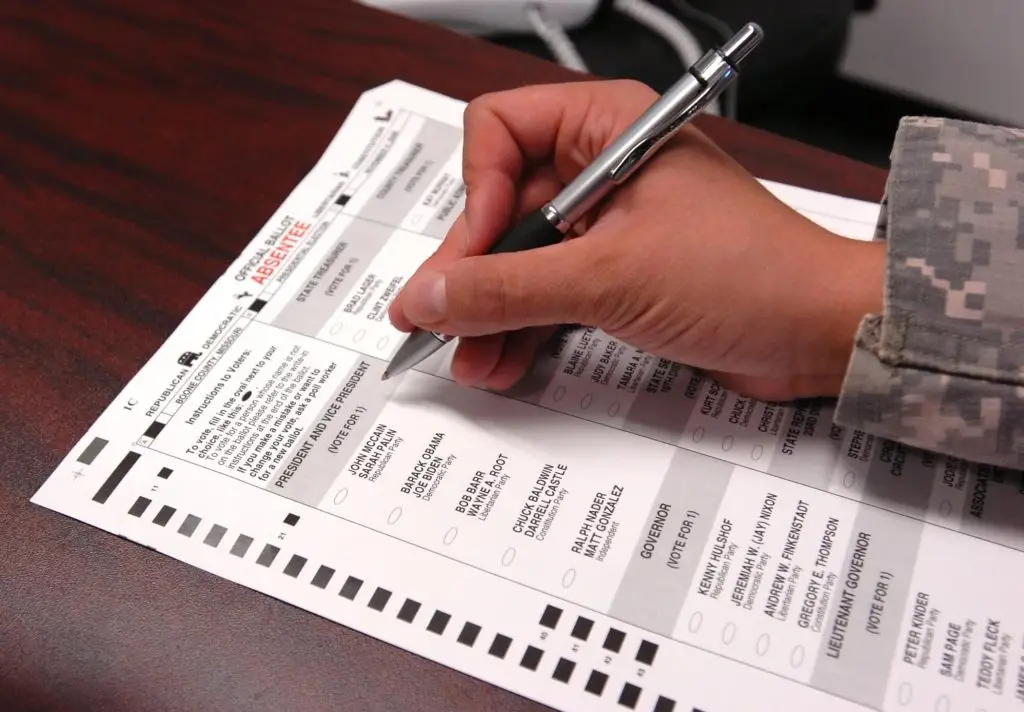
Schiff’s remarks followed comments by Trump last week calling for the federal government to take a greater role in administering elections, language he described as “nationalizing” voting procedures. The comments drew swift reaction across the political spectrum.
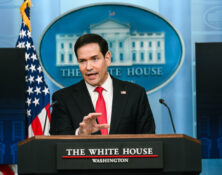
The White House initially sought to soften Trump’s remarks, but the president doubled down on Tuesday, arguing that federal intervention could be warranted if states fail to administer elections fairly.
“If states can’t count the votes legally and honestly, then somebody else should take over,” Trump said. “The federal government should get involved.”
Trump framed his argument as a response to what he described as “corruption” at the state and local level, particularly in more than a dozen states he has criticized in recent months.
In response, Sen. Edward Markey (D-Mass.) said he plans to introduce a Senate resolution on Monday denouncing any effort by a president to “nationalize” or “take over” state-run election systems ahead of the 2026 midterms.
“The Constitution gives states the primary authority over the times, places, and manner of federal elections to the States,” Markey said in a statement shared first with The Hill. “It does not assign to the President any power to directly control or administer State-run elections.”
“There is no clause in the Constitution or law on the books—none—that allows a President to commandeer state election systems. No emergency power. No implied authority. No ‘because I say so,’” Markey continued. “The President’s role is to faithfully execute the laws—not to rewrite the Constitution when the facts or the voters displease them.”
Markey warned that any attempt by a president to federalize or seize control of state election systems would be “unconstitutional, illegal and without effect,” and said such an action would be “impeachable.”
His resolution would formally affirm states’ constitutional authority over federal elections, citing Article I, Section 4 of the Constitution—commonly known as the Elections Clause—which grants state legislatures control over the “Times, Places and Manner” of congressional elections, while allowing Congress to alter those rules by law.
Several Senate Republicans have also rejected Trump’s call for federalizing elections, emphasizing constitutional limits and the value of decentralized election systems.
“I’m supportive of only citizens voting and showing ID at polling places. I think that makes sense,” Senate Majority Leader John Thune (R-S.D.) told reporters last week. “But I’m not in favor of federalizing elections, no. I think that’s a constitutional issue.”
Thune added that decentralization strengthens election security rather than weakens it.
“I’m a big believer in decentralized and distributed power,” he said. “And I think it’s harder to hack 50 election systems than it is to hack one. In my view, at least, that’s always a system that has worked pretty well.”
READ NEXT: What History Actually Shows About A Key Anti-Trump Narrative