





VIENNA — Austria has become the second EU country to deny U.S. military aircraft access to its airspace, marking the latest instance of a longtime U.S. ally distancing itself from Washington’s war with Iran.
Requests from the U.S. military to overfly Austrian territory have been rejected outright, according to the country’s Defense Ministry.
Austria’s Vice Chancellor Andi Babler sharply criticized the conflict in a post on the social media platform X, writing, “We want nothing to do with Trump’s policy of chaos and his war, which will bring us the next energy crisis.”
He added, “Neutrality is a precious asset in our country. No to war.”
Neutrality, not ambiguity
Austria is pointing to a long-standing principle: neutrality.
The country has been formally neutral since 1955, a position written into its constitution that bars it from joining military alliances or hosting foreign bases. That stance tends to come into focus during conflicts like this one.
Officials framed the decision less as a political statement and more as a continuation of that policy. Still, the timing leaves little room for interpretation.
A growing split with allies
Austria is not alone.
Spain has already closed its airspace and military bases to U.S. operations tied to the Iran war. Switzerland has also moved to halt weapons exports connected to the conflict.
Taken together, the moves point to a widening gap between the U.S. and its European partners over how the war is being handled.
Even countries that typically cooperate closely with Washington are drawing clearer lines about what they will and won’t support.
Real-world impact on military operations
Airspace matters more than it sounds.
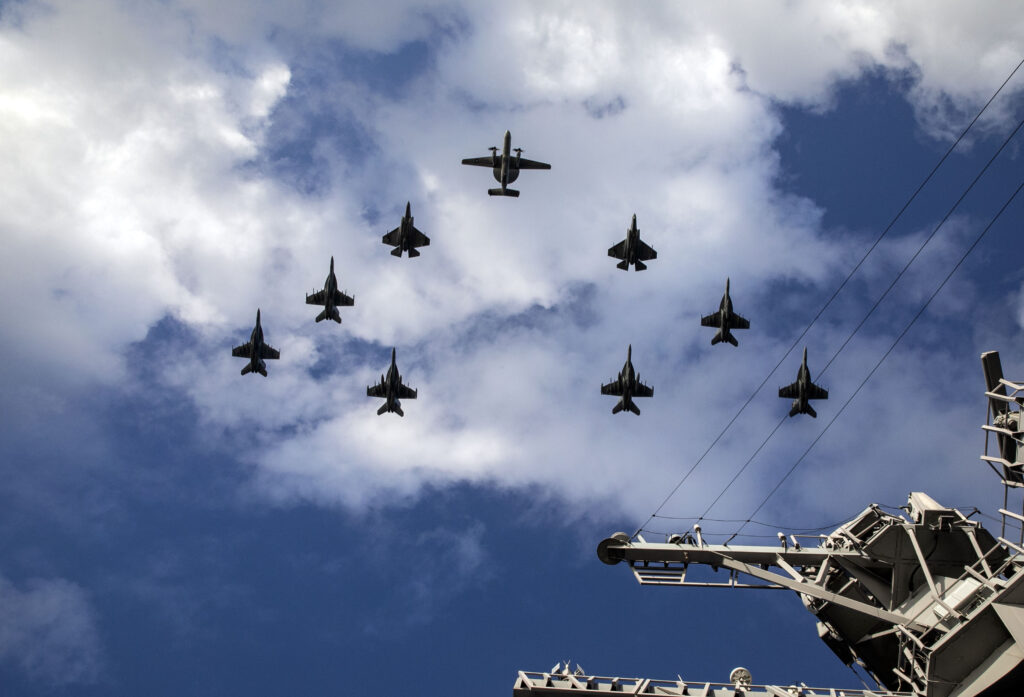
Blocking overflight routes forces U.S. aircraft to take longer paths, complicating refueling plans and stretching mission times. In practical terms, it adds cost, risk, and delay to operations that rely on tight coordination across continents.
Spain’s earlier restrictions have already pushed U.S. planes to reroute through other parts of Europe. Austria’s decision adds another gap on the map.
What comes next
For now, the message is simple: Vienna won’t be part of the war effort, directly or indirectly. Whether more European countries follow that lead is an open question, but the trend is moving in that direction.
And with each new restriction, the logistical and political space around the conflict gets tighter.
READ NEXT: Authorities Reveal Breakthrough In Urgent Military Rescue Mission

















These countries are in the process of “transitioning,” and they have no BALLS!
I can only assume that the EU countries have an overwhelming desire to defend themselves without the help of the US as part of NATO if NATO still exists without US support. If we can’t even use their airspace, I see NO reason why we should contribute to their defense down the road.
I’ve always been a strong supporter of NATO. There is a great kinship with Europe and people in this country. However, they forget just how many American troops lost their lives during WWII to save Europe from permanent disarray. The Marshall Plan helped to stabilize countries on the brink of extinction, and the U.S. shared everything with them, including our full protection from enemies. NATO was created to bring America and Europe together to keep the region free and secure. Now, when times are tough, they refuse to let us use air space in NATO territory, where we have become their biggest defender and kept the alliance alive financially? I have now come to the opinion that Trump is right and it’s time to end the charade we call NATO. What I would do is to forge an alliance with Ukraine. Those people have shown their bravery during a deadly time, and they are people worth defending and allying with. They have a lot to offer, militarily and resource-wise and their ingenuity is truly inspiring.
Then the only option is to have ALL of our aircraft, etc., either on carriers or in countries close to the ‘action’.
And if/when these European nations need us, we must remind them that our aircraft can’t come over their country(s) to help them.
Then they can take care of their own problems … alone!
Their choice!