WASHINGTON — The three-month ceasefire between the United States and Iran has seemingly collapsed after U.S. forces launched a sweeping campaign targeting roughly 90 military sites inside Iran in response to attacks on commercial shipping in the Strait of Hormuz, prompting President Donald Trump to declare the truce officially “over.”
The escalation quickly spilled across the Persian Gulf. Iran launched retaliatory missile and drone attacks against U.S.-aligned Gulf states, commercial shipping through the Strait of Hormuz slowed to a near standstill, and energy markets reacted sharply as fears of a broader regional war mounted.
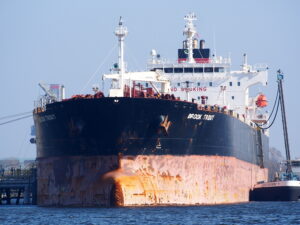
The latest round of fighting followed a string of Iranian attacks on commercial shipping, including three oil tankers transiting the Strait of Hormuz. In response, the U.S. military conducted a seven-hour campaign of precision strikes beginning late Wednesday afternoon.
According to U.S. Central Command, the operation was designed “to degrade Iran’s ability to continue attacking international commerce flowing through the international trade corridor.”
CENTCOM said the strikes targeted military infrastructure along Iran’s coastline.
“U.S. forces struck Iranian air defense systems, command and control networks, coastal radar sites, anti-ship missile capabilities, and more than 60 Islamic Revolutionary Guard Corps small boats in and near the strait,” the command said.
A senior U.S. official told reporters the strikes also destroyed two key railway bridges used to transport military weapons and supplies. Officials emphasized that the Bushehr nuclear power plant was deliberately avoided and was not targeted.
Trump dismisses further negotiations
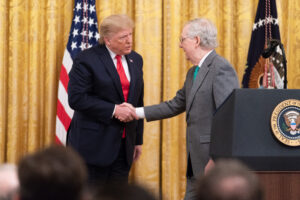
Speaking from the NATO summit in Ankara, Turkey, Trump said he no longer believes diplomacy with Tehran offers a viable path forward.
“As far as I’m concerned, it’s over,” Trump said of the ceasefire that had been in place since fighting erupted Feb. 28.
Asked about future negotiations, the president was equally blunt.
“They’re bad people, and frankly, I don’t want to waste my time with them. Now, I’ll let our wonderful negotiators keep talking if they want, but I don’t see it.”
His remarks marked one of the administration’s clearest signals yet that it expects the conflict to continue rather than return to the negotiating table.
Iran retaliates across the Gulf
Iran answered the U.S. operation within hours.
Iran’s Islamic Revolutionary Guard Corps launched ballistic missiles, cruise missiles, and drones toward Gulf nations aligned with Washington.
Kuwait’s Ministry of Defense said its forces intercepted three ballistic missiles, one cruise missile and 10 drones after they entered the country’s airspace. Debris from the interceptions caused property damage and left one person injured, authorities said.
Air raid sirens also sounded in Bahrain, home to the U.S. Navy’s Fifth Fleet, as officials reported incoming missiles and drones.
Iran’s state-run Mizan News Agency reported that three IRGC members were killed during the initial U.S. strikes.
Senior Iranian officials responded with threats of additional military action.
Mohammad Baqer Qalibaf, Iran’s chief negotiator, warned Washington in a social media post.
“If you strike, you’ll get hit,” he wrote, adding that the Strait of Hormuz would remain open only under “Iranian arrangements” rather than U.S. threats.
Strait of Hormuz traffic slows dramatically
The renewed fighting is already disrupting one of the world’s most important energy chokepoints.
Shipping data and energy analysts say commercial tanker traffic through the Strait of Hormuz has slowed to a virtual halt as companies reassess the growing security risks.
Bloomberg also reported that Qatar has temporarily paused planned expansion work at its massive Ras Laffan liquefied natural gas complex while maintaining existing operations under heightened safety measures.
Military analyst calls for tougher strategy
Some military analysts believe the end of the ceasefire gives the Trump administration an opportunity to apply greater pressure on Tehran.
Retired Vice Adm. Robert Harward, a former Navy SEAL and National Security Council official, argued during an appearance on Fox News that the United States should pursue a broad maritime blockade to weaken Iran’s economy and military logistics.
“Everyone knew at the end of the day, from a historical context, that Iran has never capitulated on anything,” Harward told host Brian Kilmeade.
“They’ve only worked to enhance their position, their financial status, and the president understands this.”
Prospects for peace fade
Even as countries including Iraq attempt to open back-channel diplomatic discussions, both Washington and Tehran are signaling that they expect the conflict to continue.
With the ceasefire now declared dead, military operations expanding across the Gulf, and commercial shipping under increasing pressure, the risk of a prolonged conventional conflict appears to be growing rather than receding.
READ NEXT: A NATO Dispute Just Became An Economic Fight