California’s ban on the retail sale of Glock handguns and other similar semiautomatic pistols will remain in effect after a federal judge denied the Trump administration’s request for a temporary restraining order while a broader Second Amendment challenge proceeds.
The Justice Department sought a temporary restraining order against California Penal Code Section 27595, commonly known as the “Glock ban,” after filing suit against the state and Attorney General Rob Bonta on July 1. U.S. District Judge Monica Ramirez Almadani’s ruling means licensed firearms dealers must continue complying with the restriction as the case moves forward in federal court.
Almadani also appeared skeptical of the Justice Department’s legal theory.
According to Bearing Arms, the judge wrote that the federal government was advancing a “novel theory under Section 12601 that California is a governmental authority whose law enforcement officers are engaging in a pattern or practice of depriving individuals of their Second Amendment rights by enforcing AB 1127.”
While there may be merit to the United States’ claim that AB 1127 unlawfully restricts California constituents’ access to Glock and Glock-type pistols, the novel approach the United State employs to stake its claim is not obviously sound. To determine this novel issue, the Court will need to carefully interpret the statute and examine its plain language, legislative history, and historical usage, which it cannot achieve here due to the accelerated nature of a TRO. Accordingly, the Court declines to grant the TRO given the uncertain viability of the United States’ claim pursuant to Section 12601.
The ruling marks an early procedural setback for the Justice Department but does not resolve the underlying constitutional challenge. The court has yet to rule on whether California’s law violates the Second Amendment.
DOJ challenges ban on popular handguns
The California law prohibits licensed firearms dealers from selling, transferring, or delivering pistols the state defines as “semiautomatic machinegun-convertible pistols.”
The statute targets handguns with certain internal designs, including models that use a cruciform trigger bar. The Justice Department says that language encompasses virtually all Glock pistols, along with several popular Glock-style firearms manufactured by other companies.
California lawmakers approved the restriction over concerns that Glock-style pistols can be illegally modified to fire automatically through the installation of conversion devices commonly known as switches.
Possessing those conversion devices is already illegal under federal and California law. The Justice Department argues that the state cannot prohibit ordinary semiautomatic handguns merely because criminals may unlawfully alter them.
“The Second Amendment is a sacred right belonging to all Americans, even those in California,” Assistant Attorney General Harmeet Dhillon said when the lawsuit was announced.
Dhillon argued that California was attempting to ban “some of the most popular handguns in the country” and said the Justice Department would seek to protect Californians’ right to purchase firearms commonly used for lawful purposes.
California defends safety measure
Bonta’s office maintains that the law is a permissible firearm-safety regulation aimed at guns that can be readily converted into illegal machine guns.
California has argued that the number of Glock-style pistols currently owned or sold does not automatically settle whether the state may regulate their commercial sale. The state also contends that other handgun models remain legally available to California residents.
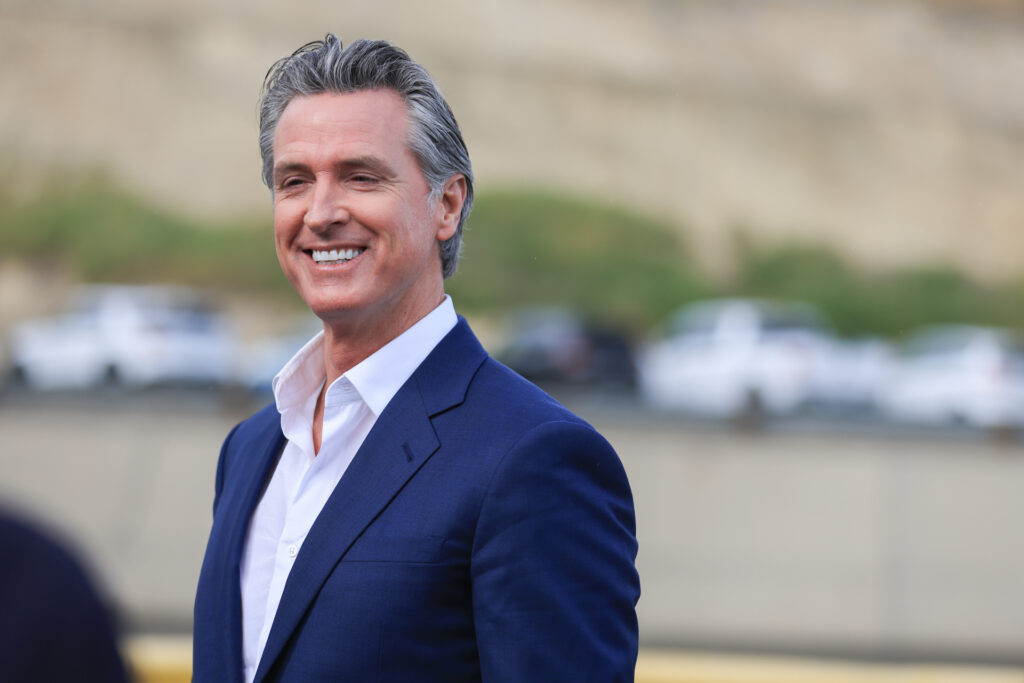
The two sides also disagree over whether the Justice Department waited too long to seek emergency relief. Bonta argued that federal officials could have challenged the measure after Gov. Gavin Newsom signed it in October 2025 rather than waiting until the law took effect on July 1.
The Justice Department maintains that enforcement had to begin before it could bring its claim alleging a pattern or practice of constitutional violations by state officials.
Handgun roster also challenged
The federal lawsuit goes beyond the Glock restrictions.
The Justice Department is also challenging California’s Unsafe Handgun Act and its state-approved handgun roster, which limits the models licensed dealers may sell. Firearms generally must satisfy state requirements involving features such as chamber-load indicators, magazine-disconnect mechanisms and microstamping before they can be added to the roster.
Federal attorneys argue that the roster prevents Californians from buying many modern handguns widely available elsewhere in the country.
California says hundreds of handgun models remain available and that the roster’s requirements are legitimate consumer-safety regulations.
Constitutional fight continues
The government’s complaint argues that Glock and Glock-style pistols are protected because they are commonly possessed for lawful purposes, including self-defense.
That argument draws on the Supreme Court’s recognition in District of Columbia v. Heller that handguns are the firearm most commonly selected by Americans for protection in the home.
California is expected to rely on decisions allowing governments to regulate weapons considered dangerous and unusual, while arguing that its law targets ease of illegal conversion rather than banning handguns as an entire category.
The denial of emergency relief leaves the law intact for now, but the Justice Department may continue seeking a preliminary injunction, pursue an appeal or litigate the constitutional claims toward a final judgment.
Until a court intervenes, California dealers may not sell newly prohibited Glock and Glock-style pistols, though the law does not broadly criminalize possession by residents who already legally own them.
READ NEXT: Trump Refuses To Sign Landmark Legislation — But Why?