

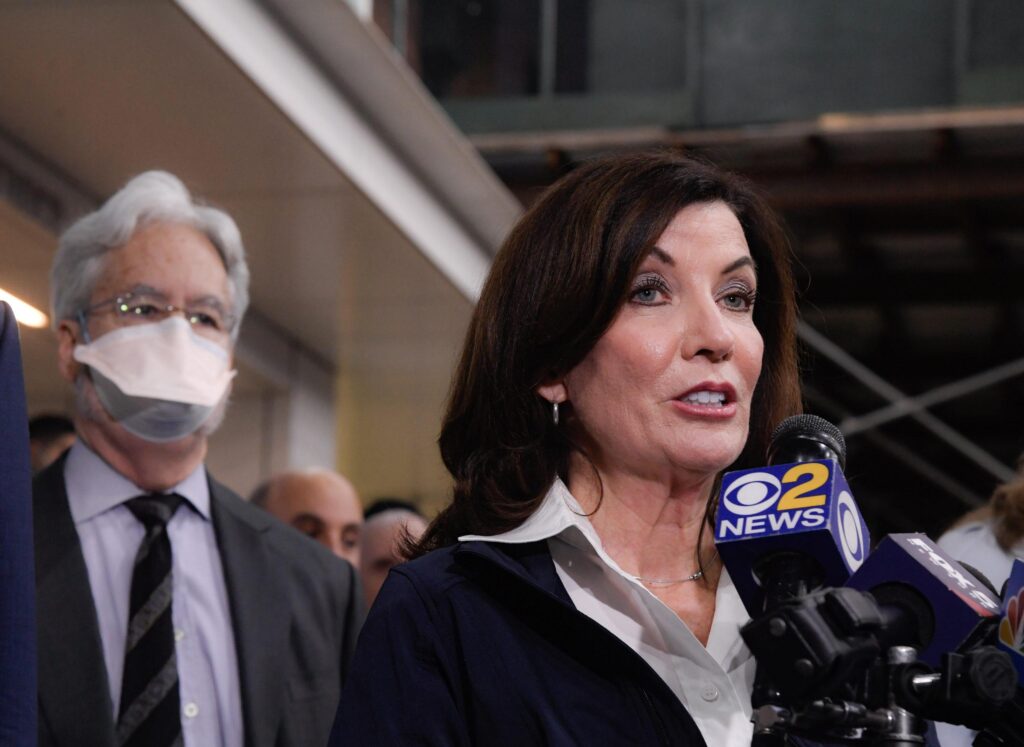
New York has approved a sweeping package of restrictions targeting 3D-printed firearms, including a first-in-the-nation requirement that 3D printers sold in the state eventually incorporate technology designed to prevent the printing of firearms and firearm components. The measure was included in the state’s fiscal year 2027 budget and signed by Gov. Kathy Hochul last week.
The legislation is part of a broader effort by state officials to crack down on so-called “ghost guns” — unserialized firearms that can be assembled or manufactured outside traditional regulatory channels. The package also creates new penalties related to the manufacture of 3D-printed firearms and the distribution of digital files used to produce them.
State to Develop Technology Standards
A key provision directs New York officials to establish minimum safety standards for 3D printer manufacturers aimed at blocking the production of firearms and firearm components. A state working group will be tasked with developing recommendations before regulators create formal requirements for manufacturers.
Supporters argue the law responds to a growing number of crimes involving 3D-printed firearms and addresses what Hochul has called the “plastic pipeline” of homemade guns. State officials say advances in consumer-grade printers have made firearm production easier and more accessible.
Critics Question Whether Technology Exists
The legislation has drawn criticism from firearms advocates, technology experts, and members of the 3D-printing community who argue that no widely adopted technology currently exists that can reliably identify and block every firearm-related print job without also affecting legitimate uses. Critics contend that open-source printer software, modified firmware, and the ability to alter digital designs could make enforcement difficult.
Even some supporters of the proposal have acknowledged implementation challenges. State officials have said the working group’s purpose is to determine what standards are technically feasible and how manufacturers might comply.
As Ammoland reports:
The state does not define what the technology will look like. It could be hardware, software, or a combination of the two. If a company doesn’t come up with a solution to satisfy New York State, it could face a civil penalty of $ 5,000 per product sold. Most products are produced overseas, so collecting fines from 3D printing companies could be almost impossible. The retailers will bear the fines.
The new law creates a working group of experts in additive manufacturing technology and artificial intelligence (AI). The group will also include members of anti-gun groups, though it isn’t clear how they would help, as they have no expertise in the technology. The group will develop minimum censorship standards for 3D printers. The goal will be to fit the law into existing technology.
One idea is to use AI to scan files to look for “signatures” that match firearms or gun parts. Since no 3D printer can run a local large language model (LLM), the printer would need to be always online and use an ecosystem such as Bambu Labs cloud printing. That would require all files to be uploaded to Bambu Lab’s servers in China before a user can print. This raises national security concerns by forcing users to upload files to servers run by a global adversary.
It also raises serious First Amendment issues. By restricting what the printer can print, the law is making the final arbiter of what speech is allowed. This restriction is exactly what the First Amendment was trying to prevent. This is a level of censorship that will surely be challenged in court.
Several companies have reportedly begun exploring software-based detection tools, and lawmakers point to emerging technologies such as AI-assisted file recognition as potential solutions. However, no universally accepted industry standard currently exists.
Part of a Broader National Push
New York is not alone in pursuing restrictions on 3D-printed firearms. Similar proposals have been introduced in states including California, Washington, and Colorado as lawmakers seek ways to address the spread of homemade firearms and online gun blueprints.
The New York law is expected to face legal and practical challenges as regulators work to define what qualifies as compliant firearm-blocking technology and determine how manufacturers will be expected to implement the new requirements. For now, state officials say the rulemaking process is only beginning, and specific technical standards have yet to be established.
READ NEXT: Blue City Finds A Powerful New Neighbor. Some Groups Want It Gone.



















What does reality have to do with gun control? Just pass another unenforceable law.