

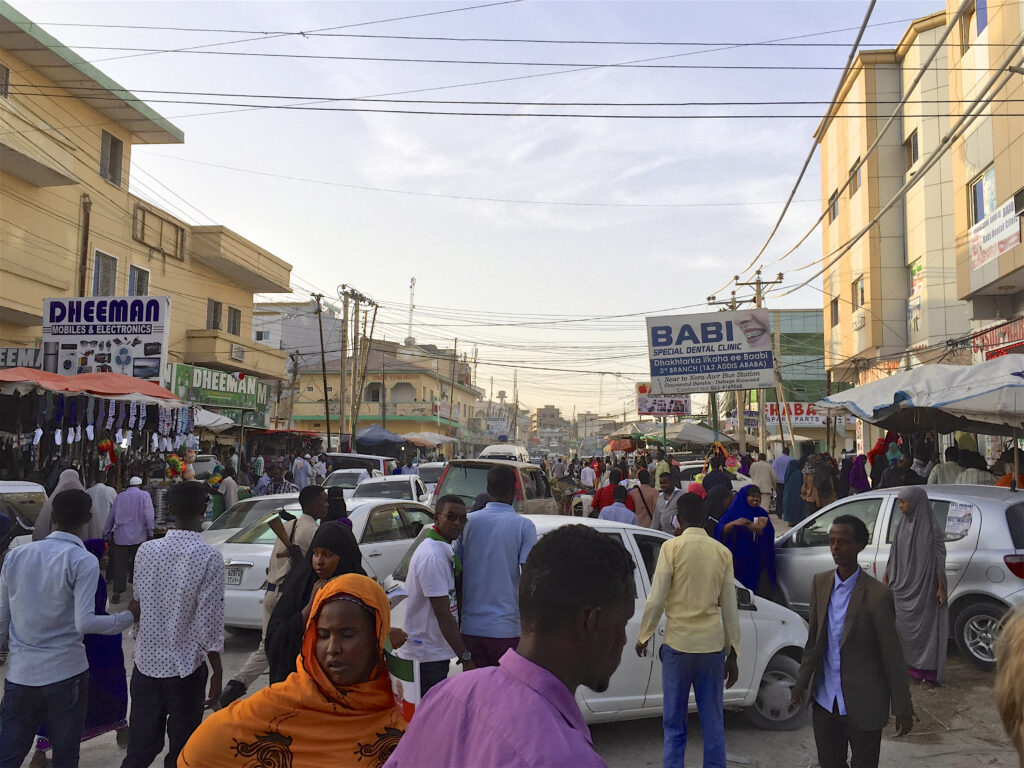
There is an easy argument for recognizing Somaliland, and it is not the one that State Department lifers will offer you in a memo. The easy argument is that it would enrage Somalia-born Rep. Ilhan Omar. That is not a reason by itself to reorder U.S. foreign policy, but it is a useful diagnostic. When a policy move reliably provokes a loud, immediate denunciation from Omar, that usually means it cuts against a particular combination of interests, ideology, and constituency. Somaliland recognition does exactly that. Omar has consistently opposed Somaliland recognition and publicly aligned herself with Mogadishu’s claim that Somaliland is merely a region of Somalia. U.S. recognition would contradict the position she has taken for years. It would also undercut her political and diaspora base, which includes Somali nationals and pro-Mogadishu activists who view Somaliland as a breakaway region whose success is an embarrassment to the federal project in Mogadishu.
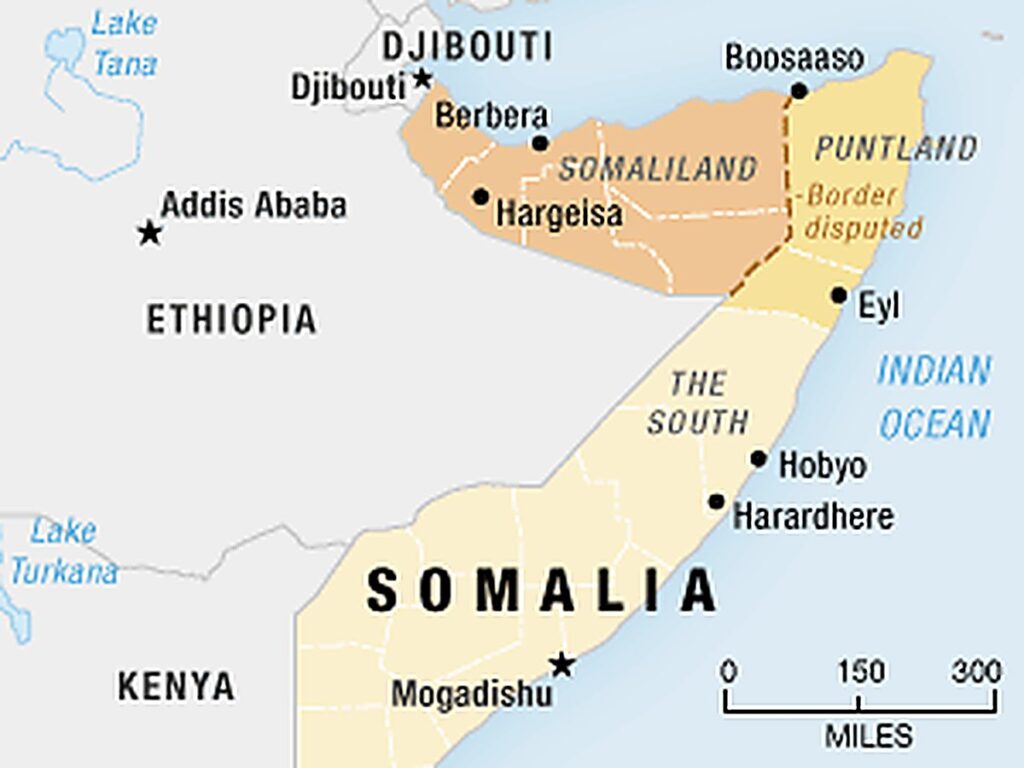
But the real case for recognition begins where the Omar case ends. It begins with a simple moral and strategic idea that conservatives understand: reward success, do not subsidize failure. Since Omar came to America, U.S. taxpayers have pumped more than $10B in aid into Somalia, much of it flowing through corrupt leaders, militias, and warlord networks that the federal government in Mogadishu has never fully controlled. That figure does not include the additional billions siphoned from U.S. taxpayers through large-scale fraud schemes perpetrated by Somali migrant networks, schemes that have repeatedly been uncovered and prosecuted at the state and federal level. For more than 30 years, Somaliland, by contrast, has built the central goods that states exist to provide. It has maintained internal peace, protected commerce, held multiple elections, and preserved a functioning public order without being propped up by tens of thousands of foreign troops. Somalia has absorbed decades of aid and attention and still struggles to control large portions of its territory. It remains a byword for corruption and fragility, and it faces an entrenched jihadist insurgency. To treat these two political projects as if they were the same is not neutrality. It is moral and strategic confusion.
Start with first principles. What is it for something to be a state? The classic legal touchstone is the Montevideo Convention’s criteria: a permanent population, a defined territory, an effective government, and the capacity to enter relations with other states. That list is not mystical. It is a checklist of the minimal features needed for sovereignty to be more than rhetoric. Somaliland meets each condition in a straightforward way. It has a stable population in the millions. It governs a territory with borders that track the colonial boundary of the former British Somaliland Protectorate. It has an effective government that provides security and basic services, and that enjoys legitimacy in the eyes of its citizens. It also has a demonstrated capacity for external relations, shown by its diplomatic offices abroad and the steady stream of foreign delegations and partner missions that operate in Hargeisa.
Notice a crucial point that is often lost in debates about recognition. Recognition is not the thing that makes a state real. Recognition is the decision by other states to treat that reality as official. The state is the underlying political fact: effective governance over a people in a territory. Somaliland has been such a fact since 1991. Somalia’s claim that Somaliland must remain under Mogadishu’s sovereignty is not supported by administrative control. It is supported by a diplomatic habit and by the fear that acknowledging an obvious case will force the world to confront less obvious ones.
A skeptic might ask: if Somaliland meets the criteria, why has it not been recognized? The standard answer is that recognition could encourage separatism. This is the “Pandora’s box” objection. But it rests on a mistake. Somaliland is not a typical secessionist movement trying to carve a new border out of an existing one. Somaliland’s claim is unusually clean. It points back to a pre-existing colonial boundary, it points to a brief period of recognized independence in 1960, and it points to three decades of separate governance sustained by popular consent. The relevant principle in Africa has long been uti possidetis juris, the idea that post-colonial borders should track colonial borders to limit conflict. Recognizing Somaliland would not violate that principle. It would restore it by reasserting the border between British Somaliland and Italian Somalia. If you want to reward the principle that stabilizes borders rather than redraw them, Somaliland is the case you pick.
Now bring the argument down from legal theory to the empirical world. If you had never heard of Somaliland and Somalia, and you were asked which one deserves U.S. partnership, you would look at governance, corruption, security, and alignment. On governance, Somaliland looks like a fragile but real democracy. It has held competitive elections and experienced peaceful transfers of power. Its institutions are not perfect, and there have been political disputes and delays, but the baseline is that the people of Somaliland can plausibly say that their leaders govern with consent. Somalia’s federal politics are far more compromised. It has struggled to conduct credible national elections and has repeatedly faced crises tied to clan bargaining, vote buying, and violent contestation. A conservative does not need to romanticize democracy to see the practical difference. Even minimal accountability and electoral legitimacy produce better security and better governance than systems that are merely transactional.
On corruption, Somalia has ranked at or near the bottom of major corruption indices for years. The details vary by year, but the steady theme is that Mogadishu’s institutions are treated as spoils. That matters for U.S. policy because aid and security assistance do not float above politics. They pass through human beings with incentives. In a corrupt system, assistance becomes patronage. It buys compliance today and funds instability tomorrow. Somaliland is not corruption-free, and no serious analyst should claim it is. But Somaliland’s governance has been comparatively cleaner in part because it has been forced into self-reliance. It cannot count on endless external rent, so it has had to build a state that taxes, budgets, and maintains legitimacy from within. Paradoxically, nonrecognition has forced a degree of institutional discipline that Mogadishu has lacked.
Security is the decisive category. Somalia has faced Al-Shabaab for more than a decade and still cannot defeat it. Even in Mogadishu, bombings and attacks have punctured the supposed perimeter of the state. Somalia’s security posture depends heavily on external forces and external money. Somaliland’s record is dramatically different. It has kept Al-Shabaab out. It has avoided major terror attacks for many years. It has also contributed to maritime security by policing its coast, in contrast to the lawless conditions that enabled piracy elsewhere along the Somali littoral. When conservatives talk about the need for partners who can handle their own territory, this is what they mean. Somaliland has done the hard part already.
At this point, the reader may worry that recognition is a mere symbolic gesture, and symbolism is cheap. But recognition is not cheap in geopolitics. It changes the menu of cooperation. It allows formal agreements, defense cooperation, and long-term planning that are difficult when everyone pretends Somaliland does not exist. If Somaliland is an island of stability along the Gulf of Aden, then the U.S. should want options there. That is especially true as the Red Sea corridor becomes more contested. The Bab el-Mandeb is one of the world’s key choke points. Disruption there affects global trade and U.S. interests. Somaliland’s port at Berbera, along with its airfield, offers a piece of strategic geography that is valuable regardless of whether diplomats prefer the old map.
Here, the China and Iran dimensions matter. Djibouti hosts the primary U.S. base in the region, Camp Lemonnier, and it also hosts China’s first overseas military base. You do not need to be paranoid to see the structural problem. If your regional posture depends on a single host that your main rival is also courting and embedding with debt and infrastructure, then you want a hedge. Somaliland offers hedging value. It also offers alignment value. Somaliland has demonstrated willingness to partner with Taiwan, despite Beijing’s pressure. That tells you something about its orientation. It is willing to accept costs for the sake of choosing its partners. That is the kind of signal that matters in great-power competition.
A skeptic might object that Somaliland could be tempted by rival offers if it remains isolated. That is correct, which is exactly why the U.S. should not leave it isolated. When the U.S. refuses to treat a friendly, functional polity as a state, it pushes that polity to seek patrons elsewhere, sometimes from actors whose interests do not match ours. Recognition is not charity. It is a way of locking in a partnership with a territory that already behaves like an ally.
What about the claim that recognition would destabilize the region? The worry is that Somalia would lash out, the African Union would protest, and militants would exploit the moment. These are real considerations, but they do not dominate the balance of reasons. Somalia’s federal government has no practical control over Somaliland, so its veto is not a sovereignty claim in the ordinary sense. It is an insistence that other states pretend. The AU’s concerns about separatism are largely concerns about their own internal politics, not about Somaliland’s facts. And militants do not need new talking points to attack the West. They already do. The question is whether the act of recognition changes the underlying security situation in a way that helps militants. The more plausible view is the opposite. Militants thrive where governance fails and where legitimacy is absent. Somaliland’s success is precisely a rebuke to their model.
There is also a moral argument that conservatives should not be shy about. Somaliland’s independence is not a mere administrative preference. It is grounded in historical trauma and political consent. The union formed in 1960 between British Somaliland and Italian Somalia was voluntary, but it proved catastrophic for Somalilanders, culminating in marginalization and mass atrocities under the Somali dictatorship. When the Somali state collapsed, Somaliland did what political communities often do after catastrophe: it reasserted its own sovereignty, built institutions, and secured consent through a constitutional referendum. Crucially, it did this without meaningful aid from the U.S. and with little international assistance of any kind. Somaliland rebuilt itself largely through internal reconciliation, local legitimacy, and domestic revenue rather than foreign troops or endless donor flows. Denying recognition indefinitely tells Somalilanders that their consent does not matter, that only the diplomatic preferences of external actors matter. That is not how America should speak if it wants its rhetoric about self-determination to carry any credibility.
At this stage, it is worth returning to Omar, not because she is the center of the issue, but because she illustrates a system. Ilhan Omar is both a product and a beneficiary of the Somali patronage system, a system built on external aid, internal corruption, and diaspora-linked fraud that rewards political loyalty rather than governance. Her political incentives align with Mogadishu’s narrative because that narrative protects the very machinery that sustains her coalition, both abroad and domestically. That machinery treats Somaliland’s independence as illegitimate and treats Somalia’s nominal territorial unity as sacred, even as that unity masks chronic failure and dependency. But a conservative foreign policy does not worship nominal unity. It asks what is real. It asks what works. It asks who is aligned with U.S. interests, and who repeatedly uses U.S. resources while undermining U.S. aims. Somaliland’s success exposes an uncomfortable truth: the Somali patronage model is not inevitable. It can be defeated by democratic institutions, local legitimacy, and self-reliance. That is why recognition would provoke immediate outrage. It would not merely contradict Omar’s stated position. It would force a choice between continuing to back Somalia’s culture of fraud and dependence or finally rewarding Somaliland’s demonstrated success.
So what should President Trump do? He should treat Somaliland the way reality already treats it. That begins with meeting Somaliland’s president, publicly, and without apology. It continues with formal recognition of Somaliland as a sovereign state, followed by the practical steps that recognition enables. The U.S. should establish a formal mission in Hargeisa. It should pursue security cooperation focused on maritime surveillance, counterterror intelligence, and professional training for Somaliland’s forces. It should explore access arrangements for Berbera that provide logistical flexibility and reduce dependence on any single host. It should also encourage investment and development tools that reinforce Somaliland’s self-reliant model rather than replacing it with aid dependency.
Some readers will still feel the pull of the old line that America must back Somalia’s territorial integrity. But we have tried that line for decades. We have spent billions. We have watched the results. The insistence on unity has not produced unity. It has produced a diplomatic fiction that rewards Mogadishu’s failure while punishing Somaliland’s success. Conservatives do not need to be sentimental to see that this is bad policy. It subsidizes corruption. It extends conflict. It hands leverage to rivals. It also sends a demoralizing message across Africa: governance does not matter, competence does not matter, elections do not matter. Only the inherited map matters. Ironically, recognizing Somaliland may be Somalia’s best remaining hope. By showing that nations which build functioning institutions are rewarded with recognition, investment, and partnership rather than endless aid, the U.S. would change the incentive structure that has trapped Somalia in dependency. Somaliland’s success offers a living demonstration that patronage and failure are not the only options. Faced with that example, Somalia would finally have a reason to reform itself, because success, not dysfunction, would be what the international system rewards.
Trump’s second-term foreign policy has the opportunity to be something better: a foreign policy that rewards allies who earn partnership and that treats sovereignty as a function of responsibility, not merely of diplomatic inertia. Somaliland is an unusually clear case where values and interests converge. It is a democratic, Muslim-majority polity that has chosen ballots over bullets, secured its territory without foreign armies, aligned itself with Western partners, and earned legitimacy through sustained consent. Somalia is a recognized state whose central government still cannot reliably govern large parts of its territory and still struggles against entrenched jihadism and corruption. To pretend that these cases are equal is not prudence. It is denial.
Recognizing Somaliland would not solve every problem in the Horn of Africa. No single act could. But it would be a low-risk, high-reward correction. It would align U.S. policy with facts. It would strengthen a friendly partner at a strategic choke point. It would complicate China’s ambitions and constrain Iran’s room to maneuver. It would also broadcast a simple lesson that should guide American statecraft: sovereignty is not a prize handed out for claiming it; it is a status earned by exercising it responsibly. It should not be understated that a recognized and growing Somaliland could also serve as the most natural destination for Somali refugees fleeing chaos in southern Somalia, offering safety, cultural continuity, and lawful governance without the pathologies of aid dependency. It could even become the proper destination for Somali migrants remigrating from places like Minnesota, returning not to a failed state or a patronage economy, but to a functioning Somali nation where work, order, and citizenship are rewarded. In that sense, Somaliland’s recognition would not merely stabilize a region. It would help re-anchor Somali people to a successful polity of their own making.
If you enjoy my work, please subscribe: https://x.com/amuse.
Sponsored by the John Milton Freedom Foundation, a nonprofit dedicated to helping independent journalists overcome formidable challenges in today’s media landscape and bring crucial stories to you.
READ NEXT: CDC Scales Back Universal Childhood Vaccine Schedule
Sponsored



















Only + to recognize Somailiand is:
Mining
Base for our ships
crops
touriism
Why should President Trump recognize Somalia when the pirates from said country attack US ships