

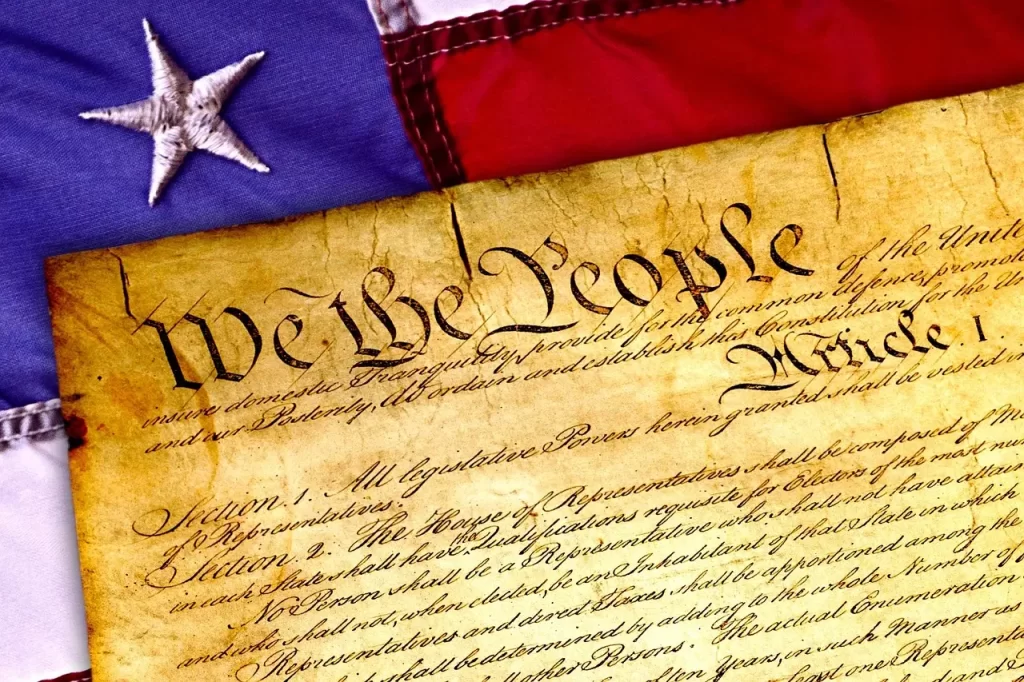
The Citizenship Clause of the Fourteenth Amendment contains 14 words before the comma, and three of them still do most of the work. All persons born or naturalized in the United States, and subject to the jurisdiction thereof, are citizens of the United States. Those words are spare, yet they direct the reader toward a demanding idea: citizenship follows allegiance. President Trump’s Executive Order 14160 asks whether a birth that occurs while both parents lack any lawful and durable tie to the U.S. satisfies that condition. The answer, rooted in text, history, structure, and the very logic of membership, is no. The Supreme Court has now agreed to decide this question. Oral argument is expected in spring 2026, and a final ruling will likely arrive by early summer. This is the first time since 1898 that the Court will squarely face the constitutional meaning of birthright citizenship. The moment is overdue.
CITIZENSHIP: The UK ended birthright citizenship in 1983. Australia did so in 1986. India did in 1987. Ireland followed in 2005. New Zealand followed in 2006. Many European democracies have long required a parental tie. Canada and the United States have stood almost alone among… pic.twitter.com/JALwmSEGq6
— @amuse (@amuse) December 8, 2025
Begin with the text itself. If the framers meant that every birth on U.S. soil confers citizenship, the qualifying phrase would serve no function. They did not say, all persons born in the United States are citizens. They wrote, born here and subject to the jurisdiction. Senator Lyman Trumbull explained the point with clarity, being subject to the jurisdiction required, owing no allegiance to any other sovereign, and being under the complete jurisdiction of the United States. The 1866 Civil Rights Act used an almost identical formula: all persons born in the United States and not subject to any foreign power, excluding Indians not taxed, are citizens. The drafters understood the phrases as equivalent. Senator Jacob Howard, who introduced the Clause, described its scope as excluding the children of foreigners, aliens, and families of ambassadors or ministers. Senator Reverdy Johnson agreed and tied jurisdiction to allegiance to the United States at birth. Representative John Bingham had earlier distilled the same idea: citizenship attaches to those born here of parents not owing allegiance to a foreign sovereignty. The shared theme, expressed again and again, is allegiance rather than geography.
Some readers may worry that such statements were stray remarks. They were not. They reflected the Clause’s moral purpose. After the Civil War, Congress wanted to secure citizenship for freedmen who had been born here and owed allegiance here, yet had been denied membership in the political community. The goal was to lock in citizenship for those who already belonged, not to extend an open invitation to secure automatic membership through happenstance. The jurisdictional language mattered because it directed the guarantee toward those who stood fully within American authority. The framers sought to protect an existing community, not to create an unconditional worldwide right to citizenship by the accident of place.
Early judicial exposition aligned with this understanding. The Supreme Court, in the Slaughter-House Cases, read the Clause as excluding the children of ministers, consuls, and citizens or subjects of foreign states. In Elk v. Wilkins, the Court denied birth citizenship to a Native American born within U.S. territory because at birth he owed allegiance to his tribe, a distinct sovereign. Congress later enacted the Indian Citizenship Act in 1924 to confer citizenship on Native Americans, which would have been unnecessary if territorial birth alone sufficed. The executive branch followed the same path. Secretaries of State Frederick Frelinghuysen and Thomas Bayard declined to treat certain U.S.-born children of transient foreign nationals as citizens and explained that births implying alien subjection did not create citizenship by force of the Constitution alone. In the formative generation after ratification, jurisdiction meant more than latitude and longitude. It meant allegiance, often indexed to the parents’ standing, including domicile and permission to remain.
Critics often invoke United States v. Wong Kim Ark as if it answered the entire question. It did not. The Court held that a child born in San Francisco to Chinese subjects whose parents were lawfully and permanently domiciled in the United States was a citizen. That point is critical. The opinion repeatedly emphasized that the parents were resident aliens with an established and permanent domicile. The Court noted traditional exceptions for diplomats and hostile occupiers, and it did not consider, let alone decide, the case of children born to those here unlawfully or briefly. Extending Wong beyond its facts converts a careful holding about the children of lawful permanent residents into an unwritten rule for every newborn regardless of parental status. The majority did not write such a rule, and the dissent warned explicitly against it. Read correctly, Wong is consistent with the view that parental domicile and permission to remain are central to jurisdiction in the constitutional sense.
CITIZENSHIP: China is paying American women to carry Chinese babies so the child gets a US passport, then immediately returns to China. Motels of surrogates were found in California. SCOTUS will decide next year if this loophole is even legal. pic.twitter.com/OOIiEXkxXj
— @amuse (@amuse) December 8, 2025
The Clause’s structure reinforces this reading. In the Constitution, jurisdiction is demanding. It is not a synonym for physical control at a moment. It marks a relation of rightful governance and reciprocal obligation. People temporarily present are physically within the government’s reach, yet their allegiance remains elsewhere. The Reconstruction Congress understood this distinction and wrote the text to capture it. A baby born to two tourists leaves the hospital with a passport to the parents’ nation because allegiance follows parentage when domicile does not tie the family to the U.S. The diplomat’s child is the canonical example. The diplomat is within U.S. territory and subject to some local laws, yet everyone agrees that the diplomat’s child is not a citizen at birth. Why. Because the Clause concerns membership rather than geography.
President Trump’s order reflects that logic and channels it into a prospective rule. If at least one parent is a U.S. citizen or a lawful permanent resident, the child is a citizen at birth. If neither parent has that status, the child is not. No one loses citizenship retroactively. No one is denationalized. The order operates prospectively and leaves untouched the ordinary path of naturalization. It closes a gap that has widened between original meaning and modern administrative drift. It gives notice and avoids collateral hardship. It is restrained in design and modest in effect. It aligns the U.S. with peer democracies that require some parental tie for automatic birth citizenship.
Some will ask whether this is un-American. The contrary is true. Citizenship is a reciprocal status. It is a bond of protection and allegiance. It is not a prize for successful travel or a consolation for unlawful entry. Restoring the role of allegiance honors the basic republican premise that a people govern themselves by consent. Consent includes deciding the terms of membership. It includes the authority to say that citizens’ children and permanent residents’ children belong by birth, and to say that children of transients or illegal entrants must join the community through the lawful process, like everyone else. That is not cruelty. It is equality under law.
Others will fear that the order conflicts with precedent. It does not. No Supreme Court decision holds that the children of those present unlawfully acquire citizenship at birth. Lower court dicta and agency manuals are not the Constitution. Wong Kim Ark concerns children of lawfully domiciled immigrants. The early cases and practices point the other way. The Reconstruction debates point the other way. The Civil Rights Act of 1866 points the other way. At a minimum, there is enough serious authority to warrant clarification. The question is ripe. Only the Supreme Court can resolve it definitively. The Court has now agreed to do so.
Still others argue that the policy is unwise. They imagine bureaucratic friction or worry about statelessness or suspect an anti-immigrant motive. Each concern can be answered. Administrative systems already verify parental identity and status for a range of benefits. Adding a simple inquiry regarding whether at least one parent is a citizen or a lawful permanent resident is feasible. Statelessness does not follow. Most nations confer citizenship by descent, and rare edge cases can be addressed by Congress as it has always done. As for motives, structure supplies the best evidence. A rule that accepts citizens’ and green card holders’ children equally, regardless of race or origin, and that treats all others equally, regardless of race or origin, is neutral. It creates no permanent bar. It preserves naturalization. It is not punitive or exclusionary. It is calibrated to allegiance.
Another objection is reliance. Some say that reliance on the status quo should deter change. But reliance on an error of constitutional meaning is not a reason to perpetuate it. The order is prospective to protect legitimate expectations. It changes no one’s past or present status. It aligns future citizenship grants with the Constitution’s text. Reliance cuts in the opposite direction as well. The people rely on the Constitution to mean what it says.
The policy rationale is straightforward. Automatic citizenship for every birth on U.S. soil, regardless of parental status, creates perverse incentives. It invites birth tourism. It encourages smugglers to promise a prize for a dangerous journey. It distorts immigration choices by holding out a future sponsorship benefit when a child reaches adulthood. It burdens states that must provide services to citizens while having no say in how citizenship is allocated. A rule requiring at least one parent with a lawful and durable tie to the country removes these incentives. It reduces pressure on the border. It curbs the market that treats U.S. citizenship as a commodity. It strengthens the norm that membership follows lawful belonging.
Comparative practice supports this. The United Kingdom tightened its rule in 1983. Australia did so in 1986. Ireland did so in 2005. New Zealand did so in 2006. India did so in 1987. Many European democracies have long required a parental tie. Canada and the US have been outliers in preserving unconditional jus soli. It is no mark of virtue to maintain a policy that peer nations have rejected as unwise. The relevant question is what best serves allegiance and fairness. A requirement of a citizen or lawful permanent resident parent is a modest and reasonable standard.
The Court’s task is to supply the clarity the lower courts have avoided. Their opinions split in tone but not in outcome; most issued broad injunctions while assuming rather than proving that Wong Kim Ark controls this dispute. That assumption cannot survive now that the justices will confront the question directly. They must read the Clause as the Reconstruction Congress wrote it, not as later agencies administered it. They must decide whether subject to the jurisdiction means full allegiance at birth or mere physical presence, a view that would make the diplomats’ exception incoherent and render the 1866 Act’s language superfluous. They must also assess whether Wong’s focus on parental domicile and permission to remain marks the proper line and whether early judicial and executive statements closer to ratification illuminate that meaning. They must determine whether decades of administrative practice can override constitutional text. In short, the Court must decide whether citizenship, the nation’s most consequential legal status, can rest on chance or must follow a genuine bond of allegiance.
The path to a sound ruling is clear. The Constitution does not compel citizenship by birth when neither parent has a lawful and durable tie to the United States. That principle preserves citizenship for children of citizens and lawful permanent residents. It leaves untouched the long-established naturalization process for everyone else. It respects the Clause’s structure, its original public meaning, and its historic purpose. It reconciles the text with early judicial and executive practice. It aligns the U.S. with peer democracies that long ago revised similar rules to reflect allegiance rather than geography alone. Above all, it restores coherence to the first sentence of the Fourteenth Amendment, a sentence whose clarity has been obscured by decades of administrative drift.
A clear ruling would bring stability to a legal landscape that has been marked by uncertainty. Hospitals and agencies would know how to classify newborns. States would be able to plan budgets and services without guessing at shifting citizenship practices. Families would have clarity and could make lawful decisions based on accurate expectations rather than an illusory promise that any birth within U.S. borders guarantees membership in the national community. Federal courts would no longer be forced to manage nationwide injunctions based on speculative readings of precedent. The integrity of citizenship would be strengthened. And the Constitution would once again be read according to its text, not according to assumptions that accumulated without judicial scrutiny.
Two final clarifications matter. First, this debate is not about generosity. The United States remains one of the most generous nations on earth toward lawful immigrants. Millions have come, worked, served, and naturalized. The order respects that path and protects its legitimacy. Second, this debate is not about the worth of any child. Every child bears dignity. The question is constitutional. What conditions does the Constitution impose for citizenship by birth? By restoring the condition of allegiance, the order treats like cases alike. Children of citizens and lawful permanent residents are citizens at birth because their families stand within the country’s durable jurisdiction. Children of tourists, foreign students, temporary workers, and unlawful entrants are not citizens at birth because their families do not. Equality under law requires that distinction, and constitutional fidelity demands it.
In 1866, Senator Howard said that the Clause would include every class of persons born here who owe allegiance to the United States and not foreigners. Over time, that line has blurred. President Trump has called the question. The Supreme Court has now taken it. The justices should answer it. The Constitution’s text is enough. Allegiance, not geography alone, determines citizenship.
CITIZENSHIP: The 14th Amendment was not intended to grant citizenship to children of undocumented immigrants. It was meant to provide citizenship to former slaves and their descendants. If SCOTUS doesn't correct this error there is something Trump could do: Simply grant all… pic.twitter.com/2DuhzYbulY
— @amuse (@amuse) December 8, 2025
If you enjoy my work, please subscribe: https://x.com/amuse.
Sponsored by the John Milton Freedom Foundation, a nonprofit dedicated to helping independent journalists overcome formidable challenges in today’s media landscape and bring crucial stories to you.
READ NEXT: Dangerous Phenomenon Emerges In America’s Backyard



















I think those who claim that the U S Constitution through Amendment XIV grants birthright citizenship to everyone born in the U S A have not read this amendment. The clause and subject to the jurisdiction thereof indicates that there is more to it than merely being born here. This praise indicates a parent must be a citizen or be legally bound to the U S. A foreign citizen traveling to America as tourist and returning to his home country has no ties to the U S. The same is true of a student here and returning to his homeland after his studies in the U S end. One coming to the U S without following our immigration laws has no loyalty to the U S, therefore being born to such an immigrant should not automatically make one a citizen of the U S A. Being an American Citizen and giving birth in a foreign land should not make your child born in that country one of its citizens. He or she should be an American by birth by virtue of being the child of an American. This reasoning has been used for candidates for President of the United States of America. The U S Constitution requires one to be a native born American in order to be eligible to become President.
I find no fault with the introductory clause, which is simply declaratory of what is written in the Constitution, that every human being born within the jurisdiction of the United States of parents not owing allegiance to any foreign sovereignty is, in the language of your Constitution itself, a natural-born citizen; but, sir, I may be allowed to say further that I deny that the Congress of the United States ever had the power, or color of power to say that any man born within the jurisdiction of the United States, not owing a foreign allegiance, is not and shall not be a citizen of the United States. – John Bingham, the principal framer of the 14th Amendment
8 March 1866, Cong. Globe, 39th, 1st Sess., 1291 (1866), Sec. 1992 of U.S. Revised Statutes