












What happens when a society teaches its machines to learn less than its rivals do? When it binds its future to a legal regime its adversaries openly ignore? The answer, I submit, is decline. Not because decline is inevitable, but because it is chosen, through litigation over leadership, through regulation over reason.
The training of large language models (LLMs) presents the United States with precisely such a choice. These systems ingest and internalize vast quantities of human expression, using it not to copy, but to learn. The legal question is whether the act of training a model on copyrighted material, books, articles, films, and videos that are publicly accessible, constitutes infringement. The policy question is whether we should treat such training as a transformative, socially beneficial activity, akin to human learning.
We should. And we should say so clearly in law, with urgency. Congress ought to enact a temporary, ten-year safe harbor for AI training on publicly available materials, irrespective of their copyright status. This pause would not excuse actual copying or plagiarism. It would not permit AI developers to republish or monetize someone else’s creative work directly. Rather, it would ensure that the learning process, the training, the reading, the absorbing, can proceed while our institutions catch up to a new reality.
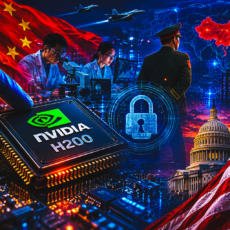
Why ten years? Because litigation takes that long anyway. Because legal uncertainty chills investment. Because our geopolitical rivals are not waiting. Chinese firms, by nearly all credible accounts, train their models on everything they can find, including American content, regardless of copyright. Enforcement in China is a fiction. Legal recourse against Chinese actors is a fantasy. If American firms must spend the next decade battling lawsuits from authors’ guilds while their Chinese counterparts feast on the full banquet of global culture, the result is not justice. It is unilateral disarmament.
This is not conjecture. The Foundation for American Innovation warns that AI lawsuits against American firms could cause “irreparable harm” to the US technology sector, with cascading effects on economic growth, military readiness, and global influence. The logic is simple: if models are only as good as their training data, and our adversaries face no restrictions on theirs, we lose by default.
Critics will ask whether this proposal amounts to government-sanctioned theft. It does not. The fair use doctrine, long a staple of American copyright law, exists precisely to allow for transformative uses of protected works. Courts have held that digitizing books to enable search is fair use. They have upheld the right to text and data mine for research. An LLM trained on a newspaper article is no more a substitute for that article than a student writing a paper after reading it. The knowledge is internalized, transformed, recombined, not reproduced.
Moreover, the courts themselves are not settled on the matter. The New York Times’ lawsuit against OpenAI is still pending. Scholars are divided. The Copyright Office has released ambiguous, cautionary guidance, but nothing with the force of law. Amid this uncertainty, the rational course is not to slam on the brakes but to keep the road open while we build the guardrails.
The proposed ten-year grace period would function precisely as such a bridge. It would affirm that training models on publicly available data is provisionally lawful. It would provide space for courts, scholars, and Congress itself to refine the doctrine, to assess actual harms (rather than speculative ones), and to craft durable solutions, including compensation schemes if needed.
Some will argue that this hands too much power to technology firms. But it is power of a particular kind: the power to learn. We do not punish students for reading without licensing each page. Nor do we force universities to obtain permission to teach from every journal article cited in a lecture. We recognize that learning is an inherently generative act, not a consumptive one. When we forget this distinction, we mistake education for expropriation.
And let us not kid ourselves: the real power imbalance is not between AI firms and novelists, but between free nations and authoritarian ones. China does not recognize Western copyrights in any meaningful sense. It trains its models on English-language news, on YouTube videos, on our academic papers and Wikipedia entries. If we sabotage our own developers while Beijing cheers theirs on, the result will not be stronger protection for American creators. It will be a future where Chinese AIs outperform ours, not because they are better engineered, but because they are better fed.
In such a context, clinging to maximalist copyright enforcement becomes not a defense of rights, but an act of strategic folly. It is the equivalent of sending our Olympic athletes to compete barefoot because we are still arguing over who owns the patent to running shoes.
There are, of course, legitimate concerns. Creators fear that AI systems trained on their work will mimic their style, will cannibalize their markets, will devalue their labor. These fears deserve to be heard. But they do not require us to criminalize learning. The proper focus is on outputs, not inputs. If a model spits out a copyrighted paragraph verbatim, that is a problem. If it produces a new paragraph influenced by hundreds of sources, that is called knowledge.
Fortunately, output safeguards exist. Companies can and do implement filters to prevent verbatim replication. Models can be audited, prompts tracked, and outputs reviewed. The training process, however, must remain open if the outputs are to improve. Starving models of data is no path to ethical AI. It is a path to useless AI, or worse, foreign-dominated AI.
The Constitution tasks Congress with promoting the progress of science and the useful arts. Copyright exists to serve that end, not to thwart it. As technology evolves, so must our understanding of what constitutes progress. Today, the frontier of knowledge is being mapped by machines that read. We can either help them read wisely, or tell them to avert their eyes while China reads everything in sight.
A temporary safe harbor is not a radical departure. It is the least disruptive course available. It protects the national interest while respecting the legitimate claims of authors. It gives Congress time to build a long-term framework that balances innovation with compensation. And it signals to the world that the US intends not merely to participate in the AI revolution, but to lead it.
If you enjoy my work, please consider subscribing: https://x.com/amuse.
Sponsored by the John Milton Freedom Foundation, a nonprofit dedicated to helping independent journalists overcome formidable challenges in today’s media landscape and bring crucial stories to you.
READ NEXT: Israel Poised To Strike — Target Reportedly Nuclear





















How can we deter CCP from AI
See new movie MI Final Recoking & Entinity AI device
See New Mission Impossible movie, AI is Big issue in theme
& 2001
Colussus The Forbin Project
Demon Seed
THX 1138
Minority Report
All use AI