
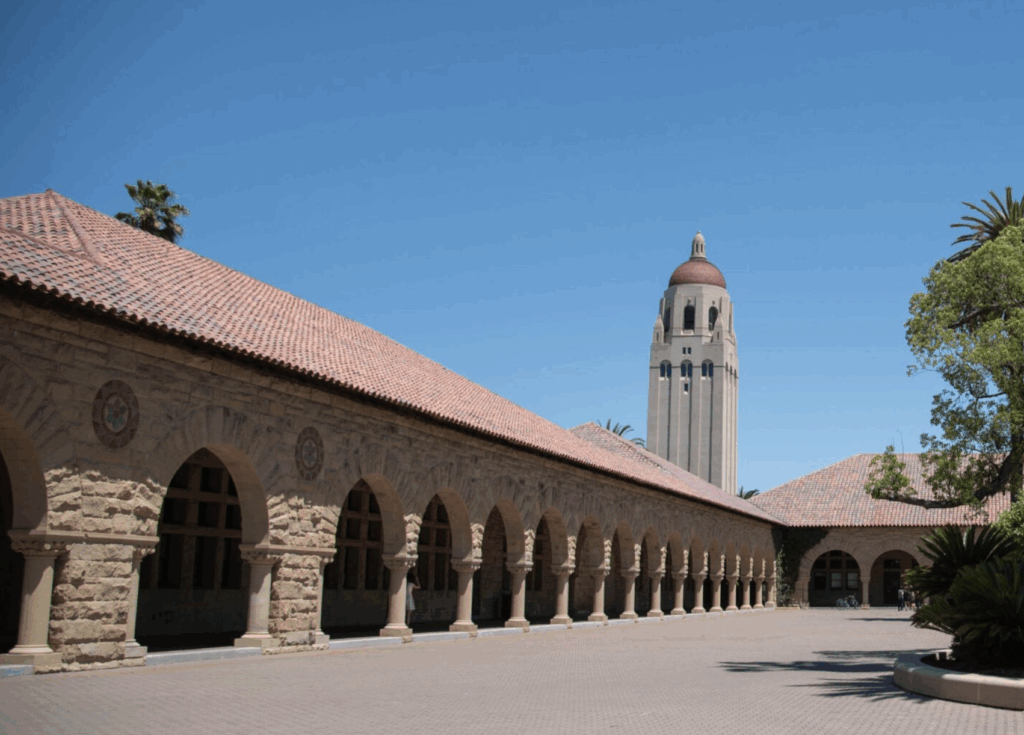
There is something grotesque in the quietude with which our political and academic class has met the increasingly clear signs that a foreign adversary, with the ambition and resources to supplant the United States as the world’s leading power, has been operating intelligence assets inside one of our most prestigious research institutions. It is not a vague threat. It is not a hypothetical. It is documented fact: China has been using both the carrot and the stick to turn students and scholars at Stanford University into unwitting, semi-witting, and in some cases witting participants in espionage operations.
The current evidence is so overwhelming that to ignore it is to participate in a dangerous self-delusion. The Stanford Review’s May 2025 investigation provides the most complete portrait to date of what intelligence officials have long hinted at: that the Chinese Communist Party, through its security services and consular arms, is running a sophisticated influence and intelligence-gathering operation in the heart of Silicon Valley. It is not hyperbole to say that Stanford, with its access to artificial intelligence, biotechnology, advanced computing, and military-adjacent research, is ground zero for a foreign campaign to extract American intellectual property at scale.
To understand the scope of this campaign, one must begin with the principle of “non-traditional collectors,” a term of art used by US intelligence to describe foreign students, visiting scholars, and ostensibly civilian academics who are tasked with collecting information not by formal espionage training but by academic proximity. The Chinese National Intelligence Law of 2017 requires that all Chinese nationals, regardless of where they reside, assist Chinese intelligence operations upon request. This creates a climate in which thousands of Chinese students in the US, many of them at Stanford, exist under a coercive legal obligation to spy if called upon.
Critics may balk at this suggestion, worrying that it paints with too broad a brush. But the issue is not one of guilt by nationality. It is one of legal and political reality. As long as the Chinese state maintains laws compelling its citizens to act as extraterritorial intelligence assets, any national security policy worth the name must treat such connections as presumptively compromised, unless proven otherwise.
Some students are offered inducements: prestigious jobs back home, fast-tracked funding, the implicit promise of access to China’s booming tech sector. Others are reminded that family members back home can be visited by police at any time. This is not rumor. It is the documented testimony of professors, students, and counterintelligence officers who have seen it firsthand.
The story of Chen Song, a Stanford-affiliated researcher and People’s Liberation Army officer embedded in a neurology lab, is not an outlier but a representative case. Song lied about her military ties, destroyed evidence, and sent detailed updates on US research to Chinese contacts. When caught, she attempted to cover her tracks, but the damage had been done. How many others are in her position but remain undetected?
Beyond the individual level, there is the broader framework of United Front work, which uses student organizations, cultural centers, and even music festivals as platforms to project Chinese influence and to monitor the diaspora. Stanford’s Chinese Students and Scholars Association, though publicly distancing itself from the Chinese consulate, has hosted events featuring PRC diplomats and allegedly coordinated activities with consular guidance. These are not trivial cultural exchanges. They are, at best, mechanisms of soft power, and at worst, quiet tools of ideological enforcement.
So what is to be done? Here we must resist the pathologies of contemporary academic debate. There is no need for racialized scapegoating, nor any call to paint all Chinese students with a broad brush. Many are victims in this saga, caught between the hope of Western freedom and the hard leash of an authoritarian state. The United States has a moral obligation to protect them too.
But we cannot do so while allowing the Ministry of State Security to recruit on our campuses. The first duty of a sovereign nation is to defend itself. That includes its intellectual assets and research institutions. As things stand, we are not defending Stanford; we are leaving it exposed. And by extension, we are leaving the country exposed.
The Trump administration, through the newly appointed team including John Ratcliffe at CIA and Tulsi Gabbard as Director of National Intelligence, must lead a policy reset. It is time to audit all Chinese-funded scholarships, pause high-risk visa categories, and expand FBI counterintelligence presence at research institutions like Stanford. It may also be time, if coercive practices cannot be curtailed, to consider a temporary moratorium on student visas from the PRC until a new framework can be established that does not compromise American national security.
This would not be unprecedented. The United States denied visas to Soviet nationals during the Cold War when security concerns demanded it. China today, by any honest accounting, is a more formidable adversary, operating with a larger economy, deeper technological ambition, and a far more sophisticated influence apparatus.
To continue allowing the Chinese Communist Party to operate with impunity in our academic institutions is to invite strategic defeat. One does not allow the fox to build a den in the henhouse simply because some hens might object to the implication. We are dealing with a regime that has openly declared its intent to surpass the US in military, technological, and economic power by 2049. And we are letting it do so using the crown jewels of our own university system.
Stanford, for all its prestige, cannot police this threat on its own. The incentives are too perverse. Administrators do not want donor controversies. Faculty do not want funding interruptions. The Department of Justice and the FBI must step in, not only to identify active threats but to create a climate in which espionage, coercion, and intellectual theft are simply not tolerated. If American students are being surveilled in their own classrooms, if American research is being stolen from our laboratories, and if foreign operatives are using J-1 visas to embed in US institutions, the matter is no longer academic. It is a national security emergency.
The Biden administration shut down the China Initiative because it became politically inconvenient. The Trump administration must now restore it in a form that is both effective and insulated from the distractions of campus politics. Let the facts speak. Let the evidence guide. And let Congress act accordingly.
We owe it to the students at Stanford who came here to learn, not to be monitored. We owe it to the professors who deserve to research without fear of espionage. And we owe it to the country, whose security and prosperity depend on keeping the engines of American innovation from becoming the supply chain of a rival superpower.
If you enjoy my work, please consider subscribing: https://x.com/amuse.
Sponsored by the John Milton Freedom Foundation, a nonprofit dedicated to helping independent journalists overcome formidable challenges in today’s media landscape and bring crucial stories to you.
READ NEXT: Trump Says New Peace Talks Are Ready To Begin















Deport all Communist Chinese from the USA!
Deport ALL communists, and Marxists. And while we’re at it, inform the United Nations they have 48 hrs to reserve their flights back to their home countries. Then level the building and replace it with a memorial that celebrates freedom and liberty, otherwise known as the Constitutional Republic of the USA.