

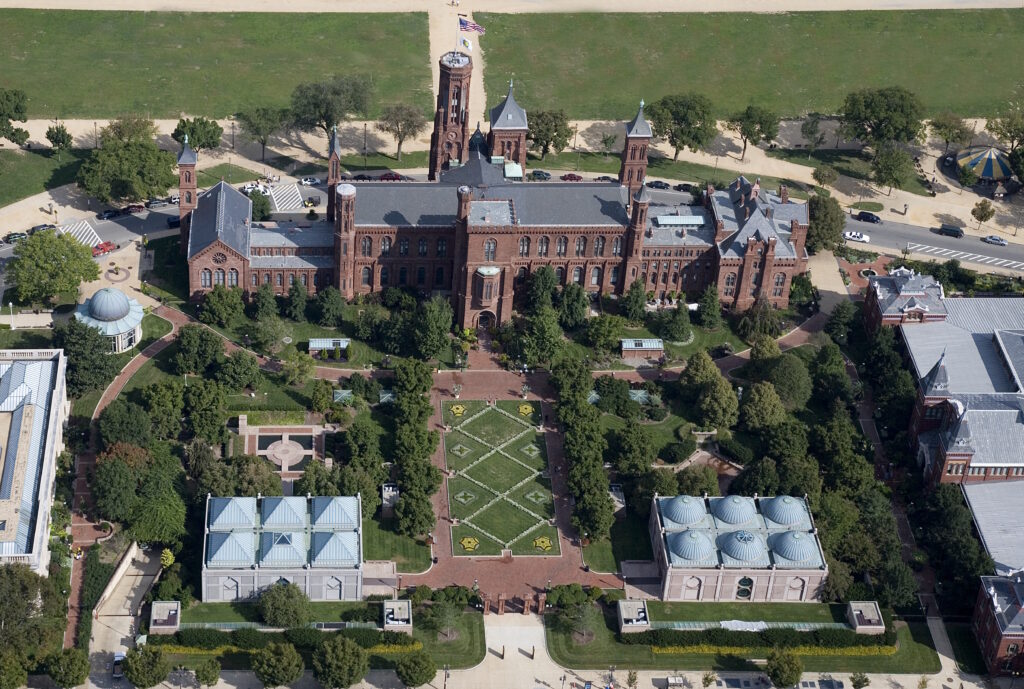
For centuries museums were conceived as temples of knowledge, designed to elevate rather than diminish the human spirit. They were not intended as confessionals where nations recite their sins but as monuments that inspire citizens with humanity’s achievements. In the United States, the Smithsonian Institution embodied this mission from its founding in 1846. Chartered by Congress to promote civic education and preserve heritage, it sought to foster pride in national accomplishments. Its exhibits traditionally celebrated invention, leadership, and artistry, presenting America as a country of ingenuity and hope. When visitors beheld the Apollo 11 capsule at the Air and Space Museum, they encountered not only an artifact of science but also a symbol of a nation that could reach the moon.
This celebratory purpose fit seamlessly with the ethos of the 19th and 20th centuries. World’s fairs, international expositions, and national museums displayed the high points of civilization: the Eiffel Tower in 1889, the electrification of Chicago in 1893, and countless technological marvels that showed progress was real and shared. These events and institutions were not naïve; they knew history had darkness. Yet they chose to emphasize progress, understanding that the role of cultural institutions is to inspire confidence, not despair.
In recent decades, however, museums in Washington, DC and elsewhere have veered from this mission. Most have become dominated by critical theories that insist history must be told primarily as a record of oppression. Curators now routinely emphasize slavery, racism, colonialism, and inequity, often in places where such themes were peripheral at best. What had been designed as sanctuaries of achievement have increasingly become shrines to grievance. This is not accidental. Museum leaders openly speak of using exhibitions to advance social justice agendas. Lonnie Bunch, the current Smithsonian Secretary, has said the Smithsonian must act as the nation’s “great legitimizer” of issues like race and climate change. This is advocacy, not preservation.
The results are evident. A new Benjamin Franklin exhibit at the National Museum of American History devotes significant space to speculation that enslaved people may have assisted Franklin in his experiments, despite scant evidence. Portraits of Washington and Jefferson prominently highlight their slaveholding, while their world-historic contributions are, in many cases, ignored. At the National Museum of the American Indian, Washington is labeled a “town destroyer,” but little mention is made of Native tribes’ own practice of slavery. The asymmetry is unmistakable. Failings of America’s founders are amplified, while uncomfortable facts about other groups are suppressed. The effect is a one-sided indictment of America itself.
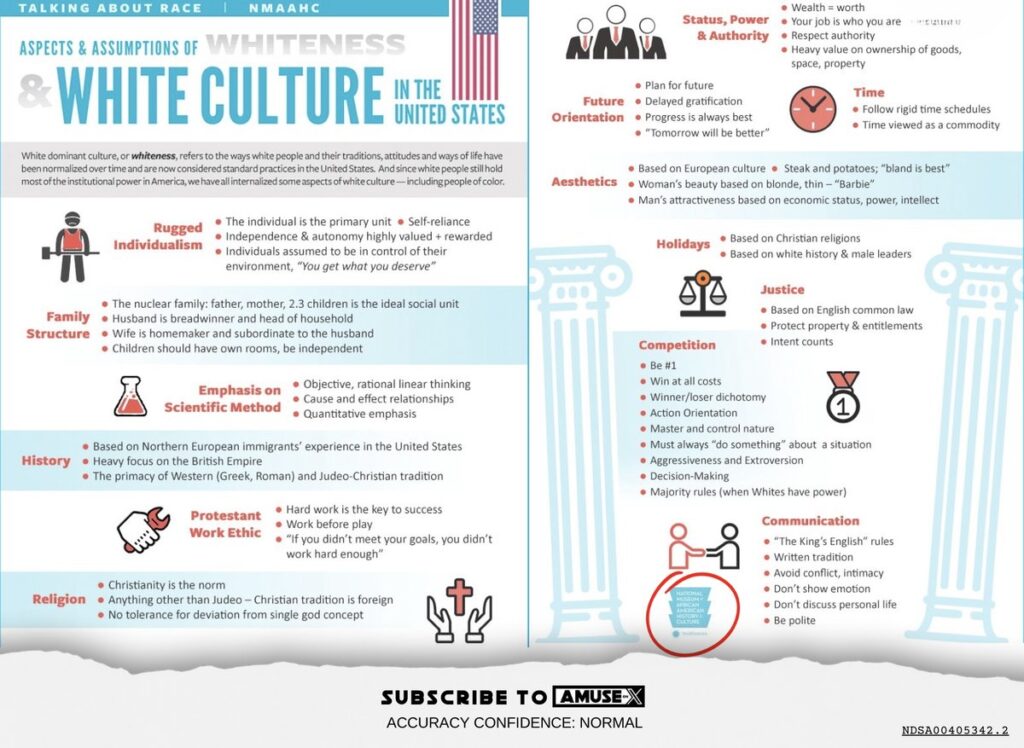
This transformation accelerated with the rise of the 1619 Project, which the Smithsonian openly embraced. The project, launched in 2019 by New York Times journalist Nikole Hannah-Jones, sought to reframe American history by making slavery and its legacy central to the national narrative. Instead of celebrating 1776 as the nation’s founding, the 1619 Project claimed that 1619, the year African slaves arrived in Virginia, was the true beginning of America. The Smithsonian lent its prestige to this interpretation, with its staff contributing artifacts and essays. By reframing the founding in terms of slavery rather than liberty, the Smithsonian shifted its role from educator to activist. Critics across the political spectrum, including leading historians such as Gordon Wood, James McPherson, and Sean Wilentz, charged that the 1619 Project is filled with factual errors, especially its false assertions that the American Revolution was fought primarily to preserve slavery. The message to visitors, especially young ones, is unmistakable: America is defined not by freedom, ingenuity, or progress but by oppression. The cumulative effect is to weaken civic pride and unity.
This is why President Trump’s intervention is so important. In August 2025, he announced a formal review of Smithsonian exhibits, rightly observing that “everything discussed is how horrible our Country is, how bad Slavery was, nothing about Success, nothing about Brightness, nothing about the Future.” Critics claim he is erasing history. That is false. Trump does not seek to eliminate slavery from museum exhibits. He seeks to restore balance, to ensure that slavery is not the only story told. America’s achievements are immense, and to present them as secondary footnotes to oppression is to betray the founding purpose of our museums.
Consider what has been sidelined. The Smithsonian once made national heroes and achievements central: the Wright brothers’ flyer, the Star-Spangled Banner, Edison’s inventions, portraits of explorers and leaders. These are still displayed, but increasingly surrounded by disclaimers about oppression. The narrative thread has shifted from celebration to condemnation. A visitor leaves not inspired but chastened, not proud but guilty. This is not education, it is indoctrination.
The damage extends beyond history. Museums shape national identity. If children are told their country is fundamentally corrupt, they will not fight to preserve it. If visitors are taught that every invention rests on oppression, they will not believe in progress. A nation that loses pride in its past forfeits its future. Trump understands this. His review aims to protect the Smithsonian from becoming another Montpelier, where James Madison’s Constitution is overshadowed by exhibits encouraging children to role-play as slave masters. Museums that erase greatness to highlight grievance betray their mission.
Restoring balance does not mean ignoring faults. Slavery was real and evil. Segregation was shameful. But the story of America is also the story of emancipation, of constitutional amendment, of civil rights movements that succeeded in expanding liberty. It is the story of a country that defeated fascism, reached the moon, and built an economy that has lifted millions from poverty. It is also the story of a nation where in no other country are people, particularly women and minorities, as free and as prosperous. America has been the greatest force for good in human history. To present only the crimes and not the triumphs is distortion. To balance both is honesty. Trump is right to insist that our museums return to honesty.
The Smithsonian is now expanding with new museums for Latinos and women. Without Trump’s intervention, these too will focus on grievances rather than contributions. A preview exhibit for the Latino Museum painted Hispanics primarily as victims of American oppression, while plans for the Women’s Museum hint at framing America as a patriarchal tyranny. If these trajectories continue, the Smithsonian will become less a national treasure and more a national scold. Trump’s review offers a chance to correct course before the damage is irreparable.
Museums should uplift. They should celebrate what mankind has achieved, from the pyramids to the moon landing, from Beethoven to Louis Armstrong. They should remind us that civilization is worth defending. America’s museums were once temples of achievement. They can be again, if we have the courage to resist ideological capture. Trump’s call for reform is not censorship. It is restoration. It is a defense of the very purpose for which our museums were built.
If you enjoy my work, please consider subscribing: https://x.com/amuse.
Sponsored by the John Milton Freedom Foundation, a nonprofit dedicated to helping independent journalists overcome formidable challenges in today’s media landscape and bring crucial stories to you.
READ NEXT: Shock Ruling Threatens Trump’s Beloved Project
















Have since day 1 under Obama
ALL VALUES IN AND OF AMERICA DEMAND TRUTH AS THE HALLMARK. WE MUST NEVER FEAR TRUTH – IT STARTS WITH GOD AND MAKES ALL PEOPLE FREE. NEVER FEAR TO FIGHT LIES SINCE TRUTH WILL HOLD FOR ALL ETERNITY. THERE ARE TRUTHS WHICH INCLUDE ACTS WE CAN BE ASHAMED OF BUT OUR FOUNDAMENTAL STAND IS TRUTH.MICHAEL DONNELLY
If I am not mistaken, many years ago, when I was in grade school, we used to start the day with the Pledge of Allegiance. I think it is high time that our country brought that back in as a mandate for all public grade schools and include the reference to God. If you wish to opt out, our nation should opt to removing these people to the country of their choice.
Show Historical Truth A-Z
Slave revolts
Ex slaves combat KKK.
Slave revolts in the 1800s
Lone black astronaut , Project Mercury
& More
Museums shouldn’t be teaching Americans to despise their own country; that’s the job public education has been doing for decades.