

Via Nosi by Michael P. D’Alessandro M.D. and The National Interest by James Holmes
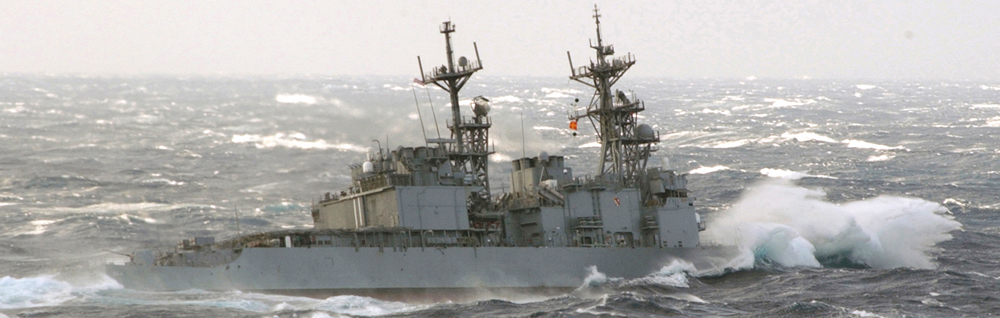
National Interest – James Holmes writes that lawmakers are contemplating is a letter of marque that bestows the authority to execute an open-ended maritime campaign under supervision from Washington.
What lawmakers are contemplating is a letter of marque that bestows the authority to execute an open-ended maritime campaign under supervision from Washington.
Inquired Utah Sen. Mike Lee on X in late January, “What are letters of marque and reprisal and how could they be used to weaken drug cartels?” Lee then went on to answer his own question, stating the case for empowering private citizens to make war on cartels running drugs into the United States. Then, on February 13, Tennessee Rep. Tim Burchett introduced the “Cartel Marque and Reprisal Reauthorization Act of 2025” in the House, in concert with Indiana Rep. Mark Messmer.
Endorsed.
The draft legislation would authorize the U.S. president to issue letters to private shipowners, private military and security firms, or both, to go after substate malefactors. As the draft language puts it, “Cartels present an unusual and extraordinary threat to national security and foreign policy of the United States.” Such is the gravity of the threat, Reps. Burchett and Messmer remind fellow lawmakers, that President Donald Trump designated a group of cartels as “foreign terrorist organizations” as one of his first acts as president.
To meet this menace, they say, Congress should authorize and request that the chief executive “commission, under officially issued letters of marque and reprisal,” as many “privately armed and equipped persons and entities” as needed, “with suitable instructions to the leaders thereof, to employ all means reasonably necessary to seize outside the geographic boundaries of the United States and its territories the person and property of any individual whom the President determines is a member of a cartel, a member of a cartel-linked organization, or a conspirator associated with a cartel or a cartel-linked organization” guilty of aggression against the United States.
Privateering Has a Constitutional Basis
Despite what pundits with more attitude than historical literacy may say, lawmakers are not concocting some “crazy plan” to unleash “pirates” against drug traffickers. Pirates are private predators out for private gain. Privateers are not. As the draft legislation indicates, they operate with state sanction—and under state oversight.
University of Tennessee law professor and blogger Glenn Reynolds reviews the proposed turn to private counternarcotics and counterterrorism from a legal perspective over at Substack and the New York Post. As Professor Reynolds points out, the U.S. Constitution (Article I, Section 8) expressly grants the president the power “to declare War, grant Letters of Marque and Reprisal, and make Rules concerning Captures on Land and Water” (my italics). There’s that phrase, prominent in the supreme law of the land.
So much for government-sponsored lawlessness.
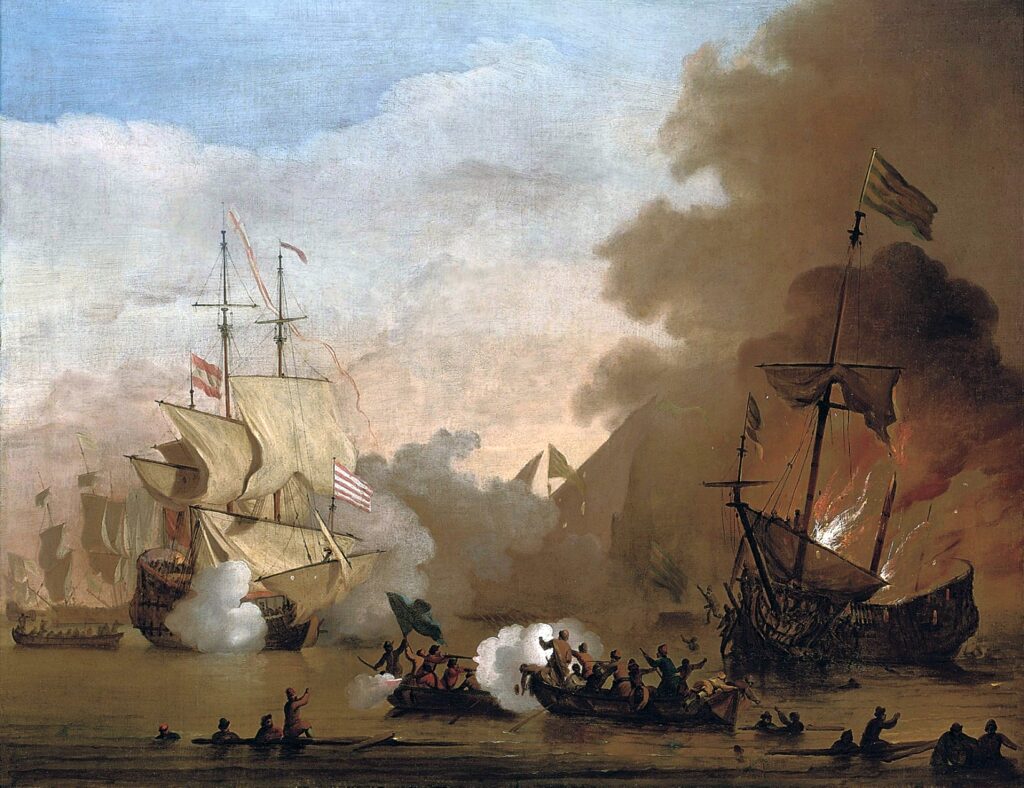
Because of its historical legacy, we typically associate the practice with naval warfare. Privateering took place on the high seas in the past. It’s an artifact of the age of sail, when governments commissioned private ship crews to prey on hostile shipping—chiefly mercantile shipping, as few privateers could afford ships and armaments able to outgun purpose-built men of war. But nothing in the Constitution forbids terrestrial operations under this construct. Nor do the founders confine the concept to geophysical operating domains. For instance, Reynolds notes that from time to time proponents have espoused “cyber letters of marque and reprisal” for going after hackers. That may or may not be wise, but it doesn’t appear unlawful.
Under a letter of marque and reprisal, observes Reynolds, private actors wage war against designated foes, state or nonstate. However, the phrase “marque and reprisal” conflates two different types of conduct. Under a letter of marque, the privateer brings a capture to a prize court and, if the court deems the seizure lawful, the crew gets to sell it, keep the proceeds, and pursue fresh prizes for as long as the government wants to keep up the campaign. Privateering pays. A letter of reprisal confers more limited authority: it allows a private citizen or citizens wronged by a foreign entity to seize enough property from that entity to make up their losses. At that point, their government charter ceases.
In reality, then, what lawmakers are contemplating is a letter of marque that bestows the authority to execute an open-ended maritime campaign under supervision from Washington DC.
So much for the legal rationale. What about the practical dimension? Let’s speculate about what modern-day privateering would look like in strategic and operational terms. Erik Prince, founder of the private security company Blackwater, held forth on X following Senator Lee’s commentary. Prince ascribed the U.S. government’s troubles dealing with cartels to bureaucratic stovepipes. In other words, the drug-running problem spans many different U.S. military commands and nonmilitary agencies—imposing coordination nightmares on overseers of counterdrug operations. And cartel chieftains can turn administrative seams, overlaps, and ambiguities within the U.S. government to their advantage.
If China is the source of the makings of fentanyl, that’s a problem for the U.S. Indo-Pacific Command to grapple with. Once those ingredients make their way to Mexico to be combined and shipped north, the problem falls to the U.S. Northern Command, which fortifies homeland security. If drug trafficking happened to spill into the Caribbean Sea, it would involve the U.S. Southern Command, charged as it is with overseeing those waters. And, of course, a variety of domestic law enforcement agencies—federal, state, and local—have a significant part to play in combating the narcotics trade.
So responsibility is segregated vertically by geographic region, and horizontally by levels of government. That makes for a wicked coordination problem. Owing to unwieldy bureaucracy, opines Prince, “only a private organization is going to be able to move . . . decisively with the flexibility required” to counter nimble cartels and their backers.
How a Privateer Fleet Might Work
Suppose Prince is right about the decisiveness and flexibility of private raiders, as I believe he is, and suppose Congress and the presidency proceed with the Cartel Marque and Reprisal Reauthorization Act. Three practical questions: who will the privateers be, where will they deploy, and where will they get logistical support without which the effort cannot flourish?
First, the makeup of the fleet. Erik Prince favors a well-resourced security firm or firms, and he may well be right about that. Few private individuals—outside the superrich who park corvette-sized yachts in Newport Harbor in summertime—boast the resources to go privateering. Nevertheless, it is worth pondering who else would go out raiding. History—including U.S. history—abounds with precedent for lone raiders. The war on cartels could see the same. Who knows who might step forward.
Vessels from private security companies could operate in wolfpacks, or they could spread out on individual patrols in an effort to maximize coverage of sea lanes frequented by lawbreakers. Presumably they could mount a cohesive effort. But if letters of marque attracted disparate elements to the cause, how different units in a polyglot fleet communicated, handled command-and-control arrangements, and acquired and shared detection, tracking, and targeting information would prove pivotal to success. Otherwise the effort could fragment.
Privateers might operate with more dexterity than government agencies. They are not exempt from operational realities that confront all combatants, public or private.
Second, deployment patterns. Chances are, commanders of a privateering fleet would prefer to deploy close to Mexican ports, assailing cartel craft as soon as they put to sea. Alternatively, privateers could hug American shores in hopes of intercepting drug-runners at the last minute, before they haul their lethal wares ashore. That’s because the sea is a featureless plain. The Gulf and Pacific are largely vacant bodies of water. Traffickers can chart countless courses across that plain from ports of origin to their destinations. That makes them extraordinarily elusive.
Nor is this a new problem for those policing the sea. Naval theorists such as Julian S. Corbett make the commonsense point that it’s tough to apprehend hostile shipping except at three points in its voyage: at its port of origin, its destination, or what Corbett calls “focal areas” in midcourse. Focal areas are straits or narrow seas through which a vessel must transit to cross from body of water A into body of water B. They make navigation predictable at key junctures. Corbett’s basic logic remains mostly valid despite advances in surveillance technology.
As noted before, alas, sea lanes traversed by drug-runners are largely unencumbered by landmasses that channel navigation into foreseeable pathways. Unfortunately for would-be privateers, there are no real chokepoints for them to guard between Mexico and the United States, on either the Gulf or Pacific coasts. Nor will any likely fleet of privateers field enough vessels to police all possible routes leading to American shorelines. After all, even the largest fleet is tiny by comparison with regional oceans and seas. That leaves origins and destinations as the likeliest places to station ships.
In other words, privateer commanders will have to be choosy about where they position fleet units. They should go on offense if practical. Forward deployment would offer the best prospects of success. Deployment close to home, a defensive strategy, would prove far more demanding and asset-intensive while offering fewer prospects for success.
That’s because coastal defense would involve staging a form of perimeter defense along the lengthy, distended, permeable perimeter that is the U.S. seacoast. And perimeter defense is hard. Mathematicians define a line as infinitely many points arranged in sequence. That conveys the essence of the challenge. Defending a line implies monitoring what’s happening at every one of those points and ensuring the defense is strong enough, everywhere, to repel efforts to puncture the line.
Best to venture out and halt the scourge at its source. Go straight at ‘em!
And third, logistics. This is a nettlesome function for any fighting force. Privateering during the age of sail differed radically from our machine age in one key respect. Sail-driven warships and merchantmen operated at a marked disadvantage relative to ships equipped with mechanical propulsion. They couldn’t defy the elements, steering against fickle winds. Nor could they move when becalmed. Mother Nature could always withhold their “fuel.” That’s why they’re mostly pleasure craft these days.
On the other hand, wind-powered craft boasted one tremendous advantage in seakeeping ability: they never needed refueling. They only needed to return to port on occasion to restock food, water, and other stores to sustain the crew. And because they were rudimentary from a naval-architecture standpoint, crews could make repairs at sea short of major overhauls. They could ride the waves for extended intervals.
Even today, in fact, sailing ships could render good service as auxiliaries to a privateer fleet. They could never give chase, but they could loiter off shorelines where cartels operate, performing surveillance duty and alerting the fleet as fugitive craft approached. They would be doubly capable if outfitted with aerial and surface drones to extend their gaze over the horizon. Sailing vessels would need some fuel to run generators and auxiliary engines. But their need for resupply would be minimal, while their on-station time as pickets would be substantial.
Of necessity, though, today’s raiders would depend mostly on modern motor vessels. Only they boast the speed and maneuverability to run down cartel craft. In turn, the powered segment of the privateering fleet would demand the full range of fuel, spare parts—the lot. Modern ships demand constant care and resupply. Fuel threatens to curtail voyages by vessels powered by diesel engines or gas turbines, as presumably privateer ships would be. They would be tethered to friendly harbors rather than free to roam Gulf or Pacific waters or prowl off distant shores.
As historian Alfred Thayer Mahan wrote over a century ago, powered craft bereft of logistical support are like “land birds” unable to venture far from shore.
If a private military and security company or companies cannot provide ample resupply—whether from motherships, chartered tankers, barges anchored at strategic points, or some other inventive arrangement—privateers will find themselves compelled to loiter in patrol grounds close to home, in hopes of catching drug-runners at the last instant. In that case, logistics, rather than strategy or operational design, will have dictated a defensive, passive posture.
Which would court failure.
If raiders enjoy ready sources of replenishment at sea, on the other hand, they can go on offense, assuming a forward, venturesome stance near ports where cartels lurk. In short, logistics could determine where privateers deploy—and shape their chances of quelling the narcotics bane.
The best defense is a good offense.
Read in its entirety at nationalinterest.org.
READ NEXT: Caught Red-Handed! Disgusting UN Judge Finally Faces Justice
















I love the idea, but where would the privateers get their small warships and supporting armed aircraft? Would it be from the naval and air force boneyards? They would need to receive extensive financial funding from the Federal government. And I assume they would get ongoing intel support from the alphabet agencies.
Such a force would inevitably encroach foreign territorial boundaries. So I suspect these mostly Latin American countries would demand a lot of money from us to allow it.
Whatever works !
I spotted a technical error in the article. It states:
As Professor Reynolds points out, the U.S. Constitution (Article I, Section 8) expressly grants the president the power “to declare War, grant Letters of Marque and Reprisal, and make Rules concerning Captures on Land and Water” (my italics).
The correct wording is that Congress is granted those powers.