




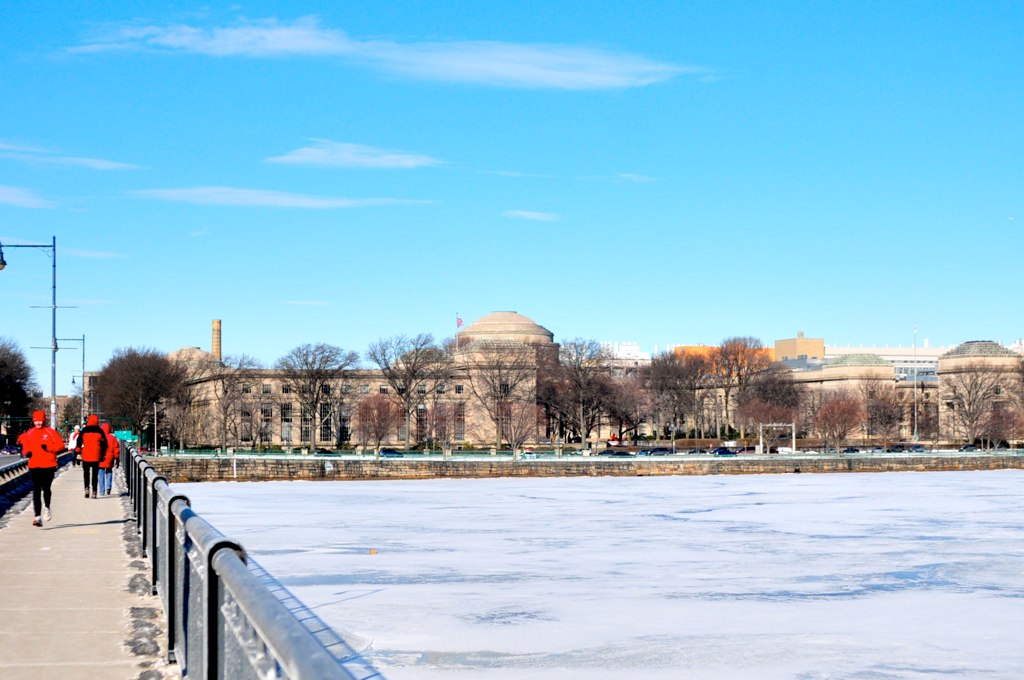
The Massachusetts Institute of Technology just became the first university to say “no” to the Trump administration’s “Compact for Academic Excellence in Higher Education.”
The news, announced Friday, comes after the administration sent a 10-point memo to nine prominent U.S. universities (including MIT, Brown, Dartmouth, USC, University of Texas, Virginia, etc.) offering preferential access to federal funding in exchange for adopting a slate of institutional reforms.
The reforms include mandates such as:
- Banning consideration of race, sex, and political views in admissions, scholarships, and faculty hiring
- Freezing tuition for U.S. students for five years
- Capping undergraduate international enrollment at 15%
- Restructuring or eliminating academic departments that “purposefully punish, belittle, or spark violence against conservative ideas”
- Requiring use of standardized tests (e.g. SAT/ACT) for undergrad admissions
- Imposing restrictions on governance, ideological “neutrality,” and oversight over campus politics and free speech
The compact frames itself as voluntary, but non-signatories could lose priority or access to certain federal research or grant funding.
MIT President Sally Kornbluth wrote to Education Secretary Linda McMahon rejecting the compact, stating that many of MIT’s practices already “meet or exceed” the proposed standards.
However, she argued that parts of the compact are inconsistent with academic freedom and institutional autonomy — in particular, the requirement to limit international students, freeze tuition, enforce ideological mandates, and restrict academic governance.
She emphasized that MIT’s view is that scientific funding and excellence should be based on merit, not political conditions.
MIT is, as of now, the first institution to formally state rejection.
Kornbluth framed the issue in terms of principle. “In our view, America’s leadership in science and innovation depends on independent thinking and open competition for excellence,” she wrote. “In that free marketplace of ideas, the people of MIT gladly compete with the very best, without preferences. Therefore, with respect, we cannot support the proposed approach to addressing the issues facing higher education.”
Many observers see the compact as an attempt by the Trump administration to gain ideological leverage over higher education, essentially conditioning funding on alignment with conservative policy goals.
Critics argue that this could undermine academic freedom, institutional independence, and First Amendment protections.
Some university leaders have expressed caution, saying they will review the compact carefully; others have already publicly signaled opposition.
In certain states, like California, political leaders have threatened to withdraw state funding from universities that agree to such federal conditions.
This is a breaking news story. Please check back for updates.
READ NEXT: Red State Draws Line In The Sand Against Growing Anti-American Movement




















I lived in Mass a few years ago never again.