
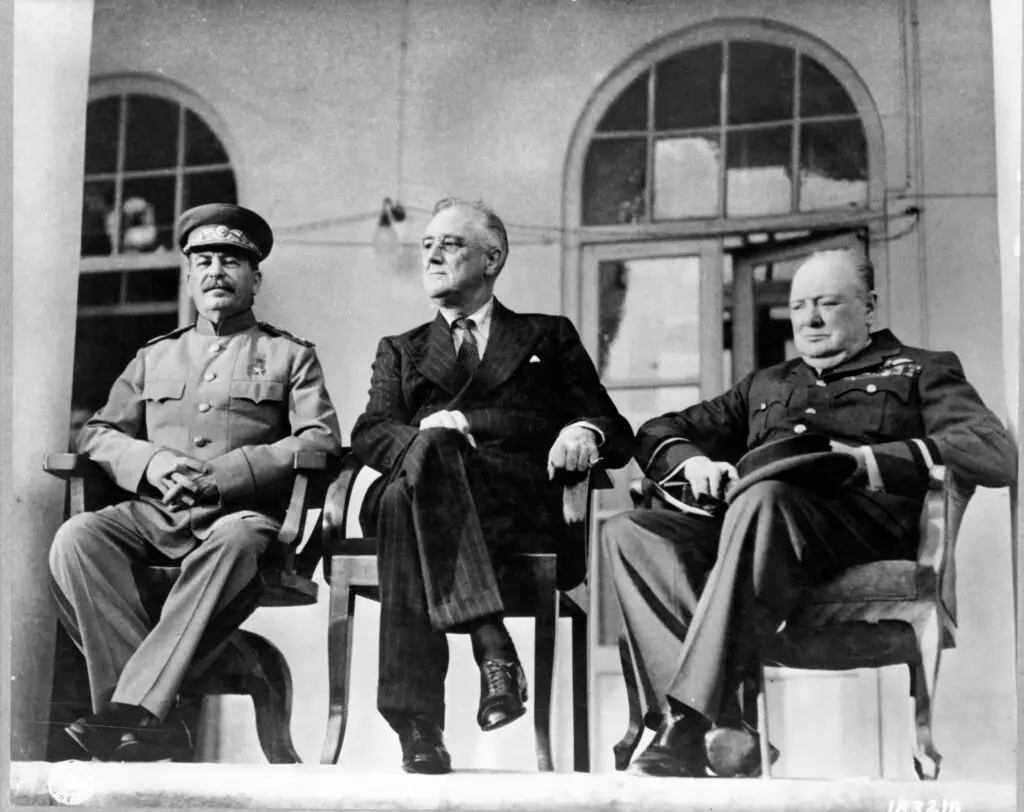
Veteran Democratic strategist James Carville defended supporting Maine Senate candidate Graham Platner despite a wave of scandals, comparing the political calculation to Franklin Roosevelt and Winston Churchill allying with Soviet dictator Joseph Stalin during World War II.
Carville argued that Democrats should focus on defeating Republican Sen. Susan Collins rather than abandoning Platner over his controversies, even as the presumptive Democratic nominee faces allegations involving extramarital sexting, offensive past comments, and a tattoo resembling Nazi SS imagery.
“He’s f—ed up, he’s been shot at, he’s a veteran, he’s a little bit weird, he’s an oysterman,” Carville said, praising Platner’s military background while casting him as an imperfect but useful candidate.
Carville contrasted Platner with Collins, whom he mocked as politically weak and ineffective.
“Then his opponent, I can hardly say her name without the utter contempt dripping, Susan Collins, whose spine reminds me of a blueberry jelly from Maine,” Carville said.
The longtime Democratic operative argued that the country is facing a political emergency and that Democrats should prioritize winning over moral discomfort with Platner’s personal baggage.
“If you believe, as I do, that the country is in imminent peril — I mean imminent peril — who is most likely to slow this criminal in charge?” Carville asked. “Susan ‘Blueberry Jelly’ Collins, or five degrees off dead center Graham Platner? I think it’s Graham Platner.”
Carville then invoked the wartime alliance between Western democracies and Stalin’s Soviet Union to justify backing a flawed political figure in pursuit of a larger strategic goal.
“And you know if Franklin Roosevelt and Winston Churchill could work with Joseph Stalin — who, by the way, well, I’ll tell you this, he was a bad guy, a really bad guy, alright — then I can overlook a tattoo,” Carville said.
Platner has denied knowing the symbol’s Nazi association and has since covered the tattoo.
One of his ex-girlfriends, Lyndsey Fifield, told The New York Times that Platner had joked about the tattoo and that members of his military unit chose it because they viewed themselves as a “death unit” and “killers,” an account that appears to challenge Platner’s claim that he was unaware of its meaning.
Fifield also accused Platner of physical misconduct, which he has denied.
“There are some allegations in this piece that I just want to be kind of unequivocal about, are simply not true,” Platner told MS NOW host Chris Hayes. “Anything alleging physicality, anything alleging that I knew what my tattoo was, these are the statements of someone who’s politically motivated.”
Carville dismissed the misconduct allegations as insufficient to abandon the candidate unless criminal charges are filed.
“If you committed a crime, then charge him. And then throw his a– in jail,” Carville said. “But so far, we have none of that!”
Carville also suggested that Platner’s military service could bring needed perspective to the Senate, particularly when lawmakers consider sending Americans into combat.
“Maybe they need to look at this guy before they start sending young people off to fight wars and see what the consequence of it is,” he said.
While Carville admitted that the tattoo controversy is “very troubling,” he insisted that Democrats must remain focused on winning.
“The tattoo is very troubling,” he said, “but f—, people get drunk.”
The remarks underscore the growing tension across the political spectrum over candidate quality and electability. Maine is widely viewed as one of Democrats’ best opportunities to flip a Republican-held Senate seat, and Collins remains one of the GOP’s most vulnerable incumbents.
But Platner’s mounting controversies have complicated that opportunity, forcing Democrats to decide whether defeating Collins is worth rallying behind a candidate who has already drawn widespread criticism.
READ NEXT: ‘The View’ Turns On Graham Platner Amid Sexting Scandal & Growing Controversies