

Modern crime reporting suffers from a basic failure of candor. Major news organizations routinely omit the race of criminal suspects, not as an occasional judgment call, but as a patterned editorial practice. This omission is not neutral. It is not evenly applied. And it has had corrosive consequences for public understanding, democratic debate, and trust in the press.
The likelihood of legacy media discussing a murderer’s race depends on the murderer’s race.
— The Rabbit Hole (@TheRabbitHole) December 15, 2025
This is why BLM martyrs like George Floyd get endless coverage while cases like Iryna Zarutska are forgotten.
The bias is clear: pic.twitter.com/I7dNK48aLo
The justification offered for this practice is familiar and increasingly hollow. We are told that omitting race prevents stereotyping, reduces prejudice, and serves a higher moral purpose. But whatever plausibility that claim once had has been overtaken by reality. In practice, the omission of suspect race now functions as a form of narrative control. It filters facts to protect preferred conclusions and suppress inconvenient ones.
What matters is not what editors say they are trying to do, but what their choices actually accomplish. And what they accomplish is distortion.
The rule governing race in crime reporting is no longer relevance. It is asymmetry. When a suspect is white, race is almost always disclosed, sometimes prominently, sometimes immediately. When a suspect is Black, Hispanic, or Asian, race is frequently omitted, delayed, or buried deep in the article. The same fact is treated as either essential context or dangerous information, depending entirely on who the suspect is. This double standard is not subtle. Readers see it. They respond to it. And they draw conclusions from it.
Consider how the practice works in real time. Police release a suspect description. Height, weight, age, clothing, and vehicle are all reported. Race disappears. The omission is not explained. It is simply enforced. The resulting article pretends to be comprehensive while silently withholding a basic identifying fact. This is not restraint. It is misdirection.
The consequences are measurable. A large review of nearly 1,100 homicide articles from 2019 to 2021 across six major U.S. newspapers shows that race is mentioned far more often when the suspect is white than when the suspect is non-white. Roughly 23% of articles identify race for white suspects, compared with about 6% for Black suspects and 3% for Hispanic suspects. Depending on the period measured, major newspapers mention a suspect’s race roughly 4X more often when the suspect is white than when the suspect is Black, and as much as 7X more often after 2020.
Even when race is mentioned, how it is mentioned matters. In articles about white offenders, race is often disclosed early, sometimes in the opening paragraphs. In articles about Black offenders, race is frequently delayed until late in the story, if it appears at all. The editorial signal is unmistakable. One set of facts is foregrounded. The other is treated as radioactive. This is not an accident. It is a policy outcome.
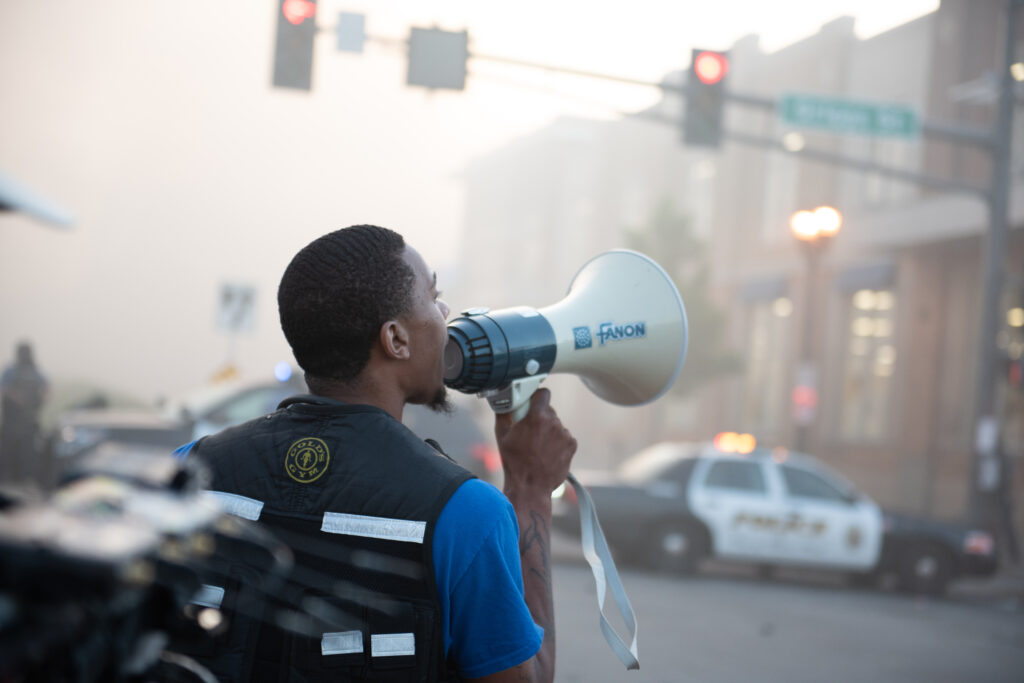
The disparity widened dramatically after 2020. In the wake of George Floyd’s death, many newsrooms, led in no small part by The New York Times, made a more consequential decision. Truth-telling was subordinated to outcome-seeking. Objectivity was treated as an obstacle, and moral clarity was redefined to mean advancing a preferred conclusion. Editors did not merely rethink crime coverage; they embraced an ends-justify-the-means ethic in which misleading omissions were judged acceptable if they produced what editors believed to be a better social outcome. The Floyd coverage became emblematic. Facts that complicated the preferred narrative, including widely reported details about his prior criminal history and toxicology, were minimized or contextualized away, while he was elevated into a moral symbol. The purpose was not to inform neutrally but to mobilize attention toward a predetermined claim that American policing is fundamentally racist. The downstream impact was not abstract. The coverage helped ignite nationwide race riots and mass looting, producing billions of dollars in property damage, dozens of deaths, and hundreds of arrests. Cities burned, small businesses were destroyed, and public order collapsed in places far removed from Minneapolis. These consequences were not unforeseeable. They were the predictable result of substituting narrative activation for factual restraint.
Despite the results of the misleading George Floyd reporting, mentions of race for white suspects increased sharply. Mentions for Black suspects declined. By 2021, articles were roughly 7X more likely to identify the race of a white suspect than a Black one. This is not about protecting readers from bias. It is about steering them toward a particular worldview.
The harms of this practice are severe. The first is epistemic. Readers receive a distorted picture of crime. When race is repeatedly highlighted in stories about white offenders and repeatedly omitted elsewhere, readers infer that violent crime is disproportionately committed by white men. That inference is false. It is encouraged by editorial design and reinforced by the media’s drive‑by treatment of mass shootings. Most Americans are never told that Black perpetrators, both in absolute terms, are responsible for a very large share, in the high‑40% range, of mass shootings in the U.S. If Black males represent roughly 6% of the population, then an observed share of about 45%–49% corresponds to roughly 750%–817% of what would be expected under population‑proportional involvement. By systematically suppressing suspect race, news coverage conceals these realities, ensuring that readers draw conclusions opposite to the underlying data.
This distortion affects public debate. Claims about mass shootings, public safety, and social threat are shaped by what people see and do not see. When key facts are systematically withheld, discussions become detached from reality. Policies are debated on false premises. Moral blame is misallocated. It also warps elite rhetoric. Congressional figures such as Rep. Ilhan Omar have repeatedly claimed that white men are the most dangerous people in America, a conclusion made plausible only by selective reporting that highlights white perpetrators while suppressing contrary data. In reality, the empirical risk profile of violence bears no resemblance to this claim, and it renders such rhetoric less credible than warnings routinely issued about MS-13, TdA members, or illegal alien criminals. The gap between political assertion and underlying reality is widened, not narrowed, by the press’s decision to withhold basic facts.
The second harm is institutional. Trust collapses. Readers are not blind to patterns. Many now assume that when race is missing, it is missing deliberately. This assumption circulates widely on 𝕏 and other platforms. It exists because the omission is consistent enough to be predictive. Once readers believe that facts are being hidden for ideological reasons, journalism loses its authority. At that point, articles are no longer read as reports, but as curated narratives. Skepticism hardens into cynicism.
The third harm is social. Selective omission does not reduce racial tension. It inflames it. Silence invites speculation. Speculation breeds resentment. By treating race as forbidden information, the press increases its symbolic power and ensures it will be discussed elsewhere, often in cruder and more hostile forms. Defenders of the practice argue that the alternative is worse. They warn of stereotyping and misuse. But this argument collapses under scrutiny. A fact does not become less true because it can be misused. Journalism is not absolved of its obligation to report reality simply because reality is uncomfortable.
The problem is not that race appears in crime reporting. The problem is that it appears selectively. A consistent rule could be defended. An asymmetric one cannot. By omitting suspect race only when it threatens preferred narratives, news organizations have abandoned neutrality while claiming it. They have replaced relevance with politics and transparency with paternalism.
This is not a minor ethical lapse. It is a systemic failure. It distorts public understanding, corrodes trust, and undermines the press’s claim to seriousness. Journalism does not serve justice by hiding facts. It serves justice by telling the truth plainly and consistently. If race is irrelevant, it should be omitted always. If it is relevant, it should be reported without fear or favoritism.
The evidence is clear. The current practice has failed. It misleads readers, damages credibility, and deepens polarization. A press that insists on managing perception rather than reporting reality forfeits its role as a truth-seeking institution. If journalism wishes to regain trust, it must abandon selective silence. Candor is not optional. It is the price of credibility.
If you enjoy my work, please subscribe: https://x.com/amuse.
Sponsored by the John Milton Freedom Foundation, a nonprofit dedicated to helping independent journalists overcome formidable challenges in today’s media landscape and bring crucial stories to you.
READ NEXT: Erika Kirk Reveals Controversial Decision Following Tragedy
















They often omit religion, and frequently political orientation. It’s all about pushing a viewpoint.
Never show audience size for Dem events rarely anyplace.
Rigged games
Can guess size by clapping for speaker at event if large crowd
I find myself thinking that if race IS NOT mentioned then it must be Black, and that is unfair!
This article was spot on. If the perps are white one can quickly find out usually within the report. No mention of race, go to the local area news and look for a police report and mug shot especially if they are over 18. However so many youths in gangs commit crimes that it’s very difficult to ascertain race. This is a black problem that the black race needs to step up and address. Not covering it only exacerbates the issue.
Of course! There is no such thing as an accurate and unbiased government report. It is all processed through the strainer of Public Correctness, and Public Correctness itself is strained through what is believed to be Political Popularity. Does anyone out there really believe that the Unemployment Rate as reported by the government is 4.6% …, that 95.4% of Americans are gainfully employed??? Once all the conditions, all the exceptions, all the adjustments, all the exclusions, all the additions, all the caveats, etc., etc., etc. are imposed, the information one is left with is worthless …, except to sell false impressions.
Another factor in crime reporting by race is the fact that very often obvious south-of-the-border criminals are recorded as white by the law enforcent agencies, even though many are darker than blacks. If you look at the mugshots you’d see that about 75% of those arrested look nothing like white by any measure but are recorded and reported as white.
That’s the way the Racist Democrats want to distort the truth in crimes