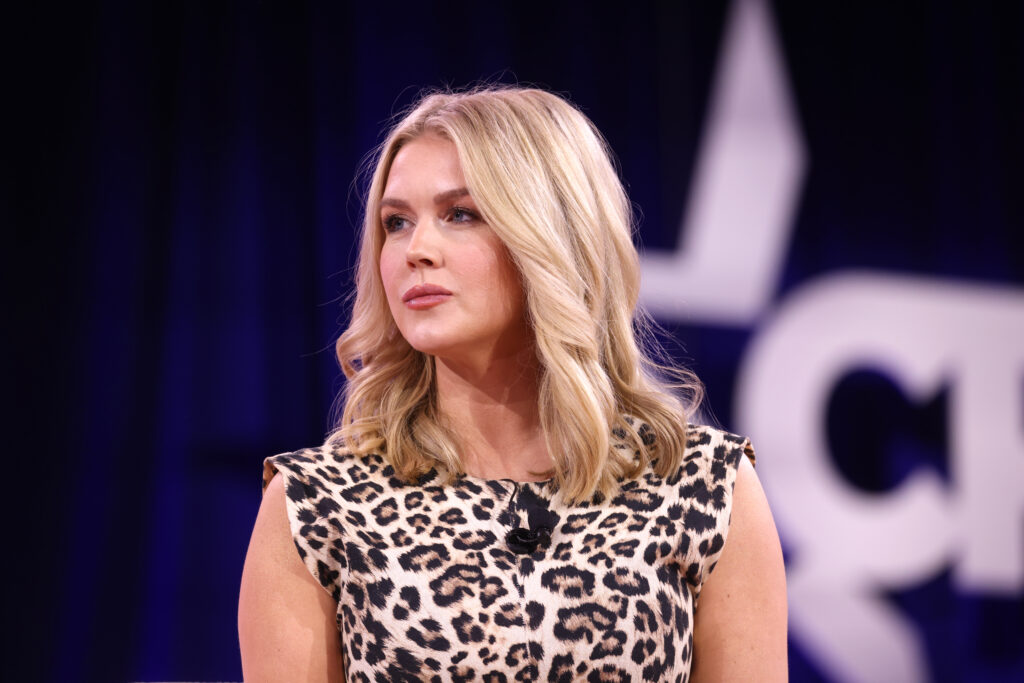
White House Press Secretary Karoline Leavitt said Wednesday that her office implemented new restrictions on media access to Upper Press after catching reporters secretly recording conversations and loitering near sensitive information.
For decades, credentialed journalists were allowed to freely enter the Upper Press area—located just steps from the press secretary’s office—without an appointment. That changed this week, with the White House now requiring reporters to schedule visits in advance.
In an interview with Pod Force One host Miranda Devine, Leavitt said the new policy was driven by repeated incidents involving reporters attempting to monitor internal conversations.
“We have taken over the responsibilities of the National Security Council, thanks to the restructuring of Secretary Rubio when he became National Security Advisor. Steven Cheung and I are responsible for all communications matters, including national security,” Leavitt said. “And so we felt it became very inappropriate for reporters to be loitering around sensitive information in our offices. And we did, unfortunately, catch some unruly reporters recording us without our permission, listening in on conversations, eavesdropping.”
Staff Meetings Targeted
Leavitt said reporters began hovering outside the area during the administration’s daily staff meetings.
“We’d have staff meetings in the morning. Some of the reporters started to pick up on that, and we’d walk out and they would be out there trying to listen,” she said. “You know, if Secretary Rubio or the chief want to come in and brief us on something, you’d have reporters out there heckling them, and it just became an inappropriate work environment.”
Reporters are still allowed to visit the Upper Press office, but only by appointment.
“And so now they’re welcome up here, but it’s by appointment only. And so a lot of the outrage you’re seeing on Twitter, they’ve told us privately they’re OK with how this system works so long as they can still have appointments with me to understand the news of the day,” Leavitt added.
Leavitt: Access Continues, But Security Comes First
Leavitt said she remains committed to making herself available despite increasingly sensitive duties and a schedule that often keeps her in Oval Office meetings.
“I give them as much time as I possibly can on my schedule. Although a lot of my time is with the president and in the Oval Office and sitting in on meetings,” she said. “So I try to devote as much time as I can to the press because that is my job, right? The basic duty is for me to work with the press and make sure they’re telling the truth out there.”
White House Communications Director Steven Cheung Defends Restrictions
Assistant to the President and White House Director of Communications Steven Cheung echoed Leavitt’s explanation, saying the restrictions were introduced only after serious security concerns emerged.
Cheung said the White House discovered journalists secretly recording both video and audio within the West Wing and even entering restricted rooms to eavesdrop on private meetings.
“Press still has access to lower press where the press team sits and can answer all inquiries. Reporters can make appointments to see us in our offices,” Cheung wrote.
READ NEXT: Trump Selects Karoline Leavitt As Youngest Press Sec Ever