Good morning. Federal prosecutors shared that a California mayor secretly worked for the Chinese government. The companies behind the catastrophic Baltimore bridge collapse are now facing criminal charges. And in Washington, the financial burden of the Iran War is rising sharply as inflation and fuel prices squeeze Americans at home.
Together, the stories reflect growing concerns about national security, institutional oversight, and the economic strain of global conflict.
California Mayor Resigns After Admitting Role as Chinese Agent
A political scandal unfolding in Southern California is intensifying concerns about Chinese influence operations inside American institutions after former Arcadia Mayor Eileen Wang agreed to plead guilty to acting as an illegal agent of the Chinese government.
Federal prosecutors say Wang worked directly with officials tied to the People’s Republic of China between 2020 and 2022, helping disseminate pro-Beijing propaganda through a Chinese-language media platform operating in the United States. According to court filings, Wang coordinated messaging with Chinese officials, published state-approved narratives online, and distributed content defending Beijing against accusations of human rights abuses involving Uyghur Muslims in Xinjiang.
Prosecutors allege Wang repeatedly communicated with Chinese operatives linked to the country’s intelligence apparatus and referred to one official as “leader” while boasting about the reach of propaganda articles she helped circulate.
The Justice Department said Wang never disclosed her relationship with the Chinese government, a requirement under federal foreign-agent laws. The charge carries a possible prison sentence of up to 10 years.
Federal authorities framed the case as part of a broader effort by Beijing to cultivate influence inside local American politics, media, universities, and civic institutions.
The scandal has also revived scrutiny surrounding earlier allegations involving Eric Swalwell and suspected Chinese intelligence operative Christine Fang, commonly known as Fang Fang, whose outreach efforts toward California politicians became public in 2020.
Arcadia officials confirmed Wang resigned following the charges and insisted that there was no evidence city operations themselves had been compromised.
Still, the case is likely to intensify national debate over how deeply foreign governments may already be embedded within American political networks.
Criminal Charges Filed Over Baltimore Bridge Disaster
More than a year after the collapse of Baltimore’s Francis Scott Key Bridge shocked the country, federal prosecutors are now pursuing criminal charges against the foreign companies responsible for operating the cargo ship involved in the disaster.
The Justice Department announced indictments against Singapore-based Synergy Marine, India-based Synergy Maritime, and ship superintendent Radhakrishnan Karthik Nair in connection with the catastrophic March 2024 collision involving the container ship M/V Dali.
The collapse killed six construction workers and temporarily crippled operations at the Port of Baltimore, one of the East Coast’s most important shipping hubs.
According to prosecutors, investigators discovered the vessel suffered repeated electrical failures before striking one of the bridge’s primary support columns. Federal officials allege the companies knowingly operated the ship despite dangerous vulnerabilities and later concealed critical information from American authorities.
Prosecutors claim operators used an unconventional flushing pump to power the vessel’s generators — a setup investigators say could not automatically restart after a blackout.
The criminal case dramatically escalates legal fallout from one of the worst infrastructure disasters in recent American history. Federal officials estimate damages from the collapse have already reached roughly $5 billion, while rebuilding the bridge is expected to take years.
The disaster also reignited broader concerns about aging infrastructure, oversight of foreign-operated vessels in American waters, and whether critical transportation systems remain vulnerable to catastrophic failure.
Pentagon Says Iran War Costs Nearing $30 Billion
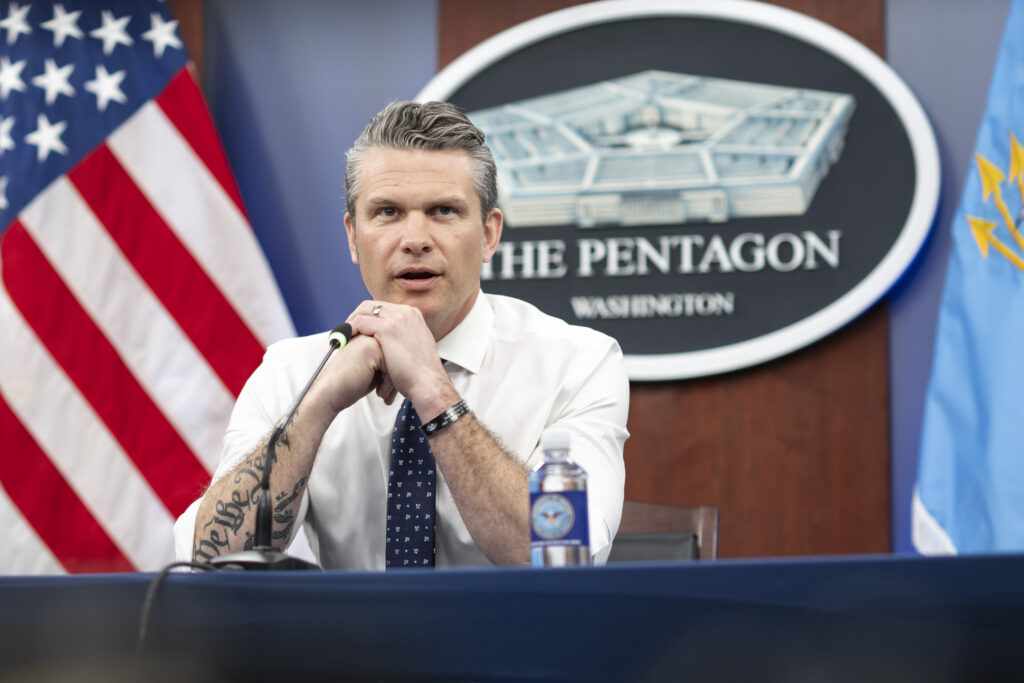
Meanwhile, the Pentagon revealed Tuesday that the cost of the ongoing Iran War has climbed to nearly $30 billion — with some internal estimates reportedly placing the true figure much higher.
During congressional testimony, Department of War Comptroller Jules W. Hurst III said operational expenses and equipment replacement costs have pushed total war spending to approximately $29 billion so far.
The updated figure marks an increase from the Pentagon’s April estimate of $25 billion. Other reports citing anonymous American officials suggest the eventual cost may already be approaching $50 billion.
The rising price tag comes as the conflict increasingly collides with domestic economic concerns. Inflation climbed to 3.8% annually in April, while national average gas prices rose above $4.50 per gallon, according to recent economic data.
Critics of the war argue the conflict is worsening financial pressure on American households already struggling with higher living costs.
A new CNN poll released Tuesday found that large majorities of Americans — including many Republicans — believe current administration policies have contributed to rising costs in their communities. The survey also showed weak public approval for the administration’s handling of inflation and fuel prices.
As debate intensifies in Washington, the Iran War is becoming not only a foreign policy issue, but an increasingly central economic and political challenge heading deeper into the 2026 election cycle.
The Bigger Picture
Whether confronting foreign influence campaigns, failures in infrastructure oversight, or the ballooning costs of military conflict abroad, federal and local officials alike are facing growing scrutiny over preparedness, accountability, and public trust.
READ NEXT: Ship That Collapsed Baltimore Bridge Had Troubled History