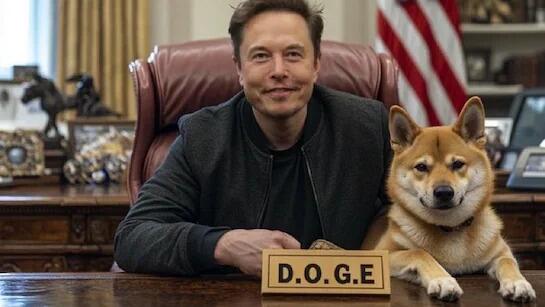
In a rare public rebuke of a Trump-backed initiative, tech billionaire Elon Musk expressed disappointment over the House’s narrow passage of the so-called “Big Beautiful Bill,” a sweeping spending package that encompasses much of Trump’s domestic agenda. Musk’s criticism, aired in an excerpt of a CBS interview released Tuesday, centers on what he sees as a contradiction between the bill’s ballooning fiscal footprint and the mission of his own government reform initiative, the Department of Government Efficiency (DOGE).
“I was disappointed to see the massive spending bill, frankly, which increases the deficit—not just decreases it—and undermines the work that the DOGE team is doing,” Musk told CBS.
The “Big Beautiful Bill,” narrowly passed by the House with just a one-vote margin, includes provisions central to Trump’s second-term platform: expanded tax cuts, stricter immigration enforcement, and regulatory rollbacks. But the bill’s size—estimated at nearly $4 trillion—has sparked backlash not just from Democrats, but also from fiscal conservatives and now, one of the Trump administration’s most prominent private-sector partners.
Musk, who launched DOGE with the bold promise of saving taxpayers $2 trillion by eliminating waste and redundancy in the federal bureaucracy, offered a blunt assessment: “I think a bill can be big, or it can be beautiful, but I don’t know if it can be both, in my personal opinion.”
Since its inception, the DOGE initiative has shuttered or gutted 11 federal agencies, resulting in the voluntary or incentivized departure of more than 250,000 federal workers. According to DOGE, the project has yielded $160 billion in savings thus far. However, independent analysis from the Penn Wharton Budget Model suggests that overall government spending has nonetheless continued to rise during Trump’s second term, driven largely by entitlement programs and large-scale infrastructure and defense investments.
That dissonance appears to be at the heart of Musk’s concern—particularly as Trump has continued to champion economic growth and border security policies that require substantial federal outlays.
Musk’s comments come as the Senate prepares to debate the future of the legislation. Senator Ron Johnson (R-WI), a close Trump ally and budget hawk, has voiced support for Musk’s efficiency-focused approach and is calling for deeper cuts in the final version of the bill.
Musk’s public disapproval may encourage fiscal conservatives to demand more aggressive cuts—or at minimum, delay Senate approval as lawmakers reexamine the bill’s long-term cost.
READ NEXT: The Price Of Patriotism: Elon Musk’s Costly Crusade Against Government Waste