






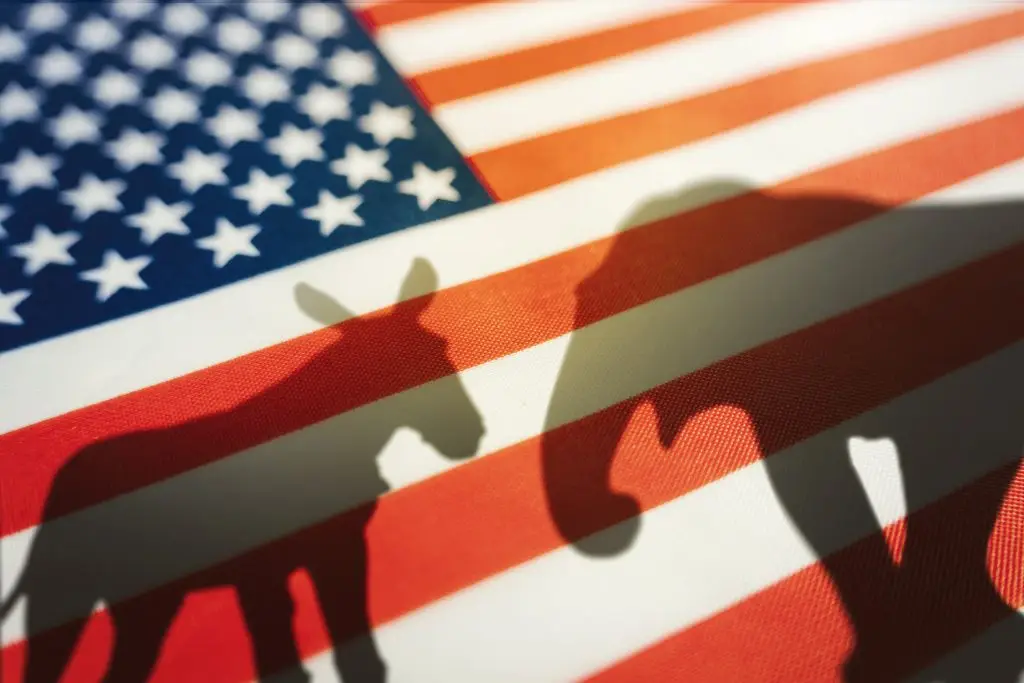
For the first time in Florida’s history, Republicans now outnumber Democrats in Miami-Dade County—long considered one of the bluest counties in the state and a Democrat stronghold for generations.
According to a report from Florida’s Voice, as of the most recent voter roll update, 464,370 Republicans are registered in Miami-Dade, compared to 440,790 Democrats. This shift marks a monumental political milestone—not only for the GOP in Florida but for the national conservative movement as well. With this change, 59 of Florida’s 67 counties are now majority Republican, underlining what has become an unmistakable red wave in the Sunshine State.
“Miami-Dade County has completed its off-year voter roll maintenance, and this morning, it shed 172,747 voters from its active rolls,” said Michael Pruser, Director of Data Science at Decision Desk HQ. “The change netted Republicans more than 38,000 voters compared to Democrats, and the county has now flipped to Republican by registration. Today marks Republicans’ first-ever lead in voter registration in Miami-Dade.”
Last week, the Florida Department of State confirmed the broader trend: 5,578,457 Floridians are now registered Republicans, compared to just 4,329,271 Democrats. That means Republicans have grown from 50.5% of Florida’s voter registration in 2021 to 56.3% in 2024—a swing of 5.8 percentage points in less than four years, all during a Democratic White House.
To put this into perspective: In 2021, Florida’s 14.5 million registered voters were evenly divided. At the time, Democrats actually led slightly in registration, with 5,290,465 Democrats to 5,185,744 Republicans, along with 3.8 million independents and smaller-party voters.
So, what changed?
Governor Ron DeSantis deserves much of the credit for Florida’s red resurgence. Under his leadership, the state rejected lockdown extremism, protected parental rights in education, advanced election integrity laws, and took a strong stand against left-wing cultural overreach. These moves didn’t just energize the base—they resonated with independents and disaffected Democrats, especially in places like Miami-Dade, where many Cuban, Venezuelan, and Colombian voters see echoes of the socialism they fled in today’s Democrat party.
The national implications of this shift are profound. President Donald Trump, who won Florida narrowly in both 2016 and 2020, dominated the state in 2024, winning by double digits and flipping historically blue counties like Miami-Dade and Palm Beach in the process. His victory in Florida was no longer about narrow margins or turnout miracles—it was the result of a fundamentally redrawn political map.
Miami-Dade’s flip isn’t just symbolic; it’s strategic. With over 1.4 million registered voters, it’s the most populous county in Florida. Turning it red is like flipping Pennsylvania’s Philadelphia County or California’s Los Angeles County—it signals a generational political realignment.
It also represents a broader trend: the Democratic Party’s collapse in key constituencies they once took for granted, including Hispanic voters, working-class communities, and legal immigrants who value faith, family, and freedom over ideological extremism.
While national Democrats double down on gender politics, open borders, and soft-on-crime policies, Republicans in Florida have focused on economic freedom, educational choice, public safety, and parental rights—and the voters have responded.
READ NEXT: Twice My Size’: Mace Reacts After Facing Teen Accused Of Issuing Death Threats























Victory