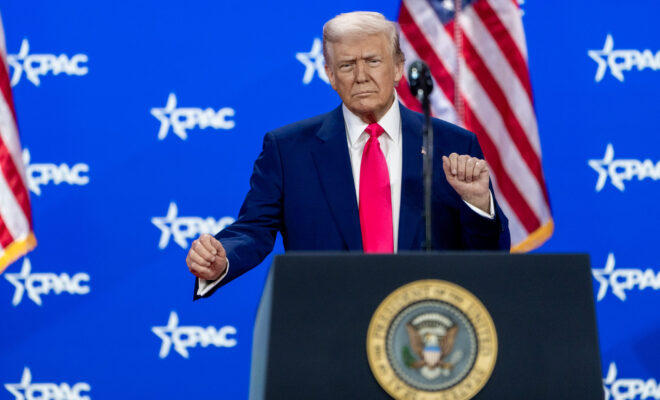





As Republicans gear up to consolidate their gains and Democrats strive to recover lost ground, the 2025 off-year elections are poised to offer a window into the nation’s political trajectory under President-elect Donald Trump. While these contests lack the grandeur of a presidential cycle, their outcomes will reveal how Trump’s leadership is resonating with voters and set the tone for battles ahead.
Here’s a closer look at the races that could redefine the political landscape.
GOP Eyes a Breakthrough in Blue New Jersey

New Jersey, long a Democratic stronghold, is emerging as fertile ground for Republican aspirations. In 2024, Trump slashed Biden’s 2020 margin from 16 points to just 6, energizing the GOP to reclaim the governor’s mansion.
With Governor Phil Murphy (D) term-limited, Republicans are seizing the opportunity. As The Hill reports, Republicans “smell blood in New Jersey,” and Trump’s expected involvement will only heighten the stakes:
“This is a prime opportunity for New Jersey Republicans to capitalize on President Trump’s strong performance in the state,” said New Jersey GOP strategist Alex Zdan. “We’ve got a really competitive field, but a competitive field can yield a great result.”
New Jersey has regularly been viewed as a solidly Democratic state in the modern political era, having last voted for a Republican presidential candidate in 1988 and last elected a Republican senator in the 1970s. But the state also has a bit of a maverick quality of electing Republicans to the governorship, and Republicans there saw some of the party’s largest improvements in November.
“In terms of the difference in the top-of-the-ticket performance from ‘20 to ‘24, New Jersey was one of the worst on the Democratic side,” said Democratic strategist Henry de Koninck, calling the swing “substantial.”
Part of the decline in Democratic votes across the state is turnout in northern counties near New York City. Hudson, Essex and Passaic counties have traditionally been Democratic strongholds where party chairs turn out hundreds of thousands of voters. The power of those county machines has declined over the last two election cycles
The race could serve as an early referendum on Trump’s presidency and test his ability to energize down-ballot candidates.
Control of the Wisconsin Supreme Court at Stake

Partisan control of the Wisconsin Supreme Court is at stake, as the retirement of liberal Justice Ann Walsh Bradley presents a rare opportunity for Republicans to shift the balance of power just two years after losing a 15-year conservative majority. Currently, liberals hold a narrow 4-3 majority on the court.
In April, voters will likely see liberal Dane County Circuit Judge Susan Crawford face off against conservative Waukesha County Circuit Judge Brad Schimel, a former Republican attorney general. Schimel’s track record of defending conservative policies underscores the high stakes for Republicans, as decisions on redistricting, abortion and election laws hang in the balance.
The Hill delves deeper into the critical partisan struggle:
Rusty Schultz, who’s worked for former Wisconsin Gov. Scott Walker (R) and Sen. Ron Johnson’s (R-Wis.) campaign, noted that “conservatives are starting to wake up to the importance of the court.”
“I think there was this, like, maybe sense of apprehension or just not necessarily understanding, because for so long, we pulled all three levers of government, right, and we kind of took that court for granted,” he explained. “And I think in 2023, after that loss, people started to wake up to that.”
Voters will be heading to the polls early next year to weigh which candidate should fill the vacancy on the state’s highest court. So far, Crawford and Schimel are the only declared candidates, though there could be late additions.
Testing Trump’s Coattails in Virginia

Virginia is shaping up as another critical battleground for Trump’s influence. After narrowing the gap in 2024, Republicans are eager to build on Governor Glenn Youngkin’s success. Limited to one term, Youngkin has endorsed Lt. Gov. Winsome Earle-Sears, who has embraced her role as a conservative standard-bearer.
Earle-Sears, in her bid to succeed Youngkin, has outlined her agenda to WTOP, emphasizing her commitment to Trump’s policies:
“After you’ve been out of politics and you’re on the sidelines … you realize you can either complain or you can get in the arena and fight,” Earle-Sears said during an interview with WTOP.
A Marine veteran who immigrated to the U.S. from Jamaica as a child, Earle-Sears got her start in elected office in 2001 when she stunned both parties by defeating a 10-term Democrat in an overwhelmingly blue district to become the first Black Republican woman elected to the House of Delegates.
She served just one term before deciding not to seek reelection.
Earle-Sears said the pandemic and the impact it had on society played a significant role in her desire to get back into politics.
A GOP win in the governor’s race would validate the party’s momentum under Trump, while a Democratic victory could signal weakening support for his agenda.
Virginia’s General Assembly: A GOP Firewall?
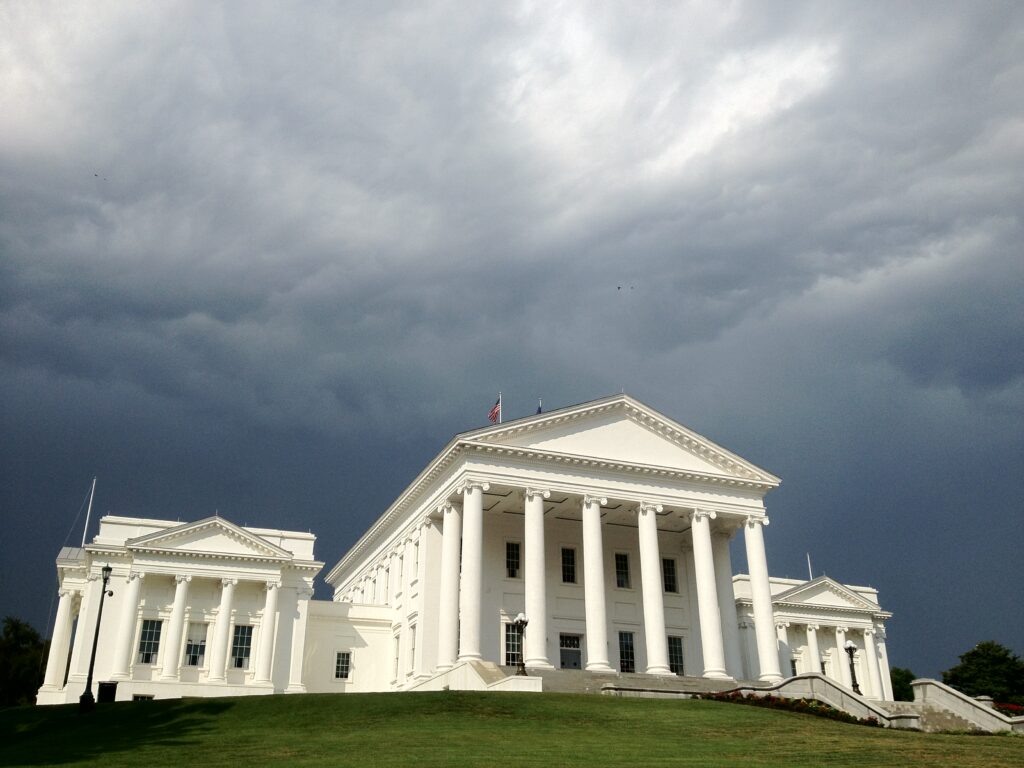
Beyond the governor’s mansion, Virginia’s state legislature is up for grabs. With Democrats clinging to a slim two-seat majority in both chambers, Republicans see an opportunity to flip control, buoyed by Trump’s improved statewide performance.
A Republican-controlled General Assembly would act as a check on Democratic initiatives, even if the governorship remains in Democratic hands. The outcome here could have far-reaching implications for policy battles in the state.
Corruption Scandals Shake New York City
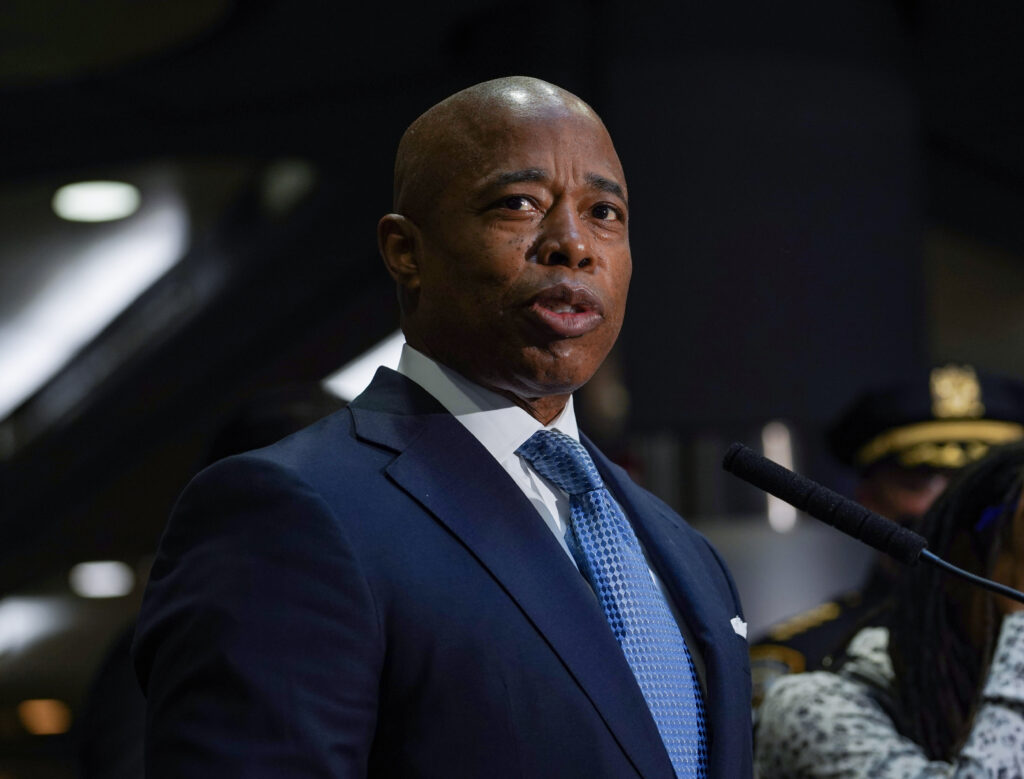
In New York City, Mayor Eric Adams is grappling with federal corruption charges and plummeting approval ratings, leaving his reelection prospects uncertain. A crowded field of Democrats, including Comptroller Brad Lander and State Senator Jessica Ramos, is already forming to challenge him. Speculation even surrounds former Governor Andrew Cuomo as a potential contender.
Historically, Republicans have struggled in New York City’s mayoral races. The last Republican to win was Michael Bloomberg, who secured victory in 2001 by running as a pragmatic, business-minded candidate during a time of heightened public focus on leadership following 9/11. His ability to appeal across party lines and leverage vast resources helped him break through in a predominantly Democratic electorate.
The 2025 off-year elections will be a proving ground for both parties, offering critical insights into Trump’s influence, Democratic resilience and the issues shaping America’s political future.
READ NEXT: Pro-Palestine Protesters Disrupt Macy’s Thanksgiving Parade