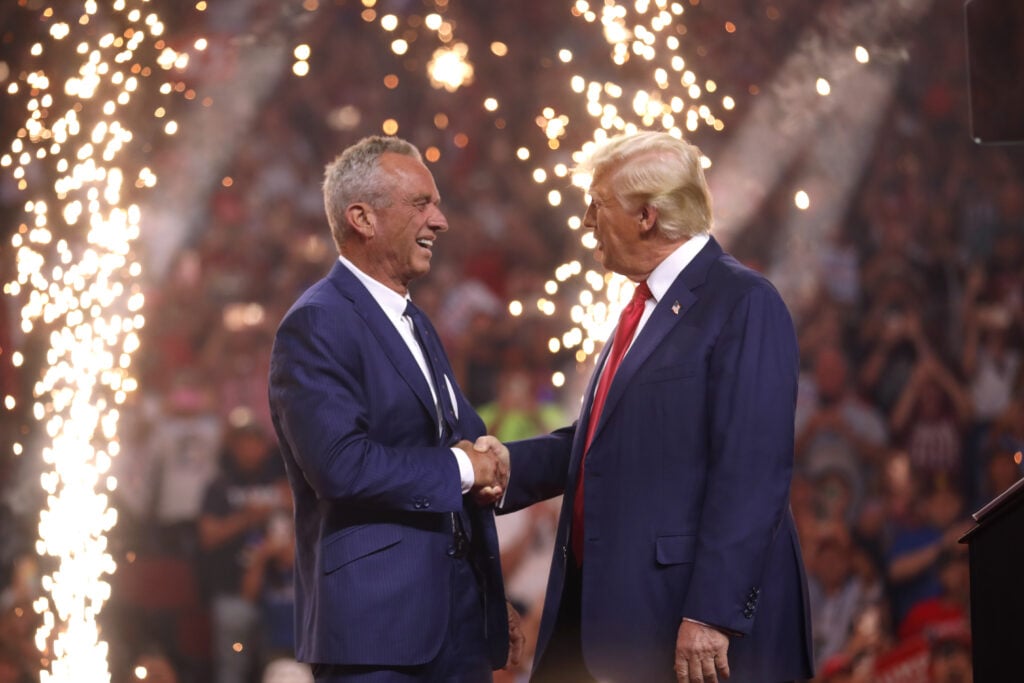
Health and Human Services Secretary Robert F. Kennedy Jr. has announced an ambitious and fast-moving initiative to investigate the root causes of autism, promising a transparent process and actionable findings within a year.
In an interview Thursday night with Fox News’s Sean Hannity, Kennedy emphasized that the research effort would be conducted openly, with rigorous scientific integrity and full public access to data, protocols, and findings. “We’re going to be very transparent in how we design the studies,” he said. “We’re going to be transparent about our protocols, about the data sets, and then every study will have to be replicated.”
According to Kennedy, the studies will be conducted by 15 top-tier research institutions across the United States, with early findings expected within six months and more conclusive results likely within a year. The research will cover a wide range of potential contributing factors, including food additives, environmental toxins, medications, pesticides, parental age, mold, and vaccines.
“We’re going to look at everything,” Kennedy said. “Genes do not cause epidemics. They can provide a vulnerability. You need an environmental toxin.”
Kennedy’s announcement comes on the heels of a new CDC report showing that 1 in every 31 children was diagnosed with autism in 2022, while previous studies showed less than 1 in 10,000 children being affected. While many public health experts attribute this surge to more inclusive diagnostic criteria and heightened awareness, Kennedy firmly disagrees.
His remarks — particularly those describing the severe and lifelong impact autism can have on individuals and families — sparked controversy. “These are kids who will never pay taxes, they’ll never hold a job, they’ll never play baseball, they’ll never write a poem, they’ll never go out on a date,” Kennedy said. “Many of them will never use a toilet unassisted. And we have to recognize we are doing this to our children.”
Critics accused Kennedy of stigmatizing the autistic community, though his remarks were clearly aimed at severe, nonverbal cases. A spokesperson for HHS later clarified that Kennedy’s comments were “emphasizing the need for increased research into environmental factors contributing to the rise in autism diagnoses, not to stigmatize individuals with autism or their families.”
Kennedy also warned of the looming economic burden autism poses to the country, predicting treatment and care will cost $1 trillion annually by the 2030s if current trends continue.
He has long been a vocal critic of corporate influence on public health and reiterated those concerns at the press conference, saying industries profiting from environmental toxins — whether in air, water, food, or pharmaceuticals — have a vested interest in downplaying the autism crisis.
Sen. Elizabeth Warren wrote on X (formerly Twitter), “I won’t share RFK Jr.’s lies about autism. It’s disgusting and dangerous. If he had a shred of decency, he would apologize and resign. Autistic people contribute every day to our nation’s greatness. To every kid with autism, I’m in this fight all the way for you.”
Gwen Walz, wife of failed vice presidential candidate Tim Walz, wrote, “This is deeply upsetting, especially coming from our nation’s highest-ranking health official. Individuals with autism are family, neighbors, students, and coworkers and they contribute more to this nation than this man ever will.”
User FischerKing64 wrote, “Autism means too many things to be a single condition. The original article from Asperger (which is available online) talked a lot about antisocial kids with some obsessions. This is very far from a man who will spend his entire life banging his head against the wall.”
User emilykmay wrote, “I am not an rfk jr fan but he just described children with what some would call ‘profound’ or ‘severe’ autism at a press conference and i have already seen so much pushback about how ‘their kid who has autism isn’t like that’ and like……….congratulations???? mine is.”
The press coverage has been overwhelmingly negative, mischaracterizing, and dismissive, with large publications that have developed reputations for left-wing bias publishing a flurry of articles that ignore what he actually said.
MSNBC published an op-ed by Eric Garcia titled ‘I’m autistic, and I work. And I made sure to let RFK Jr. know it.’ Variety published an article titled ‘My Son Is Not an Epidemic: A Father Responds to RFK Jr.’s Dangerous Autism Rhetoric.’ The New York Times published a piece titled ‘Kennedy Claimed Autism ‘Destroys’ Lives. Autistic People Disagree.’
But even the New York Times was forced to acknowledge the families with autistic members that appreciated Kennedy’s focus on the issue.
Not all parents of autistic children were outraged by the comments. Jackie Ceonzo, whose son is nonverbal and has seizures, said she was glad that Mr. Kennedy was talking about the challenges people with higher support needs and their families faced. “We are in a crisis with an aging population of parents caring for an aging group of kids who will require lifelong care,” she said.
Appointed to the post by President Donald Trump in February, the former independent presidential candidate and longtime environmental lawyer is now spearheading the administration’s Make America Healthy Again (MAHA) campaign. The initiative is a broad federal push to reduce chronic disease, cut harmful food additives, and reallocate resources from infectious disease prevention to long-term public health strategies — including a full-scale inquiry into the dramatic rise in autism diagnoses.
Kennedy stated that under Trump’s direction, the Department of Health and Human Services has launched a “massive testing and research effort” to get to the bottom of what’s driving autism rates, which the CDC now estimates affects nearly 5.5 million Americans.
“President Trump asked me to find out what’s causing it, and I’m approaching that agnostically,” Kennedy said. “We are going to have an answer and we’re going to have it very quickly.”
With bipartisan pressure mounting over America’s growing autism rates, Kennedy’s initiative signals a major federal shift toward environmental accountability and chronic disease prevention — and places one of the nation’s most controversial health advocates at the center of a high-stakes debate that could reshape how the country approaches public health.
READ NEXT: RFK Jr. Pushes For Whole Foods In Schools