







You’ve heard the expression: If it ain’t broke, don’t fix it. Well, the M16A1 wasn’t exactly broken, but after its performance during the Vietnam War, the United States Marine Corps requested the M16A1 be “fixed.” Perhaps it would be more correct to say modified.
By Robert A. Sadowski for The Armory Life
By 1979, when the request was received from the Corps, the modern battlefield was changing. Compared to the M14, the M16A1 was lightweight, had little recoil, and was easy to maneuver, but those who foresaw the changing nature of warfare identified a need to change. The range in the anticipated new era of wars would be longer — 300 to 400 meters. In Vietnam, the average engagement distance was a short 25 meters.
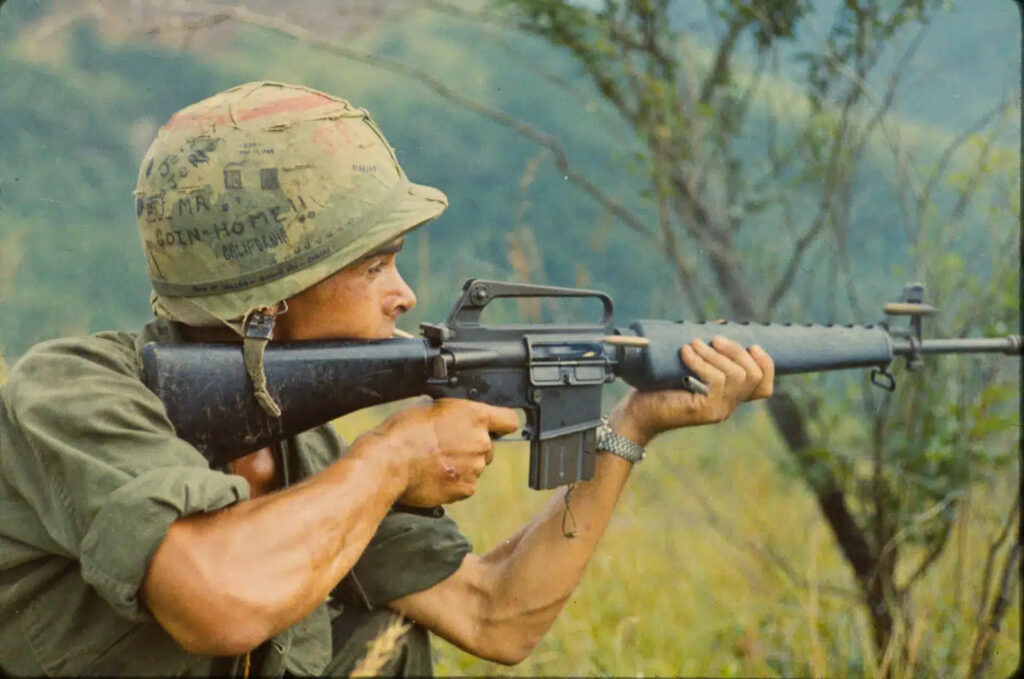
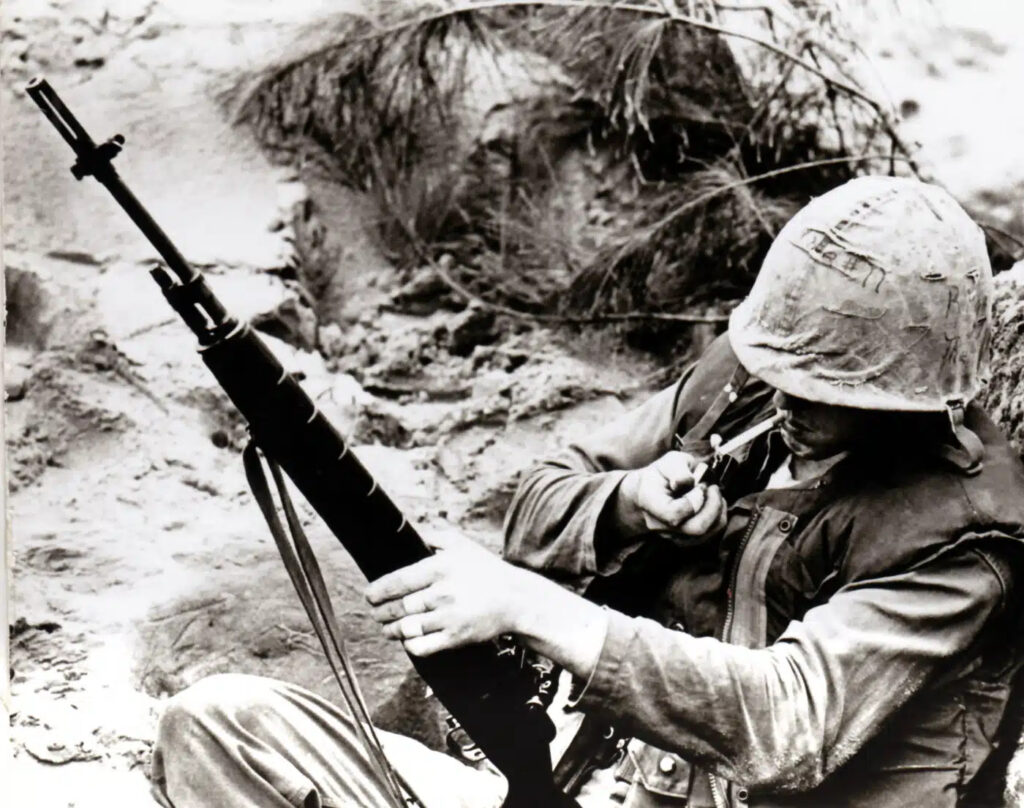
A new bullet was being fielded, too. You might have heard of the M855? The bullet’s weight was increased for better long-range accuracy, and a steel tip was incorporated to punch through body armor. Those were two reasons the analysts had to revamp the A1. The boots on the ground, the Marines in particular, had reasons, too. A lot of reasons. It would seem the M16 needed to be a rifle with downrange performance more like the classic M14.
M16A2 Barrel Improvements
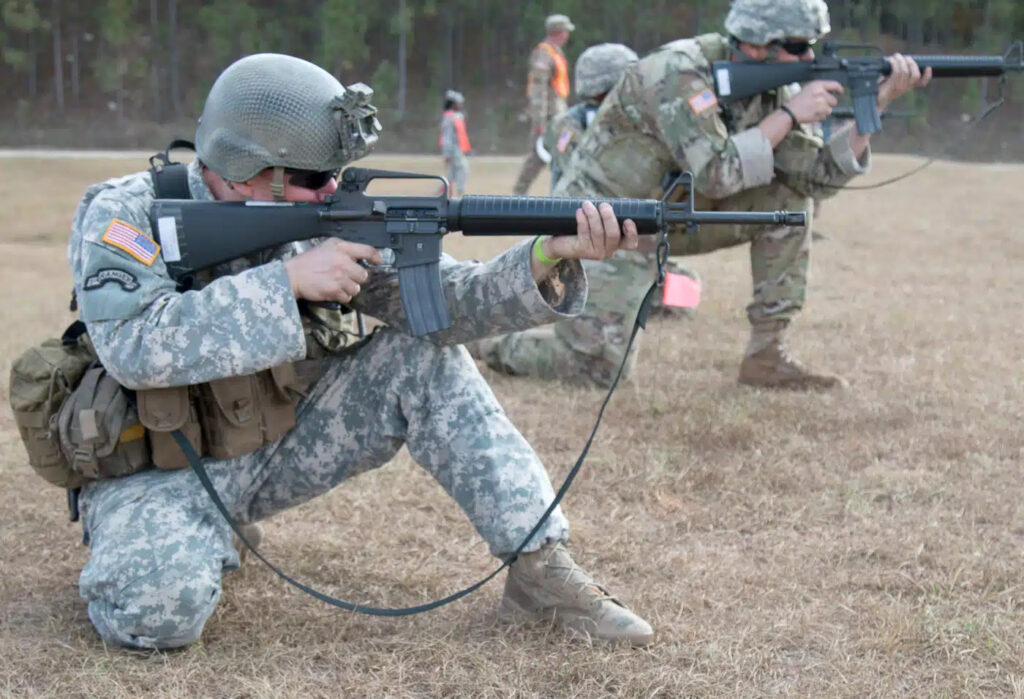
Let’s take barrel first. The A2 barrel is 20” long and has a 1:7-inch twist rate to better stabilize the heavier, longer bullets. The A1 also had a 20” barrel but with a 1:12-inch twist, which was fine for optimizing lighter, 52-gr. bullets like M1193 ball ammo, but has a harder time stabilizing heavier bullets. The barrel contour of the A2 is also beefed up forward of the handguard. Under the handguard, the barrel diameter is thin and exactly the same as the A1 to allow attaching the M203 grenade launcher.

The three-prong “duck bill” flash hider on the A1 had a habit of getting vegetation stuck in it as well as kicking up dirt or whatever was on the ground when shooting prone. A new A1 “bird cage” flash hider was enclosed so no debris could get caught in it, and slots were cut all around the circumference.
For the A2, the slots on the bottom of the flash hider were omitted, so no dust is blasted when shooting prone. In addition, it acted like a muzzle brake to stifle muzzle rise during recoil. One thing that didn’t change was the rifle-length gas system, which makes both the A1 and A2 a soft shooter compared to a carbine- or even a mid-length gas system.
A2 Has Better Sights
Being based upon the M1 Garand, the M14 was always renowned for its excellent iron sights. Conversely, one of the most distinct features of the M16A1 and the A2 is the built-in carry handle on the upper receiver that incorporates the rear sight. The A1 had a flip-up aperture sight with two sizes of aperture; flipping the aperture also selected a range. Not the best setup for long-range shooting.
The Marine Corps’ adaptation had the A2 incorporate a fully adjustable rear sight with click adjustments for both windage and elevation from 300 to 800 meters. The A2’s aperture also has two settings; the small aperture is for daylight and precision shooting, and the large aperture is meant for low-light scenarios.
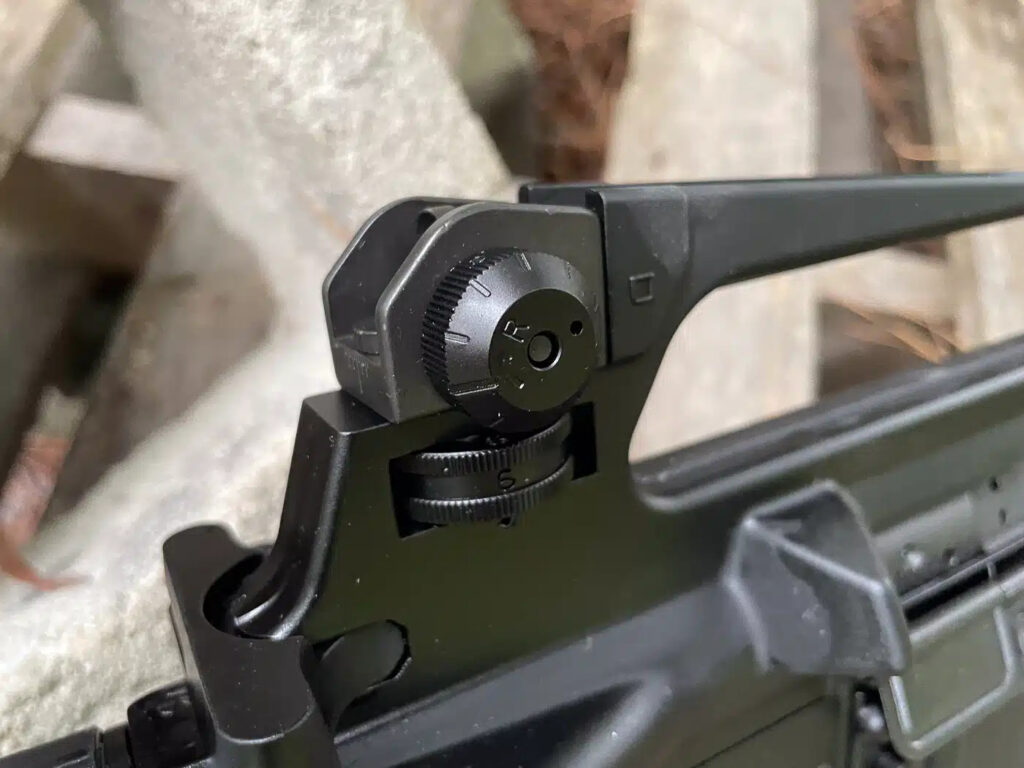
The front sight on the A2 also changed to a flat-faced post adjustable for elevation with four positions. The A1 had five settings and a round post, which created an aberration in certain light conditions, causing groups to be off-center.
Additional M16A2 Upgrades
The length of pull on A1 stocks was frankly too short, and also developed a reputation for a lack of durability. The A2 stock was made of stronger Zytel-type material that’s a glass filled thermoset polymer. The LOP was lengthened .62”, and the buttplate uses a toothy texture that didn’t slip out of your shoulder pocket like the A1 was apt to do. The hinged trap door to hold cleaning rods was retained.

A big departure was the handguard, which is round, symmetrical, and interchangeable on the A2. It was also made of a stronger polymer. The triangular A1 handguard used a left and right handguard. An interesting note is that soldiers more frequently dropped their A1s on the right side, which meant more right-hand guards than left-hand guards needed to be in stock. The A2 pistol grip incorporated a finger hook, which was designed to keep a user’s hand in place, but in reality, never really fit anyone’s hand that well.
Read the original article in its entirety at The Armory Life.
READ NEXT: Peacekeepers Halt Patrols After Reports Of Chemical Activity




















As a Small Arms instructor in the National Guard, when we received the M16A1 to replace the M1 carbines we used for training, the biggest prob;em we had was the M16 jamming after just a few rounds. I have heard a lot of stories about troops being over run when their M6s jammed in combat.