

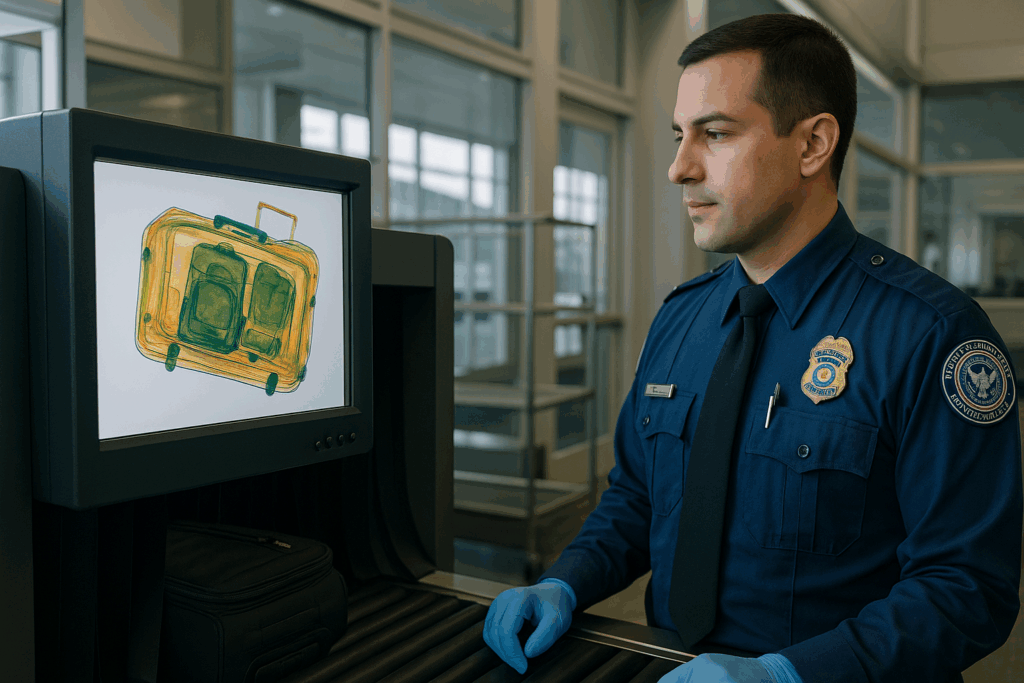
In Dante’s Inferno, the eighth circle is reserved for fraud, and if Dante were sketching his map of Hell today, the Transportation Security Administration would deserve its own sub-basement. What prompts this reflection is the absurd news that, after nearly two decades of forcing passengers to remove their shoes, a policy no other civilized nation ever adopted, the TSA has finally relented. That a rule born of one failed shoe bomb attempt in 2001 has remained enshrined until now is itself a parable of bureaucratic decadence. Created in panic and maintained through inertia, the TSA stands as the quintessential example of bureaucratic futility: a multi-billion dollar pageant of plastic trays, latex gloves, and hollow rituals, all choreographed to provide the illusion of safety. Like much of modern government, it serves itself first, the public second, and actual results not at all.
This is not hyperbole. The TSA was founded on a promise: that centralized federal control would streamline airport security, reduce risk, and improve public confidence in air travel. That was 2001. In the quarter-century since, it has metastasized into a $10.5 billion bureaucracy that fails its only measurable task with uncanny consistency. It misses mock bombs with 95 percent regularity. It molests grandmothers and confiscates shampoo bottles. And it does all this while imposing hidden taxes and eroding civil liberties.
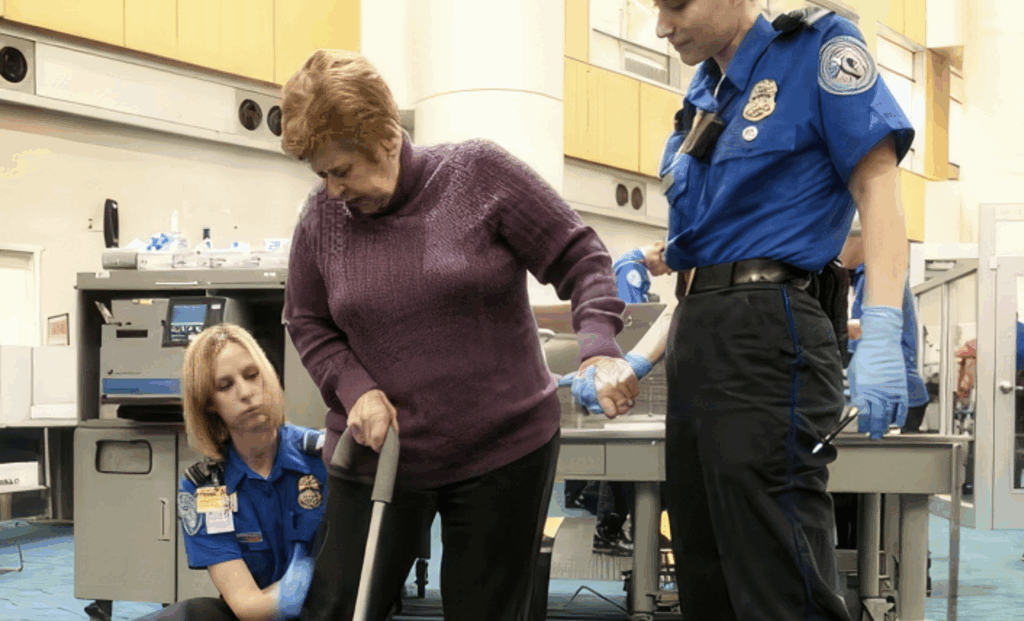
We must dispense with the fantasy that the TSA is anything more than a security theater troupe, poorly cast and badly directed. Its failure is not an aberration. It is intrinsic to its design. It is time to dismantle this performative farce and return airport security to those who have the most to lose from failure: the airlines and airports themselves, under the transparent regulatory framework of the Federal Aviation Administration.
The origin story of the TSA is well known. After the September 11 attacks, fear drove speed. Within weeks, Congress passed the Aviation and Transportation Security Act, federalizing what had previously been private screening. The rationale was obvious. Decentralization, we were told, had failed. Only a uniform federal agency could prevent another catastrophe.
But there was a problem. The hijackers exploited not a lack of uniformity but a failure of intelligence sharing and cockpit policy. They used boxcutters, not bombs. And they boarded flights in airports where security met all then-existing standards. The problem was not privatization. It was that the rules allowed anyone with a boarding pass and a small blade to enter the cockpit. Federalizing screeners was a non-sequitur solution to a wholly different problem.
That foundational error has metastasized into a bureaucracy whose primary function is self-perpetuation. Its budget swells annually, jumping from $6.8 billion in 2002 to $10.5 billion today. This year, it is almost $12 billion. A large portion of this funding comes not from Congressional appropriations but from security fees levied directly on passengers, which have risen over 300 percent. This is, in effect, a stealth tax on mobility. And what does it buy?
Failure. Repeated, documented, egregious failure. In 2015, undercover investigators from the Department of Homeland Security were able to smuggle weapons and explosives past TSA checkpoints in 67 out of 70 attempts. A 95 percent failure rate. If an airline or private contractor posted a number like that, they would be out of business, sued into oblivion. In government, it gets you a budget increase.
This is not cherry-picking. In follow-up red-team tests conducted in 2017, the TSA still failed over 80 percent of the time. As late as 2019, GAO reports found ongoing “systemic vulnerabilities” in screening procedures. The only thing consistent about TSA performance is its consistent inadequacy.
It is tempting to excuse this as inevitable, to argue that no screening regime can be perfect. But the TSA isn’t failing to achieve perfection. It is failing to clear the most basic of thresholds: catching obviously planted weapons in controlled simulations. When confronted with their dismal results, TSA administrators routinely promise reforms, retraining, and technology upgrades. And then the cycle repeats.
Meanwhile, the agency continues to impose policies that are as useless as they are invasive. Take the infamous shoe removal requirement, imposed in the aftermath of Richard Reid’s failed attempt to ignite explosives in his footwear. Reid was a British national flying from Paris. The explosives he used were not metal and would not have been detected by the screening measures then or now. The policy was imposed five years after the event and has remained in place ever since, despite no repeat attempts and no evidence of efficacy. Notably, Europe never imposed a similar requirement. They assessed the risk, saw no justification, and moved on. We did not.
Why? Because once a rule is in place, it becomes sacred scripture to bureaucrats. To repeal it is to admit error, to surrender turf, to risk budget cuts. That is why, until today, nearly twenty years after the failed shoe bombing that inspired it, passengers in the United States have been forced to remove their footwear at checkpoints, a policy no other major country ever adopted. Its rescission, finally announced today, is not a triumph of common sense but an indictment of how slowly bureaucracies move to correct even the most obvious mistakes. So the rituals remain: shoes off until just now, laptops out, liquids restricted, children patted down, the elderly humiliated. The result is not safety, but symbolism. A taxpayer-funded performance art piece where your dignity is the price of admission.
There is an alternative. The Screening Partnership Program (SPP), created as a concession to critics of federalization, allows airports to opt out of TSA screening in favor of private contractors. The catch? The TSA oversees the process. In other words, the agency whose monopoly is threatened gets to approve its own competition. Yet despite this fox-in-henhouse setup, the program works. At San Francisco International Airport, private screeners process passengers more efficiently and with higher satisfaction than TSA-managed peers. Kansas City and Bozeman show similar results. These are not anomalies. They are counterexamples that disprove the necessity of federal monopoly.
Privatized screening under FAA regulation would preserve the public interest while restoring accountability. Airlines have every incentive to avoid security breaches. Unlike federal agencies, their failures carry real costs. Reputational, financial, even legal. This dynamic fosters innovation and responsiveness. Private screeners can be held to standards, assessed rigorously, and replaced if they underperform. The same cannot be said of federal employees with union protection and political backing.
Some will protest that security is too important to entrust to the private sector. But this reverses the burden. The public sector has had twenty-four years and $200 billion to prove its competence. It has not. There is no moral or empirical justification for maintaining a system that fails by its own metrics. Nor is there justification for retaining a policy regime that treats every passenger as a suspect and every shampoo bottle as a potential bomb.
The deeper issue is this: bureaucracies do not fix themselves. Their incentive is to survive, not succeed. TSA employees are not punished for failure. They are protected by process, shielded by union rules and contracts that entrench mediocrity and promote even the most incompetent. When something goes wrong, the response is always the same: more money, more rules, more staff. This is not a bug. It is the essence of bureaucratic logic.
Contrast this with how failures are treated in the market. A private security contractor that misses 95 percent of threats is sued, fired, replaced. Their business evaporates. Their reputations crater. Incentives align with outcomes. Bureaucracies, by contrast, invert this logic. Failure breeds funding. Incompetence is a resume enhancer.
President Trump, in his second term, has made government efficiency a central plank of his administration. His creation of the Department of Government Efficiency, led for 130 days by Elon Musk, signaled a serious commitment to dismantling federal waste. The TSA is a natural target. It is the low-hanging fruit. The data is in. The agency is a failure. And the public knows it.
A recent Rasmussen survey found that only 37 percent of Americans believe the TSA makes flying safer. A majority view it as ineffective or intrusive. This is not public support. It is tolerance born of fatigue. Americans no longer expect the TSA to work. They simply accept it as a cost of flying, like turbulence or crying babies.
But it does not have to be this way. The TSA is not a law of nature. It is a policy choice. And bad choices can be reversed.
Imagine an air travel system where security is tailored to risk, not dictated by rote. Where private contractors innovate and compete. Where standards are enforced by the FAA, not rewritten by bureaucrats protecting their turf. Where travelers are respected, not treated as suspects. This is not a fantasy. It exists in pockets already. It could exist nationwide.
The first step is to acknowledge the obvious: the TSA has failed. It cannot be reformed. It must be replaced. The federal government should exit the passenger screening business, retain regulatory oversight through the FAA, and let competition do what bureaucracy cannot: deliver security that actually works.
Sponsored by the John Milton Freedom Foundation, a nonprofit dedicated to helping independent journalists overcome formidable challenges in today’s media landscape and bring crucial stories to you.
If you enjoy my work, please consider subscribing: https://x.com/amuse.
READ NEXT: Shocking Weapons Arsenal Discovered Near US Capitol
Sponsored
Radical Democrats want to destroy Chip Roy. If we lose him, the Swamp wins. Stand with Chip now.














Subcontract
Outsource
Sublet
then see savings & competition alone