





Republicans face a familiar predicament. Federal district judges in a handful of courthouses are issuing temporary restraining orders and sweeping injunctions that halt lawful executive action, even after the Supreme Court’s recent limits on nationwide relief in the absence of a certified class. These judges lodge themselves between elected policy and execution, knowing that appeals take time and that victory on the merits in the Supreme Court will arrive only after months of mischief. The question is whether Congress must simply wait. The answer is no. The Constitution supplies a tool that does not depend on Senate votes for removal. It is impeachment, and properly used, it deters. Removal is not the only point. Punishment by process, reputational sanction, and the practical sidelining that follows impeachment are real. A small number of well chosen impeachments, sustained through full Senate trials, would change behavior across the judiciary even if not a single conviction followed.
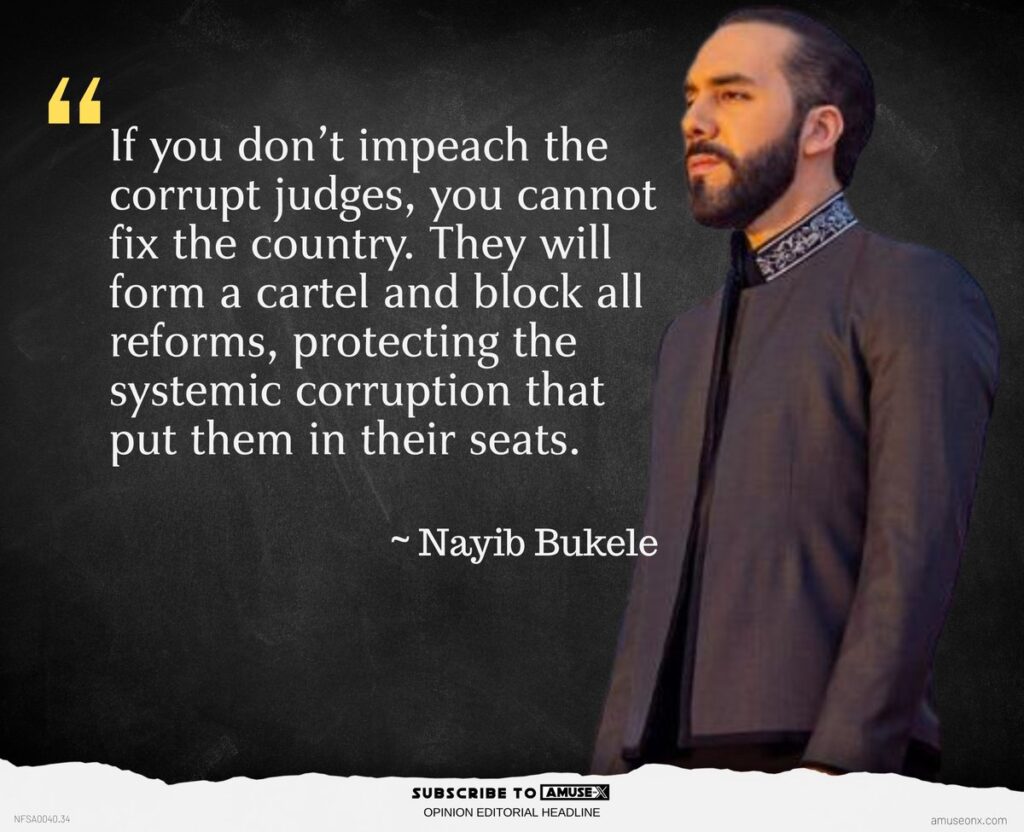
This claim may seem paradoxical. If conviction is impossible, why initiate the ordeal. Because the ordeal is the point. Impeachment is a constitutional censure dressed as a proceeding. It brands, it slows, it forces testimony and defense, it ties up time, and it imposes costs that few lifetime appointees wish to bear. House adoption of articles is a permanent mark in the historical record. That mark does not come off with an acquittal. Presidents learn this. Judges do too. The logic is simple, a rational actor avoids foreseeable pain that does not serve his goals. A federal judge who faces months of public examination, loss of case assignments in practice, seven figure legal bills, and the prospect of a Senate gallery reading formal accusations on live television will think twice before issuing an adventuresome order that is destined to be vacated.
To see why, consider what impeachment is, not in theory but in practice. Constitutionally, it is a remedial device designed to protect the public by removing unfit officials. Practically, it is also a slow burning sanction. The House investigates, drafts articles, and votes. The Senate then tries. Each step is public, lawyer heavy, and time consuming. Investigations widen, witnesses retain counsel, and discovery yields uncomfortable facts about chambers practices and ex parte contacts. Judicial Councils often strip an impeached judge of new case assignments or reassign their docket to preserve public confidence, which means that an impeached judge is in office but out of action. That is a form of discipline that occurs even before any Senate verdict. If the Senate acquits, the months of paralysis and public scrutiny do not vanish. If the Senate convicts, removal is immediate. Either way, the process punishes.
History confirms the point. Impeachments are rare, which magnifies stigma. A single House vote attaches an indelible label. It says that the nation’s representatives found probable cause of high crimes or misdemeanors. That is not a censure resolution, which officials shrug off. It is the constitutional equivalent of a formal indictment. The handful of presidents who were impeached carry that fact as a headline in every textbook. Judges who were impeached, whether convicted or not, never shed the taint. This reputational cost is not abstract. It descends into practical consequences, fewer leadership roles within the judiciary, chilled prospects for elevation, and a permanent asterisk next to every opinion.
Duration and complexity magnify the effect. Impeachment is not a week of bad press. It is many months, often a year or more, and sometimes longer. The House phase demands staff time, sworn statements, document production, and hearings. The Senate phase introduces a new set of rules, presentation of evidence, motions practice, and deliberation. Trials stretch because the Senate has other business, because counsel contest procedure, and because the record is extensive. The length of the ordeal is central to its deterrent force. Judges who value their time and reputation will not court this grind lightly. And because the process is slow, the signal it sends to the rest of the bench is steady rather than fleeting. Each day of testimony, each article read aloud on the Senate floor, reminds every Article III judge that the outer boundary of their immunity from consequence is nearer than it once seemed.
Costs make the lesson bite. Impeachment defense is expensive. There is no government paid counsel for an impeached judge. Campaign accounts do not exist for the judiciary. A serious defense requires constitutional specialists, appellate advocates, trial lawyers, and public communications counsel. Fees approach seven figures quickly, especially when the House and Senate phases run many months. Even witnesses in modern impeachment inquiries have reported six figure bills. A judge cannot reasonably expect charitable donors to pay. He must bear the burden himself, or accept pro bono help that arrives with its own reputational price. Judges of modest means face a stark choice, resign early to halt the clock, or prosecute a costly defense that ends with an acquittal that still reads like a scarlet letter.
One might object that using impeachment to deter is punitive rather than remedial. Will that not corrupt the tool. The answer is that the line between remedy and deterrence is not so tidy in constitutional practice. When the House impeaches a judge whose conduct exhibits willful disregard of binding Supreme Court precedent and of jurisdictional limits, the House is protecting the public. It is restoring the proper constitutional order in which elected branches make policy and the courts interpret law, not veto it in the first instance. Deterrence follows as an effect of that protection. The founders wrote a flexible standard, high crimes and misdemeanors, precisely because legalistic catalogues cannot capture every variety of abuse. A pattern of knowingly issuing ultra vires relief, such as purporting to bind non parties nationwide despite the Supreme Court’s instruction to the contrary absent class certification, satisfies that standard. So does the tactic of short circuiting Rule 23 through serial TROs designed to achieve nationwide effect by accumulation. These are not good faith errors, they are strategic uses of the robe to block the elected branches. Impeachment exists for such cases.
Another worry is that impeachments will politicize the judiciary. That is a counsel of paralysis. Activist injunctions already politicize the judiciary by placing courts into daily political combat with the executive. Refusing to use the only constitutional check that the legislature has over judges, because using it might be political, is to accept the politicization that already exists. The anti politicization argument also overlooks a simple asymmetry. The House is elected, transparent, and accountable. When it impeaches, it speaks in public and explains itself. A district judge who halts a national program through a novel standing theory and an improvised record does so behind the shield of life tenure and summary orders. If the goal is to reduce politics, then deterring judicial adventurism serves that goal better than tolerating it.
What of the Senate. Conviction requires two thirds. That number will not be met. Does this not make House impeachments performative. Only if one thinks removal is the only consequence that matters. The House’s power is not a dead letter without 67 votes in the Senate. The reputation cost lands at the House vote. The practical sidelining often occurs during the investigation. The legal bills accrue regardless of the Senate’s final tally. The Senate trial itself is not performative. It is a constitutional ceremony that forces the accused to answer, under oath, to a set of specifically pleaded charges. Even acquittal can come with a rebuke in the opinion of the court of public opinion. And even if an accused judge is acquitted, the durable signal to peers is that the House will act again if similar conduct recurs. A few such cases will be enough to alter incentives across the bench.
A skeptic may ask whether impeachment ought to be a response to bad judging rather than personal misconduct. The Constitution’s text does not confine the standard to indictable crimes. Historical practice includes judges impeached for abuse of office and for patterns of dishonest behavior that undercut the integrity of adjudication. The Republican case should be tailored to cases where a judge’s injunctions and orders show repeated defiance of binding Supreme Court precedent, misuse of equitable power to achieve nationwide policy control, and tactical manipulation of procedure to avoid appellate correction. The inquiry must be careful, fact based, and focused on conduct within the judicial role that constitutes abuse, not a mere difference in interpretive philosophy. The standard is not that a judge is liberal. The standard is that a judge is lawless in ways that sabotage the separation of powers.
How many impeachments would it take. Likely not many. The judiciary is a small, collegial world of roughly nine hundred Article III judges. News of a House vote spreads by chambers text within minutes. A single impeachment would prompt wide internal discussion, what is the record, which practices drew scrutiny, where did the line lie. Two or three sustained efforts, carried through to full Senate trials with public evidence, would set a clear boundary. Within months, chief judges and Judicial Councils would tighten internal guidance on TROs and preliminary injunctions, ensuring that chambers staff understand the limits announced by the Supreme Court and that emergency relief is not used to achieve nationwide outcomes without adherence to class procedures. Deterrence halfway through an impeachment is still deterrence.
Republicans should also recognize the pedagogical role of impeachment. It is a civics lesson in front of the nation. Articles that explain, in crisp and public language, how equitable power is supposed to work, why Supreme Court precedent binds district courts, why forum shopping paired with serial TROs evades neutral assignment rules, and why class procedures exist, will reset public expectations. Voters will better understand why a temporary order from one judge should not freeze national policy. That understanding will lessen the political payoff for obstructionist litigation and will support appellate courts that move quickly to narrow improvident relief. Impeachment, in this sense, is a public philosophy seminar about the separation of powers, run on C‑SPAN.
Notice, too, that impeachment is fair to good judges. By identifying and penalizing abusive patterns, it clears the lane for careful jurists who apply the law with fidelity. It is not an attack on judicial independence to say that independence is bounded by law. Independence is a means to impartial application of law, not a mandate to rewrite statutes from the bench. When judges act outside those bounds, accountability protects, rather than diminishes, the integrity of judging. The fear that all judging will become precarious ignores the sobriety with which the House has historically used impeachment. The tool is heavy, and that is why it deters. Used rarely, in the clearest cases, it will make the rare case rarer still.
Nor should Republicans worry that the tactic will boomerang. Abuse invites response. If a future Democratic House targets conservative judges because they dislike outcomes grounded in the Supreme Court’s text first jurisprudence, the constitutional answer is the same, present the record, measure it against the standard, and let the public judge. The remedy for political misuse is political accountability. The remedy for lawless judicial obstruction is to restore law by using lawful tools. Refusing to act now because of hypothetical future bad faith is a mistake that cedes the present to real bad faith.
Finally, consider the counterfactual. If the House never impeaches a judge for tactical obstruction, what incentive exists for the next wave of TROs and maximalist injunctions to stop. Every cycle will repeat. Executive action will stall. Agency professionals will become risk averse. National policy will be set by preliminary relief rather than by statutes and rules promulgated under statutes. The Supreme Court can only hear so many emergency applications. It can narrow remedies case by case, which it has begun to do, but it cannot alone change the incentives of trial judges who enjoy the attention that follows a national pause button. The House can change those incentives swiftly. It can announce that misuse of equitable power will be met with articles that lay out the abuse and seek judgment in the Senate. That announcement does not require a promise of conviction. It requires a promise of perseverance.
Impeachment, correctly understood, is more like a marathon than a sprint. The pain is cumulative. Hours of testimony become days, days become months. The accused must plan, brief, and argue while colleagues handle the docket. Clerks depart rather than tie their reputations to a chambers under investigation. Personal finances strain. The work that judges cherish, the daily craft of judging, is replaced by the humiliations of being a defendant in a public forum. At the end, even with an acquittal, the line on the biography remains, impeached by the House of Representatives. That is punishment enough to deter most, and it does not offend the Constitution to recognize that fact. The founders expected ambition to counteract ambition. They gave the House a power that works even when the Senate will not. It is time to use it with care and resolve.
If you enjoy my work, please share my work and subscribe: https://x.com/amuse.
Sponsored by the John Milton Freedom Foundation, a nonprofit dedicated to helping independent journalists overcome formidable challenges in today’s media landscape and bring crucial stories to you.
READ NEXT: Foreign Power Using Illegals To Infiltrate Critical Transportation Routes






















Go after all rogue judges A-Z
Never thought the rule of law could be undermined to the point Americans no longer trust our judiciary. We are there. These rogue, radical, leftist judges have bastardized the rule of law to where people can no longer believe them.
That is a good start, but more is needed. Here are the major points of failure.
– Our Presidents have failed to consistently nominate judges who have proven track records of fidelity to the law.
– The Senate has failed by confirming hundreds, if not thousands, of nominees that do not have a proven record of fidelity to the law.
– The United States Bar Association has failed to properly evaluate federal court nominees, or disbar judges who do not faithfully apply the law and/or break the law.
– The universities are failing to teach and prepare students to faithfully execute our laws, or properly understand and execute our Constitution, and they have been allowed to continue to do so, and even worse with no accountability.
– Accreditation boards have failed to do their job in assuring that colleges/universities properly prepare students for a career in law.
– The House of Representatives has failed to impeach or even attempt to impeach any of these criminals in black robes.
I could not agree more or add anything more to Leftshot’s opion. Leftshot is 100% right.
Non-US Citizens must be prohibited and immediately removed from appointed or elected positions in our legal systems !