

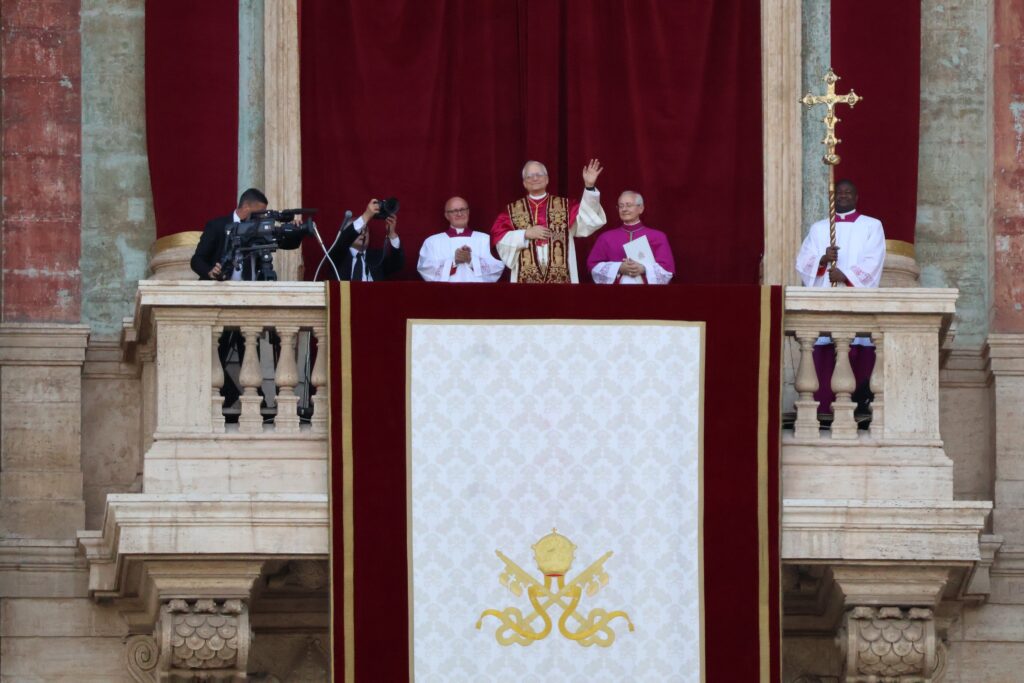
Pope Leo XIV said that Christian political leaders who bear responsibility for wars should reflect on their moral responsibility and examine their conscience, urging them to consider confession as part of that process.
The pope made the provocative remarks during a Vatican speech focused on the Catholic sacrament of confession, where believers acknowledge wrongdoing and seek forgiveness.
“Do those Christians who bear serious responsibility in armed conflicts have the humility and courage to make a serious examination of conscience and to go to confession?” Leo said, in remarks many observers viewed as a thinly veiled critique of world leaders, including U.S. President Donald Trump.
Comments come amid global conflicts
The pope did not mention specific leaders or conflicts directly. However, the remarks came as fighting continues in several regions, including the escalating war involving the United States, Israel, and Iran.
Church leaders have increasingly raised moral questions about the conflict. Earlier in the week, Washington Cardinal Robert McElroy argued that U.S.-Israeli strikes on Iran do not meet the Catholic Church’s “just war” standards, which are used to judge whether military action can be morally justified.
Catholic teaching on war
For centuries, the Catholic Church has evaluated armed conflict through the “just war” doctrine, a framework developed by theologians such as St. Augustine and St. Thomas Aquinas. The doctrine sets strict conditions for when war may be morally acceptable, including:
- Just cause
- Right intention
- Proportional use of force
- Last resort after diplomacy fails
Church leaders have warned that preventive or unjustified wars fail to meet those criteria.
Pope Leo’s broader message on peace
Since becoming pope, Leo has repeatedly warned about what he calls a growing global acceptance of war and violence. He has urged political leaders to pursue diplomacy and dialogue rather than military escalation.
The pontiff has also condemned the use of religion to justify conflict, arguing that faith should guide leaders toward reconciliation and peace instead of nationalism or ideological battles.
Appeal to conscience
Leo’s comments reflect a recurring theme of his papacy: the idea that political power must be guided by moral conscience and responsibility toward human life.
In earlier speeches to lawmakers and diplomats, he has emphasized that political leaders should treat public service as a mission to promote the common good rather than partisan power.
His latest remarks add a pointed moral dimension to ongoing global conflicts, suggesting that leaders who authorize war should carefully examine their decisions — not just politically, but spiritually.
READ NEXT: SWAT Team Kills Man Linked To Top Dem’s Security Detail













Does he believe that Trump started the 47 year old war with Iran?
The Pope needs to get the picture. This war with Iran meets all of the Roman Catholic Church’s conditions as outlined above.
The pope is a hypocritical idiot. Which makes him perfect fit for his position.
It is amazing to me that virtually all the “pacifists” in this world always blame those who are actually the protectors rather than those who threaten others with violence and death, as being the trouble-makers! The USA did not start this Middle East war…nor did Israel! These two countries only responded to the threats and violence created by others, and rightfully so! I would like to respect the Pope and his views on peace, but he is so wrong in directing his opinions toward the USA and Israel. These two countries have never been belligerent toward others, at least not in the ways that others have been…need I name names? The USA and Israel do not murder their own people as other countries do and are doing, yet the Pope singles out the USA and Israel as being the troublemakers…bullies, if you will! NO, NO, NO…not so!!! This is not the first time that the Pope has done such!
President Trump is protecting all of our citizens. It’s his job. He is good at it and is concerned for the safety of all of his people.