


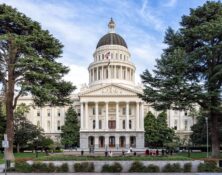




Treasury Secretary Scott Bessent, in an illuminating address to the New York Economy Club, recounted his first meeting with President Trump, who queried succinctly: “How do we get this debt and deficit down without killing the economy?” Bessent, after 18 months of rigorous contemplation, concluded the only viable route was clear: shift economic power decisively from the public sector—where inefficiency and waste reign—to the innovative private sector. When 25% of America’s GDP funnels through the corridors of Washington (area code 202), a fundamental problem is evident. The path to prosperity, Bessent argues, is paved not by bureaucratic fiat but by entrepreneurial dynamism.
American history stands as a witness to Bessent’s vision. Consider the remarkable post-WWII economic miracle. When government spending dramatically plunged—from over half of GDP during the war down to just 16% within three years—America defied predictions of economic collapse. Instead of disaster, private investment flourished. Consumer spending soared, factories shifted swiftly from building tanks to automobiles and businesses flourished unfettered by wartime controls. The Keynesian doomsayers were confounded; the predicted catastrophe never materialized. America’s private sector demonstrated, once again, that government retreat often heralds the dawn of economic revival.
This historical lesson was not forgotten by President Ronald Reagan, who embraced a similar logic during the 1980s. His policies, an aggressive combination of tax reductions and deregulation, sparked the largest peacetime expansion in American history. Reagan captured this perfectly when he quipped, “Government is not the solution to our problem; government is the problem.” Despite initial deficits, the surge in private-sector productivity laid the groundwork for a balanced budget by the end of the decade, ultimately paving the way for surplus budgets in the 1990s. Bessent’s contemporary call for fiscal discipline and government restraint echoes Reagan’s wisdom, that the American economy thrives not when guided by bureaucratic planners, but when unshackled from their meddling.
Globally, Margaret Thatcher’s Britain and 1990s Canada offer parallel success stories. Thatcher’s radical privatizations transformed stagnant, subsidy-reliant public enterprises into robust, profit-generating engines of innovation. Canada, too, dramatically curtailed government expenditures in the ’90s, transitioning swiftly from a looming debt crisis to enviable fiscal health. Both nations demonstrated that the contraction of public-sector dominance does not spell economic calamity but sparks an unparalleled renaissance in innovation, investment and prosperity.
Today’s fiscal realities add urgency to Bessent’s argument. A quarter of America’s GDP, shockingly, passes through the bureaucratic arteries of Washington’s infamous 202 area code. This unprecedented level of governmental intrusion distorts markets, discourages entrepreneurship, and suffocates private investment. Bessent correctly identifies this bloated public sector as a millstone around the economy’s neck, burdening future generations with unsustainable debt and crippling interest payments. Only by shifting capital away from the self-perpetuating bureaucracies and into the productive hands of American entrepreneurs can we halt the debt spiral and secure sustained growth.
The economic rationale is clear: when government spending retreats, private enterprise advances. Capital once wasted on federal inefficiencies is redeployed into ventures that stimulate genuine wealth creation—new businesses, technologies and employment opportunities. This virtuous cycle of private investment and economic expansion increases tax revenues organically, without the punitive taxation favored by progressive spendthrifts, making deficit reduction a natural byproduct rather than an imposed austerity.
Bessent’s pragmatic approach has undeniable political viability. It’s not about indiscriminate slashing of social safety nets; rather, it is about redirecting government resources strategically and sensibly, from areas of demonstrated waste to areas of proven economic potential. The practicality of the strategy makes it politically palatable—growth and job creation attract bipartisan appeal, and privatization or public-private partnerships can gain traction without descending into ideological warfare.
Bessent’s blueprint offers more than mere austerity—it’s an appeal to common sense, echoing Reagan’s timeless maxim: “The nine most terrifying words in the English language are ‘I’m from the government, and I’m here to help.’” This perspective rightly reasserts the principle that America’s true economic genius emerges from its innovators and entrepreneurs, not bureaucratic decrees.
If we continue to feed the voracious beast of Washington’s swollen administrative state, our economy—and our liberty—will slowly suffocate under its weight. Bessent’s prescription of private prosperity offers the antidote to this malaise. Much like Rebel forces rising against a corrupt empire in a galaxy far, far away, the American people must once again assert their independence—this time, from the empire of waste and inefficiency at the heart of the federal bureaucracy.
It is time for the Republic to strike back.
Sponsored by the John Milton Freedom Foundation, a nonprofit dedicated to helping independent journalists overcome formidable challenges in today’s media landscape and bring crucial stories to you.
READ NEXT: [WATCH] Astronaut Confirms Musk’s Bombshell Claim – Biden Blocked Rescue?






















Reall impressive Trump administration !!
Tariffs ? The problem all started sending production of items out of country, because of greed, meaning 3RD world cheap labor. We became buyers and some assembling. Once the world steel manufactures, once the biggest producers period. Too restart ; there is going to be a PRICE too PAY. IT will not be pleasant or even in our Time ? But hopingly our future generations, So Tariffs will start USA to start being self reliant. Companies making jobs here, buying here. or do with out !! Here I go again with old sayings : NO PAIN- NO GAIN There is a lot of truth to that statement, The major problem why its never going to happen ? Our society is so Spoiled ! it ours we want it NOW !! no wait , no work, GIMY_GIMY. That is what happens when you get on top. you become lazy and neglect the foundation that you built on. One must always be diligent of surroundings, Another old saying !!1 When on TOP only other Direction if not careful is ( DOWN ) One positive aspect : we know what direction we need too go ( Back UP ) My sad thought , we are dumber than a flock of geese. Bird brain as they are ? they know when and which direction too fly when things get cold !!!!!!!
Bringing it BACK implies that it was there in the first place. Not so much.