A Major Reversal?
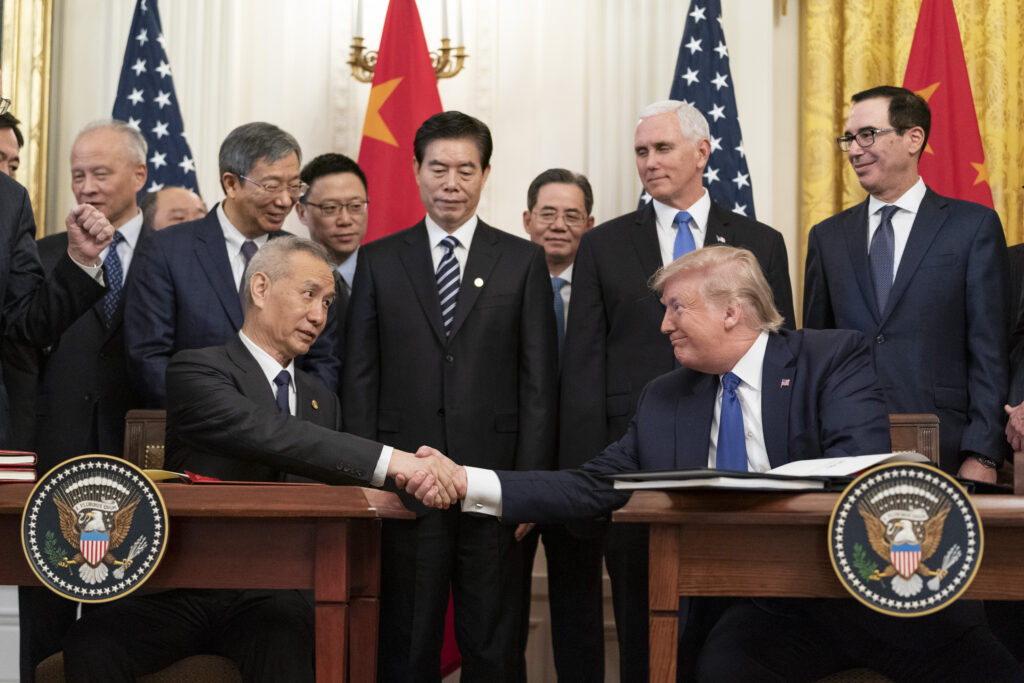
President Trump announced Tuesday at a White House press conference his intention to reduce the 145% tariff on Chinese goods — a significant shift from his earlier aggressive trade war stance, which began in 2018 to address unfair trade practices and the U.S.-China trade deficit.
Trump’s softened stance follows China’s decision to impose retaliatory restrictions on rare earth metal exports — materials vital to the U.S. tech and defense industries. (RELATED: Why Trump Wants Rare Minerals From Greenland And Ukraine)
Faced with mounting economic and political pressure, Trump signaled a shift from confrontation to diplomacy, renewing calls for direct talks with Chinese President Xi Jinping.
Reinforcing the urgency of the situation, Treasury Secretary Scott Bessent described the ongoing trade war as “unsustainable” during a private event hosted by JPMorgan Chase on Tuesday. He warned that the heavy tariffs were dragging down both the U.S. and Chinese economies.
Although Bessent predicted some form of de-escalation could come “very soon,” he acknowledged that formal negotiations had yet to begin — and cautioned the process could be a “slog.”
He also told investors, according to a transcript of the speech obtained by AP, that neither the U.S. nor China believed that the tariffs were sustainable. News of Bessent’s concerns had an affect on the S&P 500, which rose on Tuesday.
Trump showed some signs of softening on China after news broke of Bessent’s comments. The president said at a White House news conference that the high tariffs on Chinese goods will “come down substantially, but it won’t be zero.” But he avoided confirming whether he also believed the trade war with China was unsustainable, telling reporters, “We’re doing fine with China.”
He added that he plans to avoid playing hardball with Chinese President Xi Jinping and instead will be “very nice” to Beijing.
Progress on a trade deal with China may be slow but the Trump administration said that it has received 18 proposals from other countries, and has taken vital steps to securing an agreement with India.
The announcement also comes amid a broader global reshuffling of trade alliances. China has denounced U.S.-led trade pacts as “unilateral bullying” and has threatened retaliatory measures against nations that align too closely with American economic interests. (RELATED: UK Prime Minister Starmer Echoes Trump Trade Concerns, Signals End Of Globalization Era)
Since 2021, Beijing has imposed sanctions on multiple Trump-era officials and has increasingly shifted its economic focus toward Southeast Asia — signaling a long-term strategic pivot in its global trade posture.
Beyond trade, U.S.-China relations are defined by strategic competition across multiple domains. The State Department characterizes the relationship as one of “strategic competition,” with a focus on countering China’s unfair trade practices, cyber intrusions, rapid military modernization and human rights violations.
The Wall Street Journal has further details on the Trump administration’s upcoming actions to de-escalate, including a proposal from the White House to reduce tariffs on some Chinese imports by more than 50%:
One senior White House official said the China tariffs were likely to come down to between roughly 50% and 65%. The administration is also considering a tiered approach similar to the one proposed by the House committee on China late last year: 35% levies for items the U.S. deems not a threat to national security, and at least 100% for items deemed as strategic to America’s interest, some of the people said. The bill proposed phasing in those levies over five years.
The White House didn’t immediately respond to requests for comment.
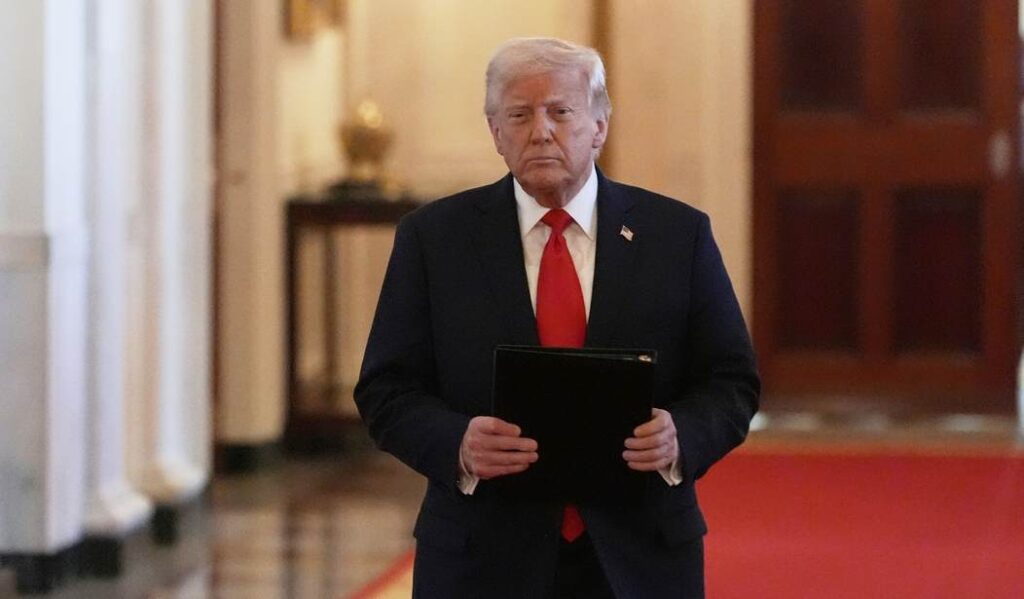
Trump said Tuesday he was willing to cut tariffs on Chinese goods, saying the 145% tariffs he imposed on China during his second term would come down. “But it won’t be zero,” he said. The development was welcomed news to investors who had been spooked by the White House’s aggressive moves in recent weeks.
China on Wednesday signaled it was open to trade talks with the U.S., though Beijing warned it wouldn’t negotiate under continued threats from the White House. In China’s policymaking circles, Trump’s comments Tuesday were viewed as a sign of him folding, people who consult with Chinese officials said.
The developments come as Trump’s economic approval rating has fallen to 37%, according to a new Reuters/Ipsos poll — the lowest of either term and a sharp drop from his post-inauguration numbers. The decline reflects mounting public unease over his escalating trade war and recent clash with Federal Reserve Chairman Jerome Powell, both of which have fueled stock market sell-offs and stirred fears of a potential recession.
Whether Trump and Treasury Secretary Scott Bessent’s remarks mark the beginning of a true détente or simply a tactical pause remains unclear. Much hinges on the outcome of upcoming negotiations — if they happen at all. For now, both Washington and Beijing appear to be recalibrating under intensifying pressure at home and abroad.
READ NEXT: Jury Issues Decisive Verdict In Onetime Republican Star’s Years-Long Legal Battle