
President Donald Trump announced Tuesday that his administration is reinstating the Presidential Fitness Test in schools nationwide, marking a significant shift in federal youth fitness policy and formally ending a program introduced under former first lady Michelle Obama.
The decision is part of Trump’s broader “Make America Healthy Again” initiative, which emphasizes physical fitness, competition, and measurable performance standards for students.
Return of a Longstanding Program
The original Presidential Physical Fitness Test—once a staple in American schools—was phased out in 2013 and replaced by the Presidential Youth Fitness Program, which focused more on individualized progress rather than standardized athletic benchmarks.
Under the reinstated system, students will again be evaluated on exercises such as a one-mile run, sit-ups, pull-ups or push-ups, and flexibility tests. The administration is also reintroducing an awards system recognizing top performers, which Trump described as a “gold standard” for youth fitness achievement.
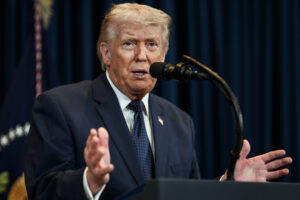
Speaking at the White House, Trump framed the change as a return to tradition and discipline, while also injecting humor into the event by joking about his own workout habits.
“I work out so hard on a personal basis. I work out so much – like about one minute a day, max, if I’m lucky,” Trump said in the Oval Office.
Health and National Readiness Concerns
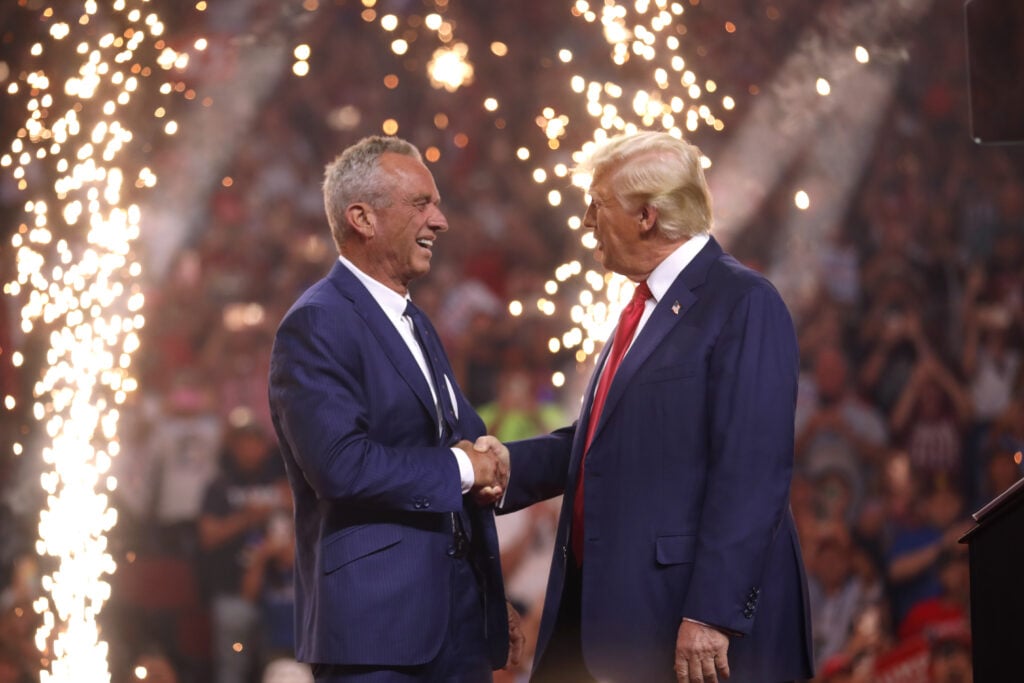
Health and Human Services Secretary Robert F. Kennedy Jr. linked the initiative to broader concerns about public health and national preparedness. He referenced the legacy of John F. Kennedy, who helped popularize the fitness test in the 1960s amid concerns about Americans’ physical condition.
Kennedy argued that declining physical fitness levels—particularly rising obesity rates among children and adults—pose challenges not only for public health but also for economic productivity and military readiness.
A Shift in Philosophy
The reinstatement highlights a philosophical divide between the two approaches. The Obama-era program, part of the Let’s Move! campaign, emphasized broad “improvements” with much less emphasis on measurable outcomes. By contrast, the revived fitness test focuses on competition, evaluated performance, and national benchmarks.
Supporters of the change argue that structured standards and incentives can motivate students and foster resilience. Critics of the older test had previously argued that it could discourage less athletic students and place too much emphasis on performance over “overall well-being.”
High-Profile Event at the White House
The announcement was accompanied by a public event featuring student demonstrations and appearances by athletes, including professional golfer Bryson DeChambeau as well as football and baseball players.
Following the ceremony, Trump joined students on the White House grounds for exercises.
Looking Ahead
The return of the Presidential Fitness Test signals a renewed federal emphasis on physical education in schools, though implementation will ultimately depend on state and local education systems.
As the policy rolls out, educators and policymakers are likely to debate how best to consider competition and long-term health outcomes in shaping the next generation’s approach to fitness.
READ NEXT: MAHA Year One: How Trump & RFK Jr. Are Rebuilding American Health

















I’m a Republican supporter end of story
Did anybody check with Mad Maxine first ? We must be sure she is not APPALLED ! (sarc.)