Lawmakers are challenging presidential war powers, the nation’s top intelligence agency is undergoing a dramatic restructuring, and a veteran DEA agent is accusing federal authorities of allowing deadly drugs to flood American communities in pursuit of bigger targets.
Senate Delivers Bipartisan Rebuke on Iran
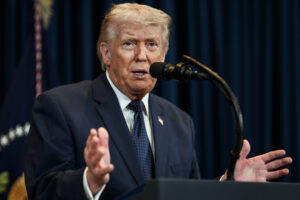
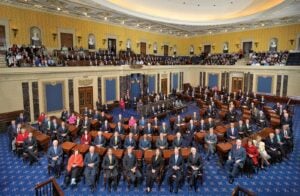
President Trump’s Iran policy faced its most significant congressional setback yet on Tuesday when the Senate approved a war powers resolution aimed at blocking further U.S. military action against Tehran without congressional authorization.
The measure passed 50-48, with four Republican senators joining Democrats in support. The resolution carries no legal force and will not alter military operations on its own.
The vote reflects growing unease on Capitol Hill after months of military operations, escalating costs, and continued debate over the administration’s emerging agreement with Iran.
Supporters of the resolution argue that Congress—not the executive branch—holds the constitutional authority to authorize prolonged military engagements. Opponents counter that limiting presidential flexibility could undermine national security during a volatile period in the Middle East.
Defense Secretary Pete Hegseth is seeking roughly $80 billion to replenish military stockpiles depleted during the conflict, while lawmakers face pressure from constituents concerned about inflation, energy prices, and federal spending.
Intelligence Community Faces Major Shakeup
At the same time lawmakers are debating America’s role overseas, a major restructuring is unfolding inside the American intelligence apparatus.
Large-scale workforce reductions are now underway at the Office of the Director of National Intelligence under acting Director Bill Pulte.
Reports indicate that as many as 400 positions could be eliminated as the administration pursues what supporters describe as a long-overdue effort to streamline the intelligence bureaucracy.
The restructuring comes amid a broader political battle over the future of surveillance authorities and election legislation. President Trump has paused the confirmation process for his permanent DNI nominee, Jay Clayton, until Congress advances both voter identification measures and an extension of Section 702 surveillance powers.
That decision has further complicated negotiations surrounding one of the government’s most important intelligence collection tools.
DEA Whistleblower Raises Alarming Fentanyl Allegations
Perhaps the most explosive allegations come from within the Drug Enforcement Administration itself.
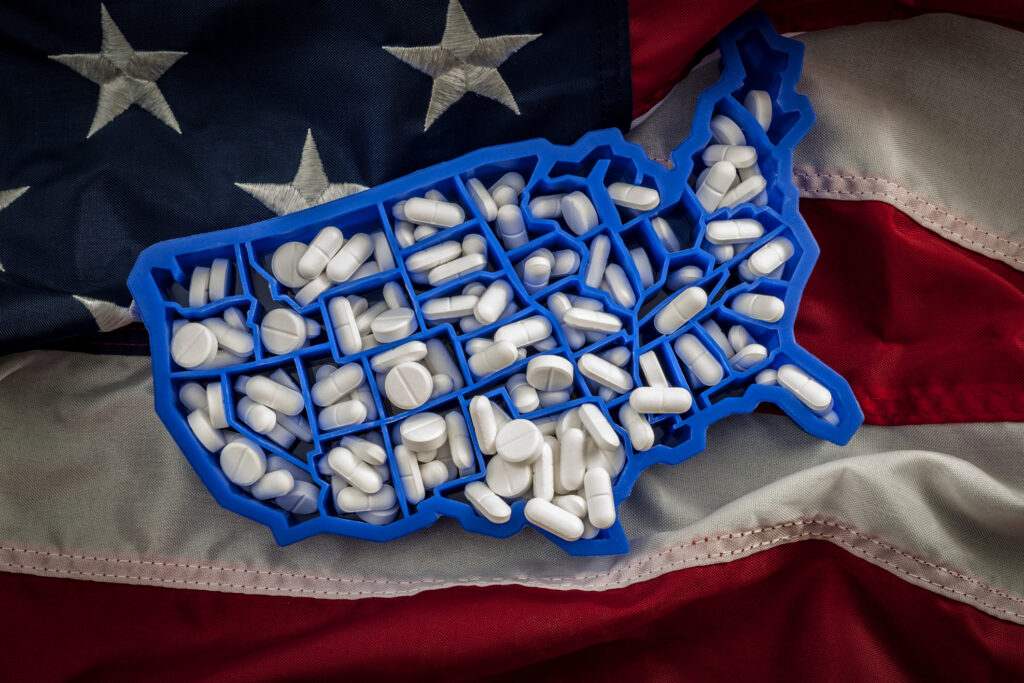
A veteran DEA agent is accusing federal prosecutors and agency leadership of knowingly allowing massive quantities of fentanyl to reach American communities while building larger investigations against drug trafficking organizations.
Special Agent David Howell alleges that between 2023 and 2025, authorities repeatedly permitted shipments containing tens of thousands of fentanyl pills to move through New Mexico rather than immediately seizing them.
According to Howell, the strategy may have allowed more than one million pills—and potentially far more—to enter distribution networks.
The accusations have drawn comparisons to the Fast and Furious gun-walking scandal of the Obama era, in which firearms were allowed to reach cartel networks in hopes of identifying higher-level operators.
Federal officials dispute Howell’s characterization. The DEA says investigators used lawful surveillance techniques, wiretaps, and intelligence gathering to dismantle major trafficking organizations and ultimately remove significantly larger quantities of narcotics from circulation.
Former prosecutors argue the approach saved lives by targeting entire criminal enterprises rather than low-level couriers.
But Howell contends that fentanyl presents a uniquely deadly threat that demands immediate intervention whenever possible.
READ NEXT: Treasury Secretary Clarifies Threat Against Bill Pulte