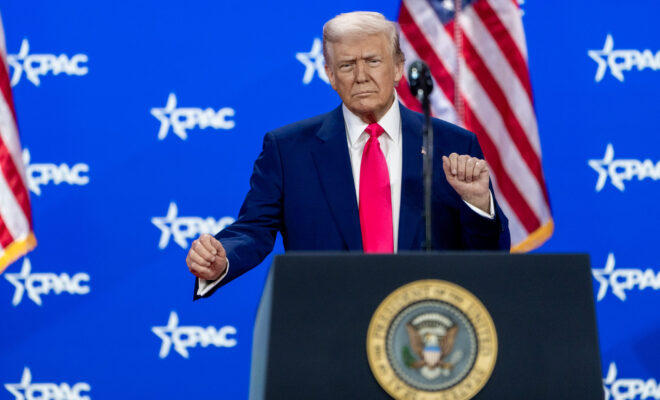

On Monday, Dan Bongino, the Deputy Director of the FBI, announced that the agency will reopen investigations into a mysterious bag of cocaine being found in the Biden White House and the infamous leak of the draft of the Dobbs decision by the Supreme Court that overruled Roe v. Wade.
“Shortly after swearing in, the Director and I evaluated a number of cases of potential public corruption that, understandably, have garnered public interest,” Bongino wrote in a statement on Monday:
We made the decision to either re-open, or push additional resources and investigative attention, to these cases. These cases are the DC pipe bombing investigation, the cocaine discovery at the prior administration’s White House, and the leak of the Supreme Court Dobbs case. I receive requested briefings on these cases weekly and we are making progress. If you have any investigative tips on these matters that may assist us then please contact the FBI.
In July 2023, the Secret Service discovered powder cocaine in a vestibule cubby at the White House where visitors store mobile phones. President Biden and his family were at Camp David at the time. (RELATED: Trump Says He Wants To Find Real Story Behind White House Cocaine)
While the Secret Service launched an investigation into the origin of the bag, it was closed after just 11 days, sparking immediate uproar among conservatives and the media, who questioned whether the cocaine could have belonged to then-President Biden’s son Hunter Biden, who previously battled addiction to crack cocaine. (RELATED: Biden Secret Service Chief Tried To Destroy White House Cocaine)
“There was no surveillance video footage found that provided investigative leads or any other means for investigators to identify who may have deposited the found substance in this area,” the FBI stated at the time. “Without physical evidence, the investigation will not be able to single out a person of interest from the hundreds of individuals who passed through the vestibule where the cocaine was discovered. At this time, the Secret Service’s investigation is closed due to a lack of physical evidence.”
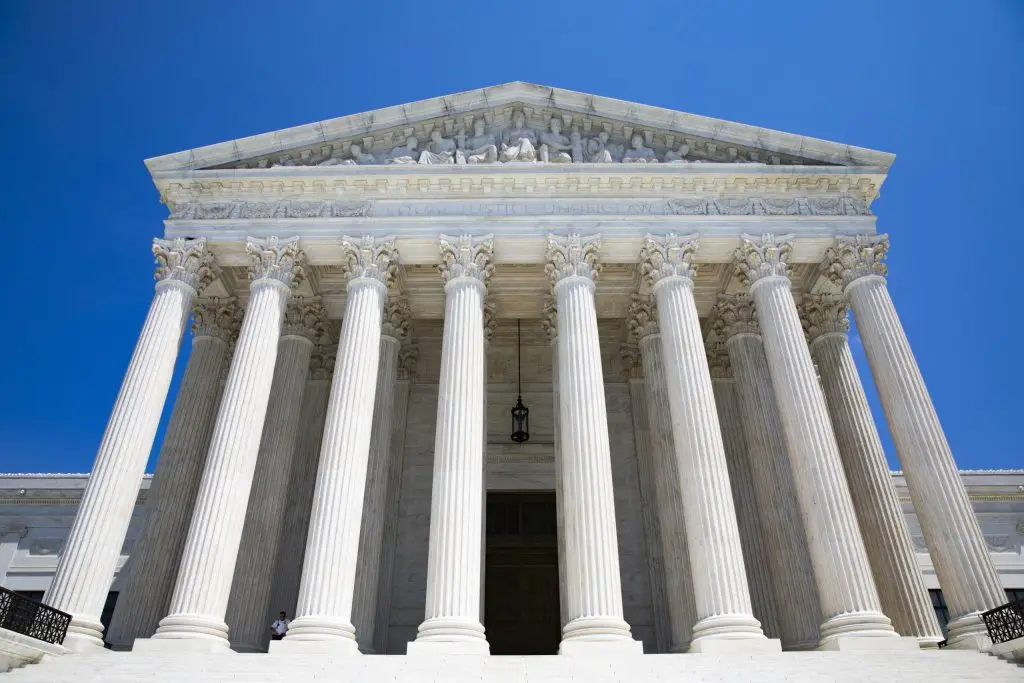
Bongino also noted that the FBI will further investigate the source of the draft of the Dobbs decision by the Supreme Court. (RELATED: Roberts Orders Investigation After ‘Egregious’ Supreme Court Leak)
In May 2022, someone leaked a draft of Justice Samuel Alito’s opinion in Dobbs v. Jackson Women’s Health Organization. The Supreme Court denounced the leak as “a grave assault on the judicial process.” Gail Curley, the court official assigned with investigating the incident, stated, “If a Court employee disclosed the draft opinion, that person brazenly violated a system that was built fundamentally on trust with limited safeguards to regulate and constrain access to very sensitive information.”
The court stated that although it “has to date been unable to identify a person responsible by a preponderance of the evidence,” investigators believe it is unlikely to have resulted from a computer hack.
Per CNN:
Investigators said they conducted 126 formal interviews of 97 employees, all of whom denied disclosing the opinion.
The leak – the worst breach of confidentiality in the court’s history – became public on May 2 when Politico published a draft opinion reversing the landmark 1973 decision that established a constitutional right to abortion. The disclosure rocked the court and left some justices with a sense of paranoia inside the confines of the marble-lined hallways. Shortly thereafter, on May 3, Chief Justice John Roberts issued a statement directing the marshal of the court, Gail Curley, to investigate the leak.
Curley oversees about 260 employees, including the court’s police department which has the power to arrest people on the grounds.
In the report Thursday, Curley concluded that “whether or not any individual is ever identified,” the court should implement better policies concerning sensitive information.
READ NEXT: Trump Threatens To Divert $3 Billion From Harvard To Trade Schools Amid Escalating Federal Clash