

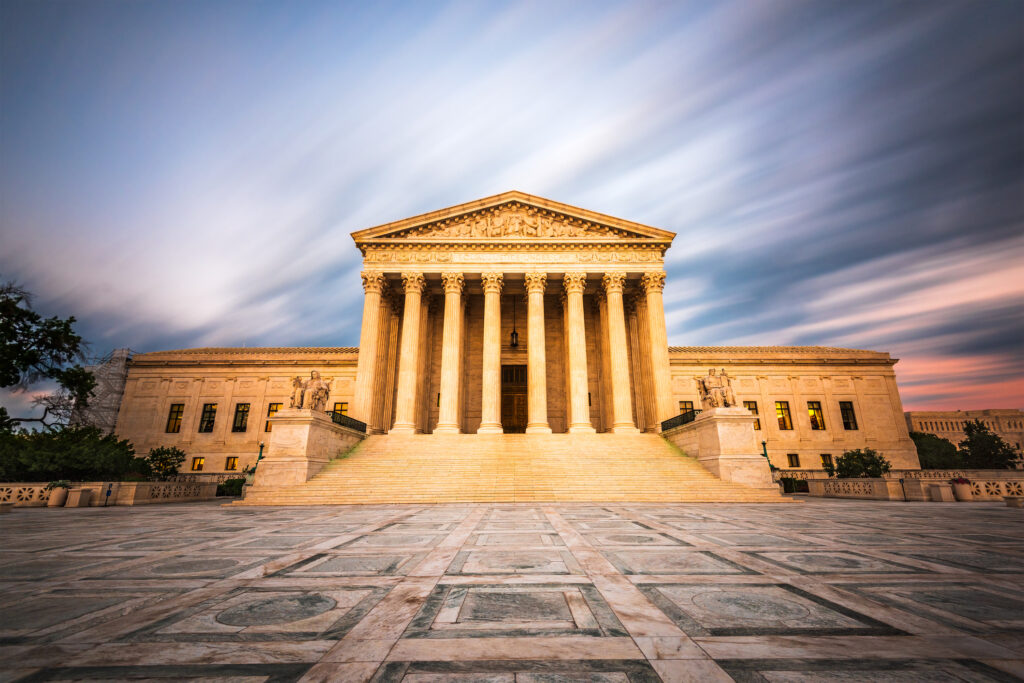
On Friday afternoon, the Supreme Court took up President Donald Trump’s challenge to birthright citizenship — launching a constitutional fight with huge stakes for immigration policy, presidential power, and the future of thousands of U.S.-born children.
A Major Case Lands Before the Justices
On Dec. 5, 2025, the Court granted review of the cases challenging Trump’s executive order that seeks to end automatic citizenship for children born in the U.S. to parents who are in the country illegally or temporarily. Oral arguments are slated for spring 2026, with a ruling expected by early summer.
For now, lower court rulings freezing the policy stay in place.
What Trump’s Order Would Do
Signed on Jan. 20, 2025, the order instructs federal agencies to deny birthright citizenship to certain U.S.-born children whose parents lack permanent legal status.
It breaks sharply with more than 125 years of legal understanding under the Fourteenth Amendment — an interpretation strengthened by the Supreme Court’s 1898 Wong Kim Ark decision, which affirmed that nearly everyone born on American soil is a citizen.
Critics say Trump is trying to sidestep the Constitution with an executive directive. Backers argue the amendment has been misread for decades and that Congress never intended blanket citizenship in these cases.
Not the Court’s First Brush With the Issue
In June 2025, the Court ruled 6–3 in Trump v. CASA, Inc., restricting nationwide injunctions that had frequently been used to halt Trump-era immigration policies. That ruling helped the administration procedurally — but it didn’t answer the central question now before the justices.
The Court has never directly said whether a president can restrict birthright citizenship or whether the Constitution categorically forbids it.
If the Court Upholds the Order
A victory for Trump would represent one of the largest shifts in U.S. immigration policy in modern history. Children born here to illegal or temporary-status parents would no longer get automatic citizenship, potentially creating a large group of U.S.-born residents without guaranteed nationality anywhere.
The move would ripple through immigration systems, social services, and demographic forecasts — and signal a dramatic expansion of presidential power.
If the Court Strikes the Order Down
A rejection would reaffirm the long-settled understanding of the Fourteenth Amendment and draw a clear boundary around executive authority. It would also tamp down a debate that resurfaces every few years about who qualifies for citizenship at birth.
With oral arguments still months away, both sides can only brace for what may be the most consequential immigration decision in a generation.
READ NEXT: Watch: Data Expert Reveals Surprising New Claim About Trump




















No other Country does this and USA shouldn’t either. Close the door to chain migration.
Supposedly, anyone who wants to become a citizen, and members of their family (including new-borns, need to wait five years after applying to attain citizenship. Yet, having a baby after arriving makes it a citizen? Not sound thinking. Immigration, itself, has outlived its time. At this point, no one should be able to immigrate to this country unless they can prove that they can support themselves. Everybody comes in today and immediately goes on the dole. The world knows that the American taxpayer will support everyone coming in who can’t afford to be here. This can no longer happen.
They preplan the timing of their entry and the birth. That’s called making us look like suckers.